Own your pay transparency journey with confidence
Secure compliance, manage employee communication and correct your pay gaps before any risk shows up.


Ensure compliance

Explain and correct your gaps

Answer right to information

Figures helped us build a full salary transparency structure, making it easier to transition into an open, fair compensation model.

Don't let new regulations take you by surprise
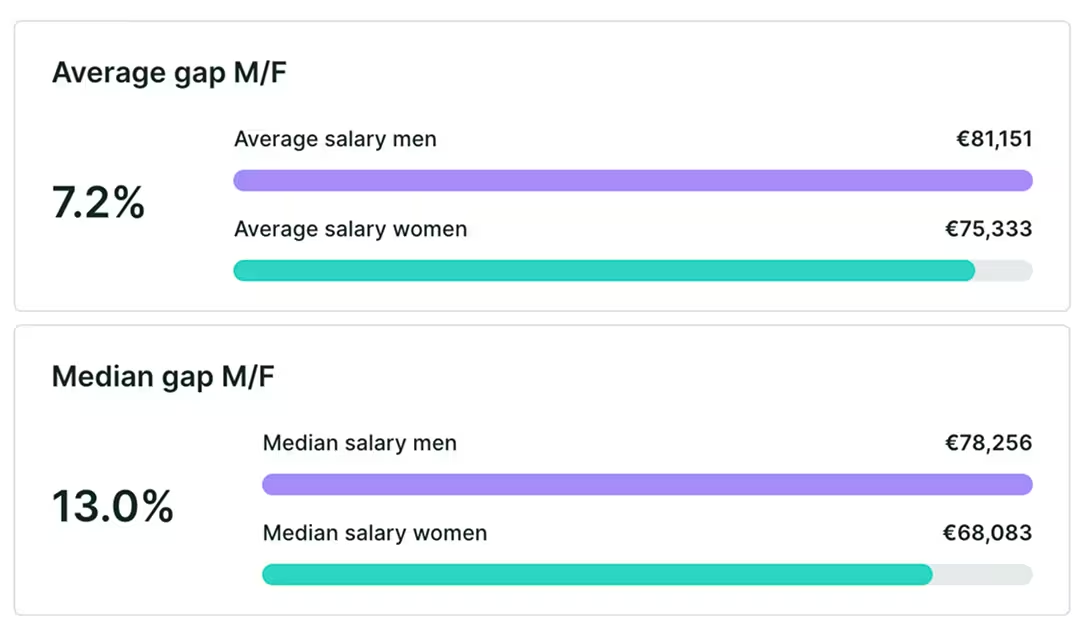

Generate compliance report in a clic
Automatically generate a fully calculated, compliant report, ready to share instantly.


Detect >5% gaps at a glance
Spot all raw gaps above 5% by worker category to prioritize your actions.

Create accurate correction plans
Simulate scenarios aligned with your budget and compensation strategy.

Answer employee right to information
Provide employees with the mandatory information through dedicated, ready-to-send letters.

Set up your custom classification
Set your roles, levels and job families to ensure accurate, consistent equity analyses.
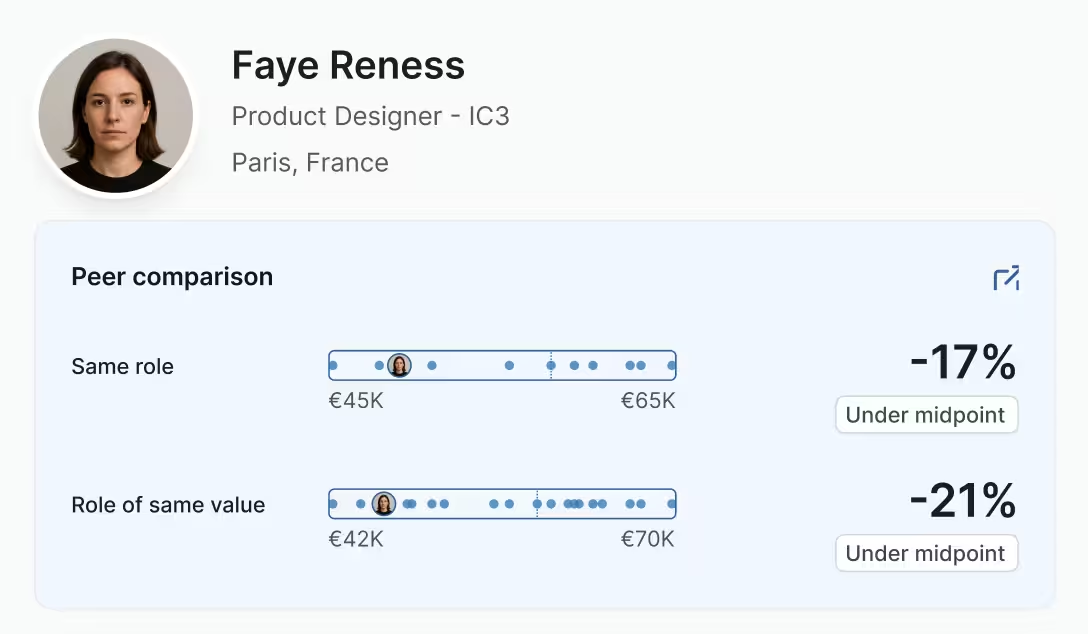
Spot risks at the individual level
Analyze pay for employees in roles of equal value through automated peer comparison.

Championing fair pay across Europe
As part of the Pay Transparency Alliance, we’re committed to simplifying the complexities of pay transparency and helping organizations achieve compliance while driving equity.
82% of companies exceed the 2026 gender pay gap threshold
Source: Average gap observed among companies when they join Figures.


Frequently Asked Questions
Got more questions? If we missed anything, just reach out and we’ll fill you in on all the details.
What is the EU Pay Transparency Directive and when does it take effect?
The EU Pay Transparency Directive is a regulation aimed at closing the gender pay gap across member states.
It requires companies to disclose salary ranges, ensure equal pay for equal work, and report pay gap data.
It will come into force in 2026, but companies should start preparing now.
Which companies are affected by the Pay Transparency Directive?
The directive applies to companies with 100 or more employees, with phased reporting obligations based on company size.
Organizations will need to provide pay transparency both at the recruitment stage and in internal compensation structures.
How can Figures help your company comply with the Pay Transparency Directive?
Figures is a leading compensation benchmarking and pay transparency platform tailored for European companies. It helps you:
- Benchmark salaries using real-time, localized data
- Ensure pay equity with gender gap analysis tools
- Establish internal fairness with clear job leveling frameworks
- Generate compliance-ready reports aligned with EU requirements
- Communicate salaries transparently to employees and candidates
Is the Pay Equity module included in all Figures plans?
All plans include the Foundations features: employee right-to-information letters and compliant pay equity reports. Advanced features (advanced gap analysis and remediation scenarios) are available as an add-on in the Pay Equity Expert plan.
What is a pay gap report, and why does it matter?
A pay gap report shows the difference in average pay between groups of employees, typically by gender or other demographics.
It helps identify structural disparities and drive fairer compensation policies.
What data is used to calculate pay gaps?
Figures uses your compensation data (salary, bonuses, job title, seniority, contract type, etc.) combined with demographic attributes like gender or age, depending on your local regulations and internal practices.
Who is required to publish a pay gap report?
It depends on your country and company size. In the EU, for example, companies with 100+ employees will be required to report starting 2026. We’ll help you stay compliant as regulations evolve.
Follow the regulations evolution in the country that interest you here.
How Figures helps me prepare for pay transparency regulations?
Figures Pay Gap Reports are designed to help you get ahead of upcoming EU and national laws, with compliant report templates and proactive gap detection.
From gender pay gaps with advanced filtering options, to individual risk detection, the module helps you communicate internally and generate custom reports.
Can I use it to prepare for my next compensation review?
Absolutely. Pay gap insights help you close unjustified gaps and allocate budgets more fairly in your next review cycle.
Can I use it to respond to employees exercising their right to pay information?
Yes. Figures will generate pre-filled response templates you can customize and send to employees requesting pay-related information.
Will it generate the official reports I need to submit to authorities?
Yes. Our reports are aligned with upcoming legal standards and can be exported in formats ready for submission (e.g. to government portals or public registries).
How does pay gap reporting benefit employers beyond compliance?
It strengthens your employer brand, increases trust and transparency, and provides actionable insights to improve fairness and retention.
Is Figures suitable for companies of all sizes?
Yes. Whether you're scaling your team or running an established organization, Figures supports HR teams, CFOs, and CEOs with data-driven compensation insights that grow with you.
When should companies start preparing for the directive?
Now. Although enforcement starts in 2026, organizations that begin early will have time to identify pay gaps, update their salary structures, and avoid last-minute compliance stress.
Can Figures help with salary ranges in job ads, as required by the directive?
Absolutely. Figures helps define data-backed salary bands for roles, making it easy to include transparent pay ranges in job ads—an essential step toward compliance.
Simplify your compensation management today
Pinpoint pay disparities at every level and make the right call.