Key points
- Compensation software reduces processing time through automation, saving HR teams hours of work every week.
- European companies need GDPR-compliant platforms with EU-specific benchmarking data for 2026 Pay Transparency requirements.
- Features to prioritise include real-time market data, salary bands, pay equity analysis, HRIS integration, and compliance reporting.
- Implementation typically takes four to eight weeks for mid-market companies; enterprise deployments require three months+.
- Top picks for 2026 include Figures, Deel, Workday, and Payscale.
Managing employee salaries and bonuses takes a huge amount of time if you’re looking to retain staff and stay industry-relevant. Trying to achieve this manually leaves less time to work on tasks that require a human touch – like strategy, creative thinking, and the all-important brew run.
Manual compensation management increases error rates, and benchmark data goes stale within months. By the time you’ve got that spreadsheet ready for the world, the world no longer gives a hoot. That’s why compensation management tools are becoming an essential part of efficient HR processes.
Compensation software reduces processing time, with automated workflows saving HR teams hours of work on compensation tasks alone. But knowing which solution is the right one for your company is no easy venture, so this post outlines 13 of the top choices around.
We’ve also included a detailed analysis of compensation software benefits, types, and feature sets, so you can base your decision on the coldest, hardest facts.
What is compensation software?
Compensation software helps optimise HR processes including salary management, bonuses, pay equity, incentives, and compensation planning.
Essential features vary by company size, so keep this in mind when shopping around. Small businesses need basic salary planning, while large enterprises require advanced analytics.
Here are the core capabilities to look for:
- Salary planning
- Advanced analytics
- Market data integration
- Pay equity management
- Performance-based compensation
- Integration with HR and payroll systems
Working together, these features support companies in making fair, data-driven pay decisions that align compensation with market and business strategies. Capabilities like these help brands to retain their best talent – they’re also useful brand selling points for attracting new employees.
Types of compensation software
Before comparing specific platforms, it helps to understand the three main categories of compensation software available, with each serving different organisational needs. Pick the wrong one and you’ll be running your next review cycle on a heady blend of gut instinct and wild guesses.
Purpose-built platforms
Purpose-built platforms focus exclusively on compensation management. These tools offer benchmarking and salary band creation. They typically provide deeper functionality than HRIS add-ons, including advanced pay equity analysis and compensation review workflows.
Examples: Figures, Pave, Beqom
Compensation features within HRIS
HRIS platforms include compensation management within broader HR suites. These solutions centralise employee data and compensation planning. The trade-off is that compensation features may be less sophisticated than purpose-built alternatives, so bear that little nugget in mind when weighing up your own options.
Examples: Workday, ADP, HiBob, Rippling
Features comparison checklist
When comparing compensation platforms, verify these capabilities:
- Does it provide real-time compensation benchmarking with filterable market data?
- Can you create and manage structured salary bands for different roles?
- Does it identify pay equity gaps across employee demographics?
- Are compensation workflows automated for merit increases and bonuses?
- Can you model different budget scenarios in real-time?
- Does it integrate with your existing HRIS and payroll systems?
- Can employees access total rewards statements showing their full package?
- Are there role-based access controls for sensitive salary data?
- Does it ensure GDPR and regional labour law compliance?
- Is there an employee self-service portal for compensation details?
For detailed explanations of why each feature matters, see our comprehensive features and benefits guide.
Top compensation software for HR management in 2026
Ready to discover the best compensation software? Here’s everything you need to know.
1. Figures
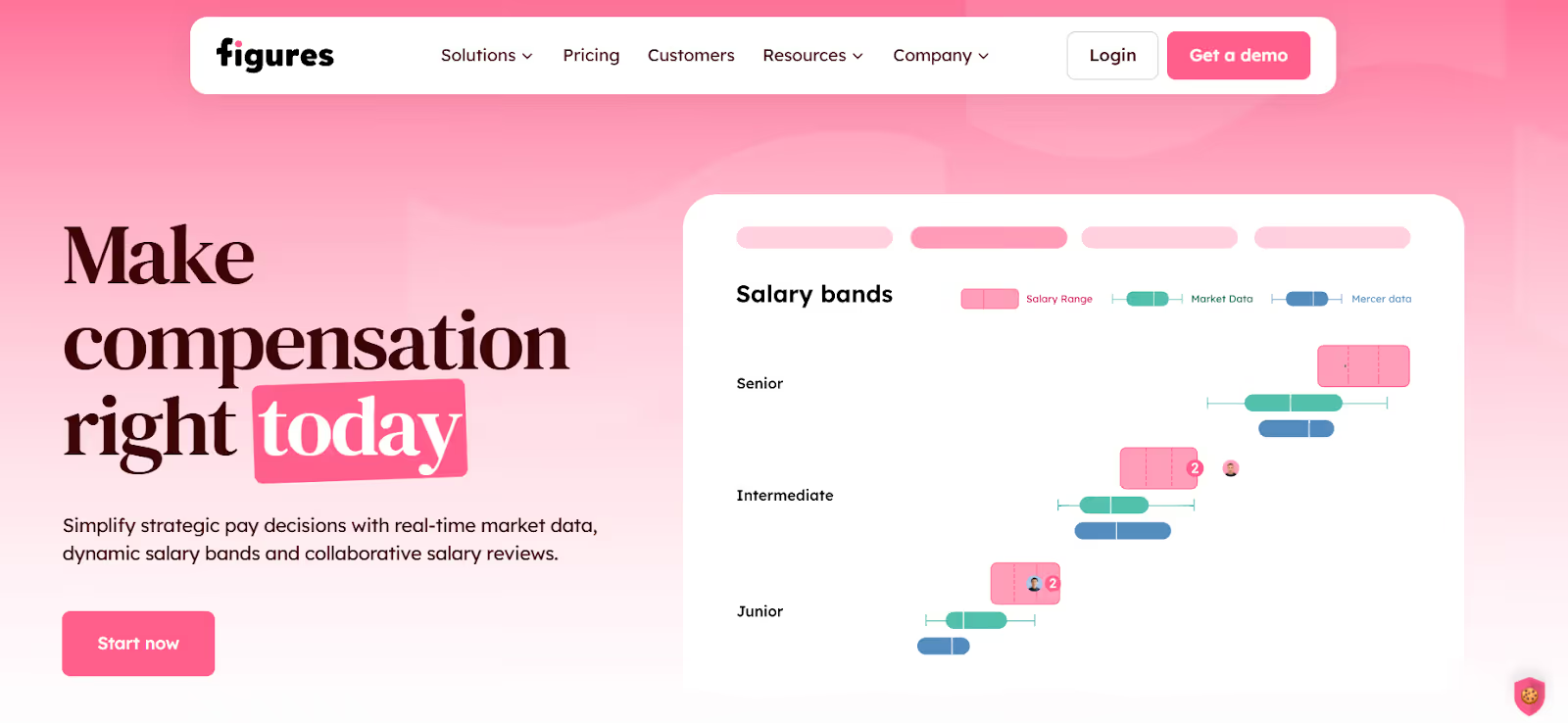
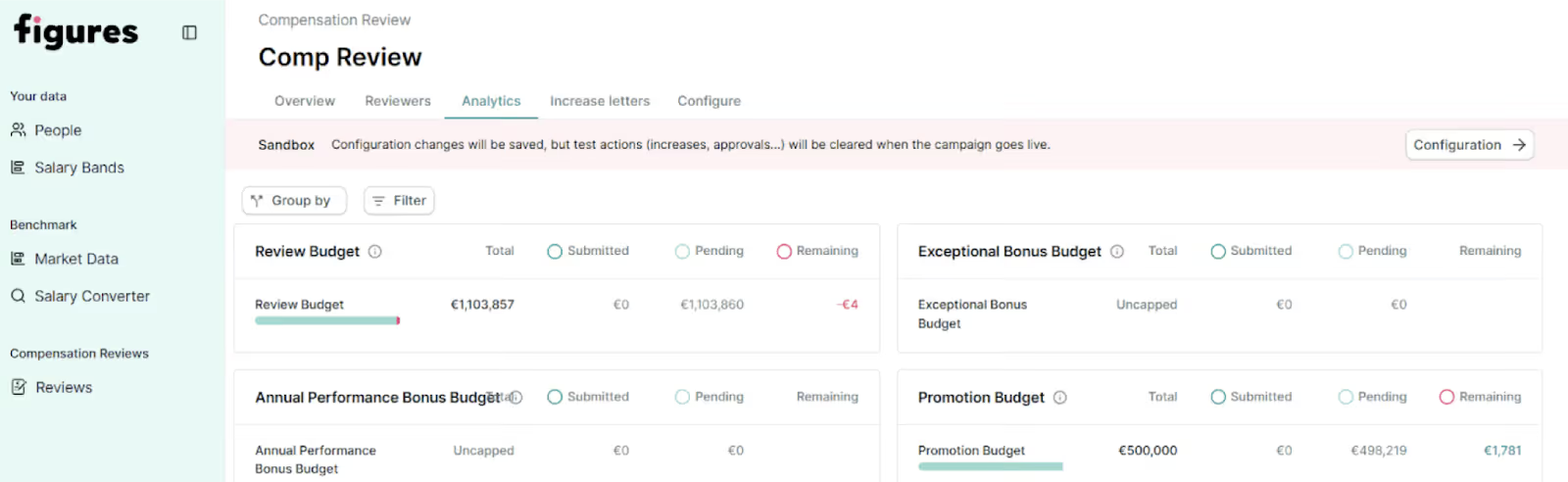
Figures is Europe’s leading compensation management platform, built specifically for European companies navigating complex regulatory requirements. The platform serves 10,000+ European users and stores data exclusively in European regions for data sovereignty compliance.
“For us, using this tool is a crucial step toward salary transparency, as we envision it at Swan. For the first time, we were able to easily base our salary increase decisions on a very clear visualization of our employees' positions within our salary grids.”
– Mathilde Sou, HRBP at Swan
What sets Figures apart is its combination of enterprise-grade Mercer data with purpose-built compliance tools. The platform updates benchmark data monthly – ensuring your compensation decisions reflect current market conditions rather than dusty ol’ data. You’ll be dealing straight up with some seriously accurate info, enabling some seriously accurate decision-making. And we’re totally serious about that.
What sets Figures apart is its laser focus on pay equity and EU Pay Transparency compliance. The platform automates pay equity analysis and generates compliant reporting for the EU Pay Transparency Directive – because nobody wants to be scrambling when those 2026 deadlines hit. Figures also optimises your compensation reviews with purpose-built workflows, all backed by enterprise-grade Mercer data that updates monthly. You'll be dealing straight up with current market conditions, not dusty ol' data. And we're totally serious about that.
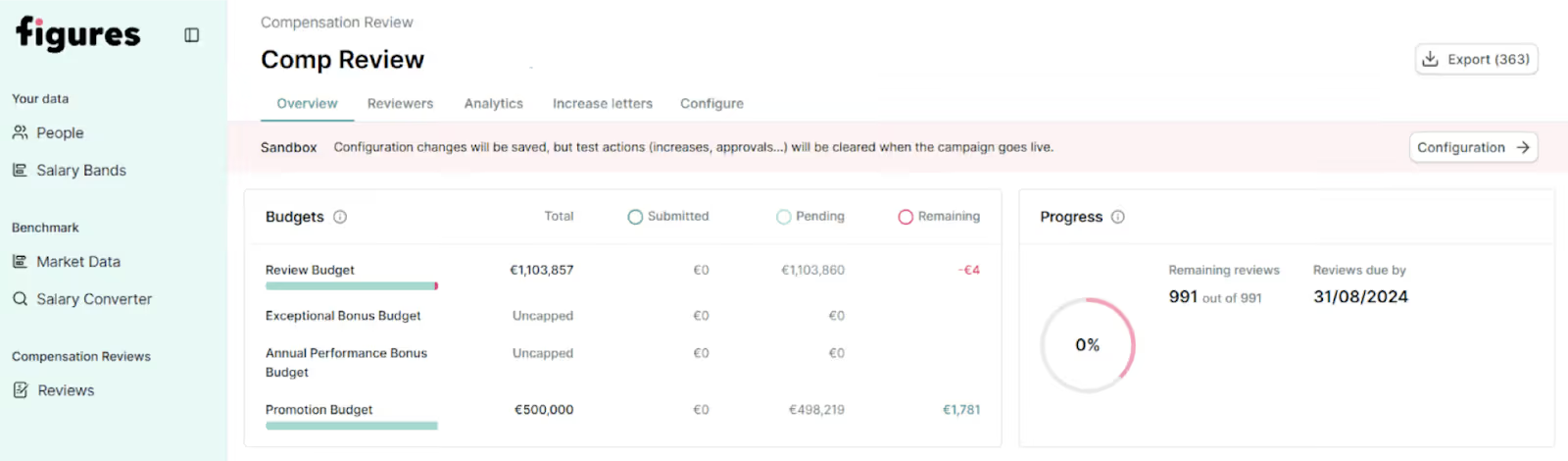
Key features:
- 📊 Access to 3.5 million EMEA salary datapoints powered by Mercer.
- 🔄 Integration with 30+ HRIS systems.
- ⚖️ Automated pay equity reporting for EU Pay Transparency Directive.
- 🔒 ISO 27001, SOC 2 Type 2, and GDPR certified security.
- 📈 Real-time benchmarking with monthly data updates.
- 💡 Compensation reviews can save HR teams three weeks per cycle.
- 🌍 European AWS cloud storage for data sovereignty.
Best for: European companies requiring EU Pay Transparency compliance.
Company size: Mid-to-large organisations (250-5,000 employees).
Pricing: Custom pricing based on company size – demo available.
2. Deel
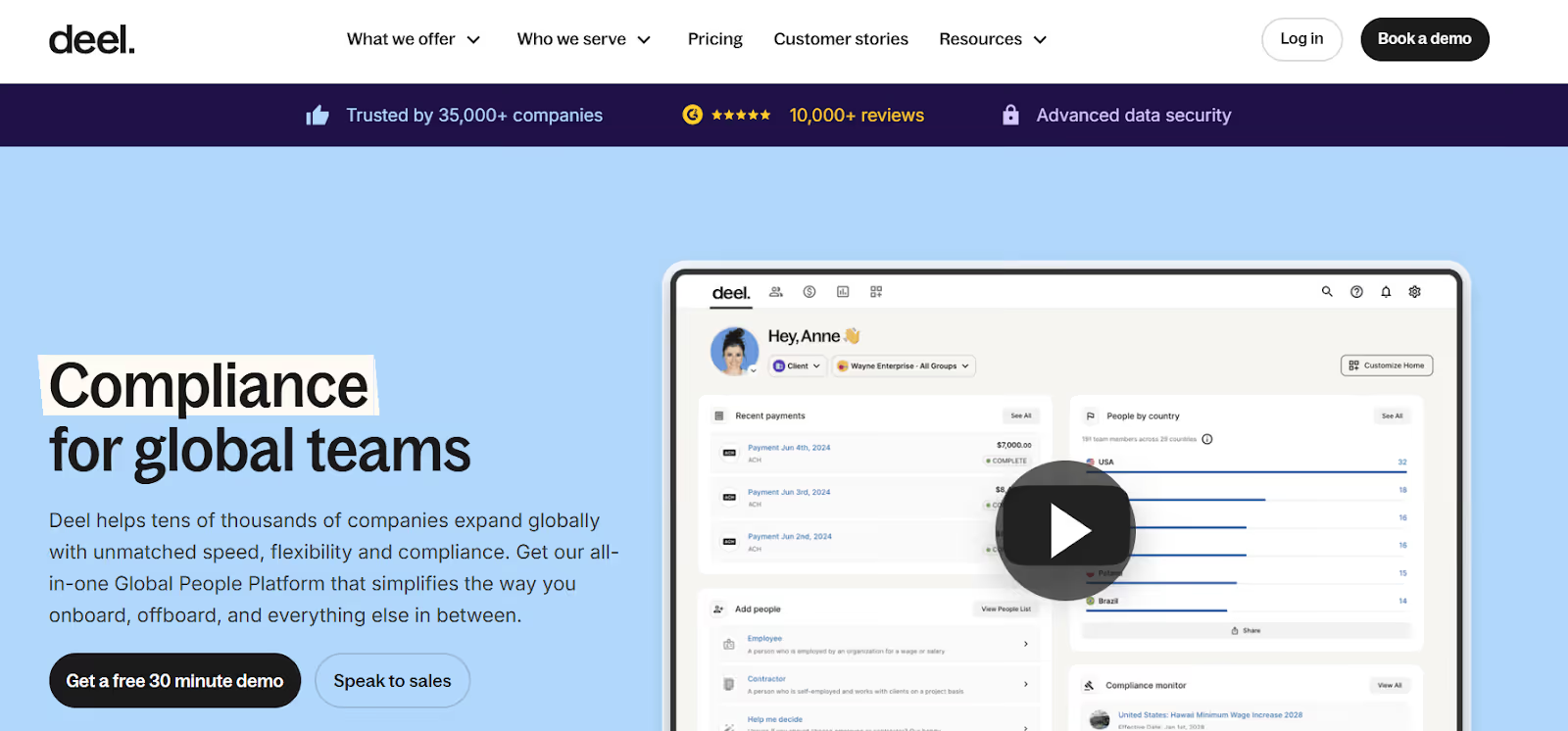
Deel has expanded beyond its roots in global payroll to offer comprehensive compensation management across 110+ countries. The platform combines employer of record services with salary benchmarking, making it particularly strong for companies with internationally distributed teams.
Key features:
- 🌍 Global payroll in 110+ countries.
- 📊 Built-in salary benchmarking for international roles.
- 🔄 Employer of record (EOR) services.
- 💰 Multi-currency payment processing.
- 🔒 Compliance management across jurisdictions.
Best for: Global teams with employees in multiple countries.
Company size: All sizes (particularly strong for growing global teams).
Pricing: From £22/month per employee – demo available.
3. Workday Compensation
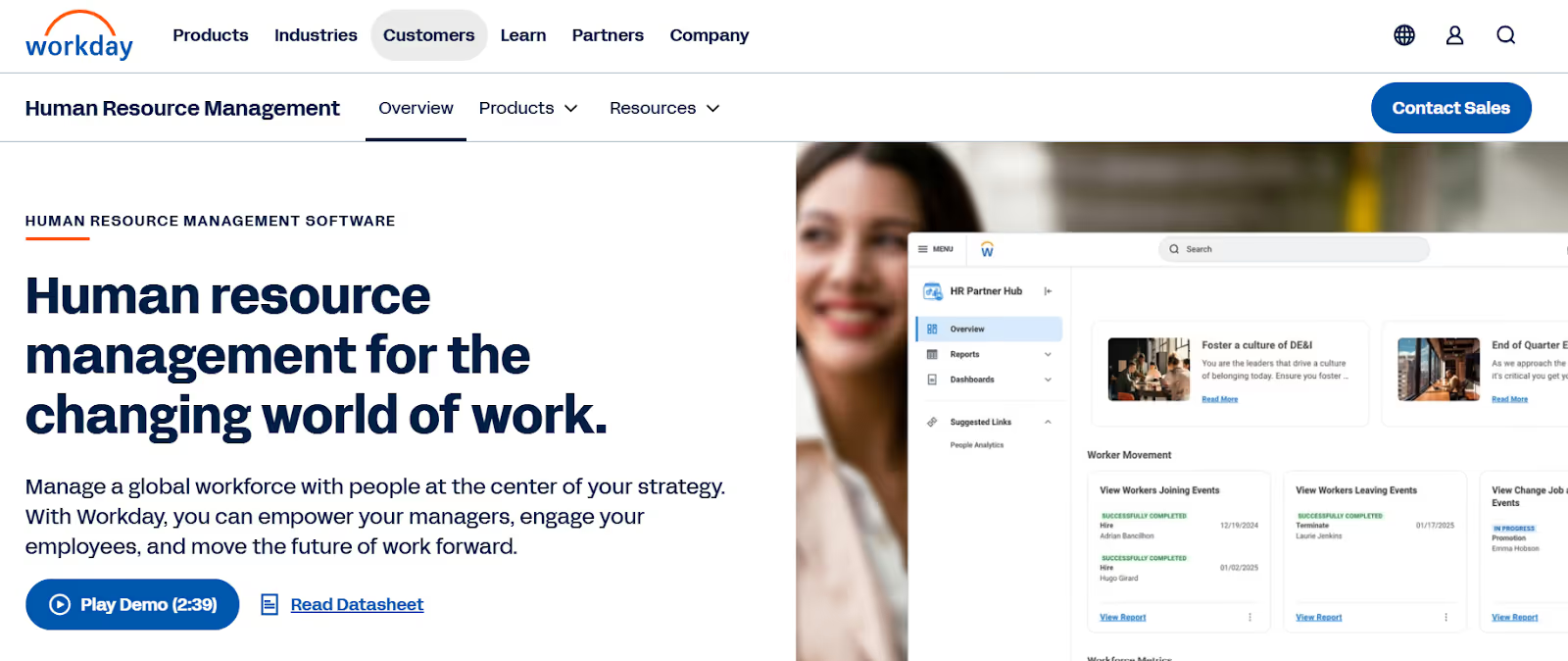
Part of the Workday HR platform, the Workday Compensation module offers a range of features, all within an easy-to-use, customisable dashboard. It allows HR teams to easily keep track of a wide range of data, including base salaries, commission, and long-term incentive management.
Key features:
- 📊 Comprehensive HCM suite with compensation module.
- 🔄 Integrated HR and finance systems.
- 💰 Customisable compensation plans and workflows.
- 📈 Advanced analytics and reporting.
- 🌍 Multi-country support.
Best for: Large enterprises already using or planning to use Workday HCM.
Company size: Enterprise (500+ employees).
Pricing: Custom pricing – demo available.
4. Payscale
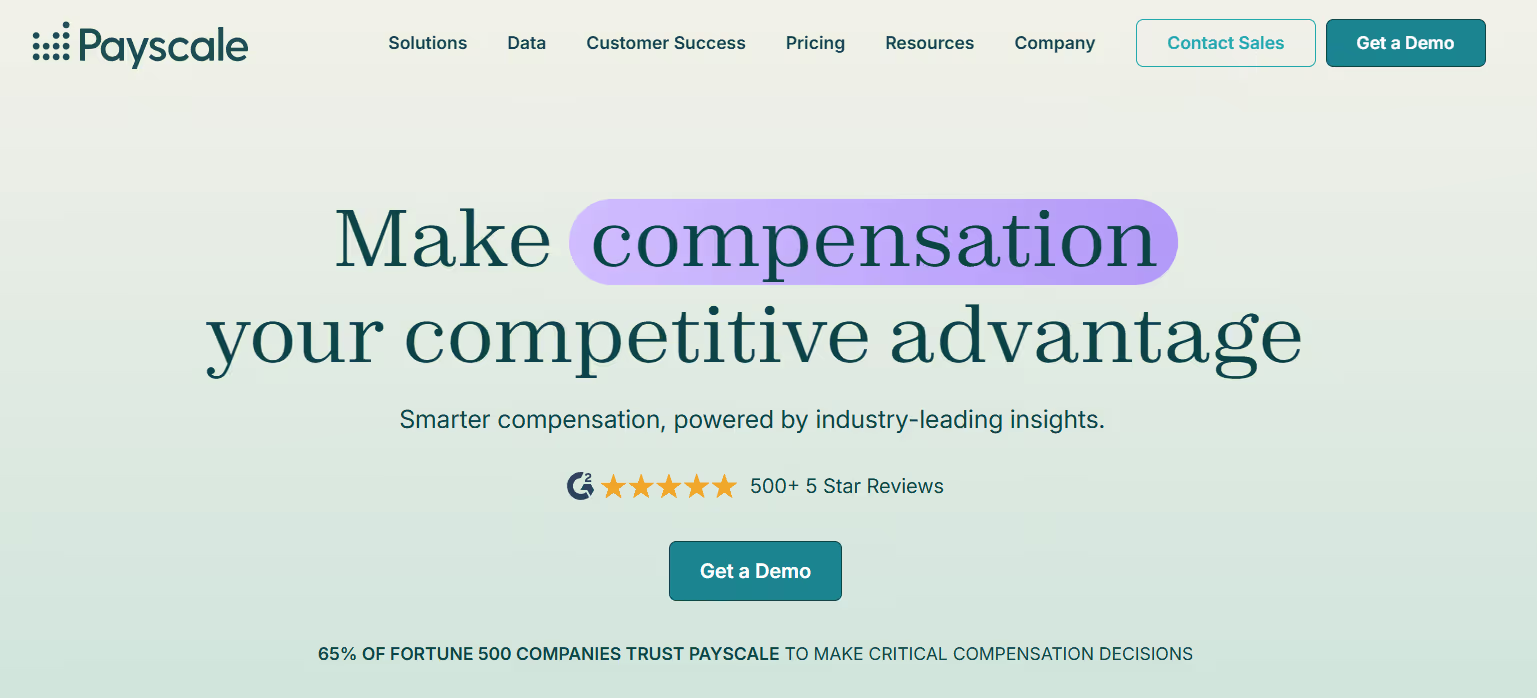
Payscale built its reputation on salary survey data and has expanded into full compensation management. The platform combines its extensive market data with job pricing tools, pay equity analysis, and compensation planning features. Payscale is particularly strong for organisations that prioritise data-driven pay decisions.
Key features:
- 📊 Extensive salary survey database.
- ⚖️ Pay equity analysis and reporting.
- 💰 Job pricing and market positioning.
- 📈 Compensation planning tools.
- 🔄 HRIS integrations.
Best for: Organisations prioritising market data and salary benchmarking.
Company size: Mid-to-large (100+ employees).
Pricing: Custom pricing – demo available.
5. SAP SuccessFactors Compensation
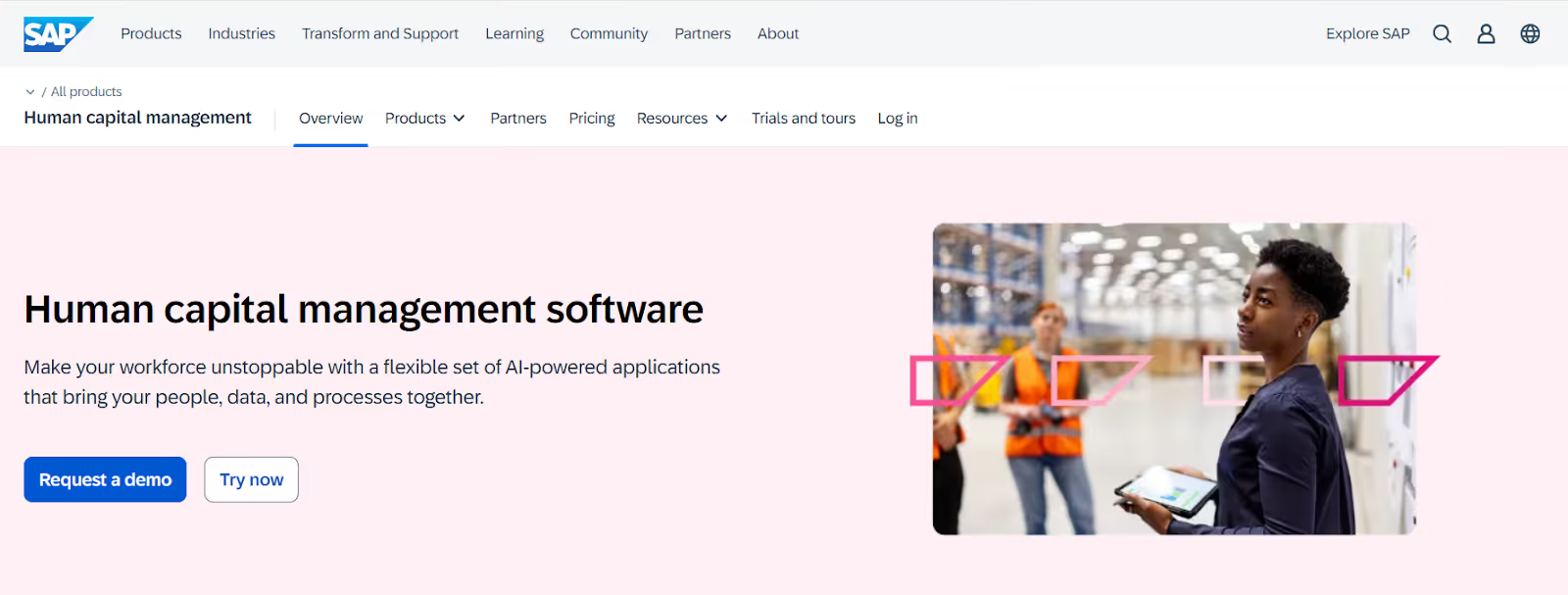
SAP SuccessFactors Compensation helps medium to large organisations work towards pay transparency by giving them access to analytics and real-time reporting. This solution allows for integrated performance reviews, making it easier to track merit-based raises and ensure consistency across all departments.
Key features:
- 📊 Automated salary planning and bonus allocation.
- 📈 Pay-for-performance management.
- 🔄 SAP ecosystem integration.
- 📊 Real-time analytics and reporting.
- 🌍 Global compliance support.
Best for: Organisations already using SAP ecosystem products.
Company size: Medium-to-large (250+ employees).
Pricing: Custom pricing – demo available.
6. CompXL
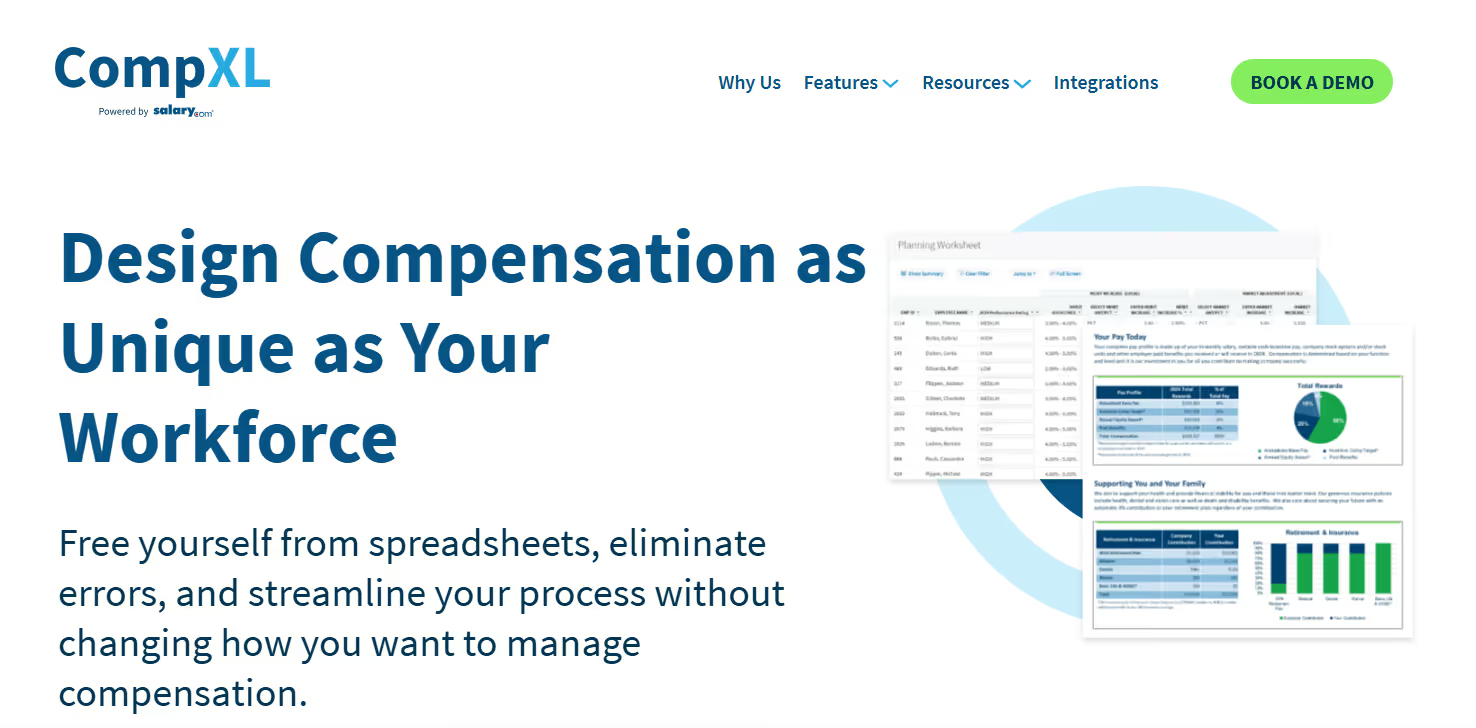
CompXL is designed for managing employee salaries, bonuses, and incentive programs. The platform allows for detailed analysis of salaries based on location, gender, and role, making it easier to move towards pay equity. The interface is highly customisable and includes a range of collaborative features designed to help HR teams work together to make data-backed decisions.
Key features:
- 💰 Budget management and allocation.
- 📊 Salary and bonus administration.
- 📈 Customisable reporting and analytics.
- ⚖️ Pay equity analysis by location, gender, and role.
- 🔄 Collaborative workflow features.
Best for: Mid-sized organisations needing flexible compensation workflows.
Company size: Mid-sized (100-1,000 employees).
Pricing: Custom pricing – demo available.
7. ADP Workforce Now® Compensation Management
ADP Workforce Now® Compensation Management makes it easier for HR teams to make compensation decisions while also staying within their budget. It offers recommended salary ranges based on analytics and compensation trends, plus built-in compliance features that help organisations ensure they’re following local compensation laws.
Key features:
- 💰 Salary planning with budget controls.
- ⚖️ Pay equity analysis.
- 🔄 Native payroll and HR integration.
- 📊 Recommended salary ranges based on analytics.
- 🔒 Built-in compliance features.
Best for: Organisations seeking integrated payroll and compensation management.
Company size: All sizes.
Pricing: Custom pricing – demo available.
8. Beqom
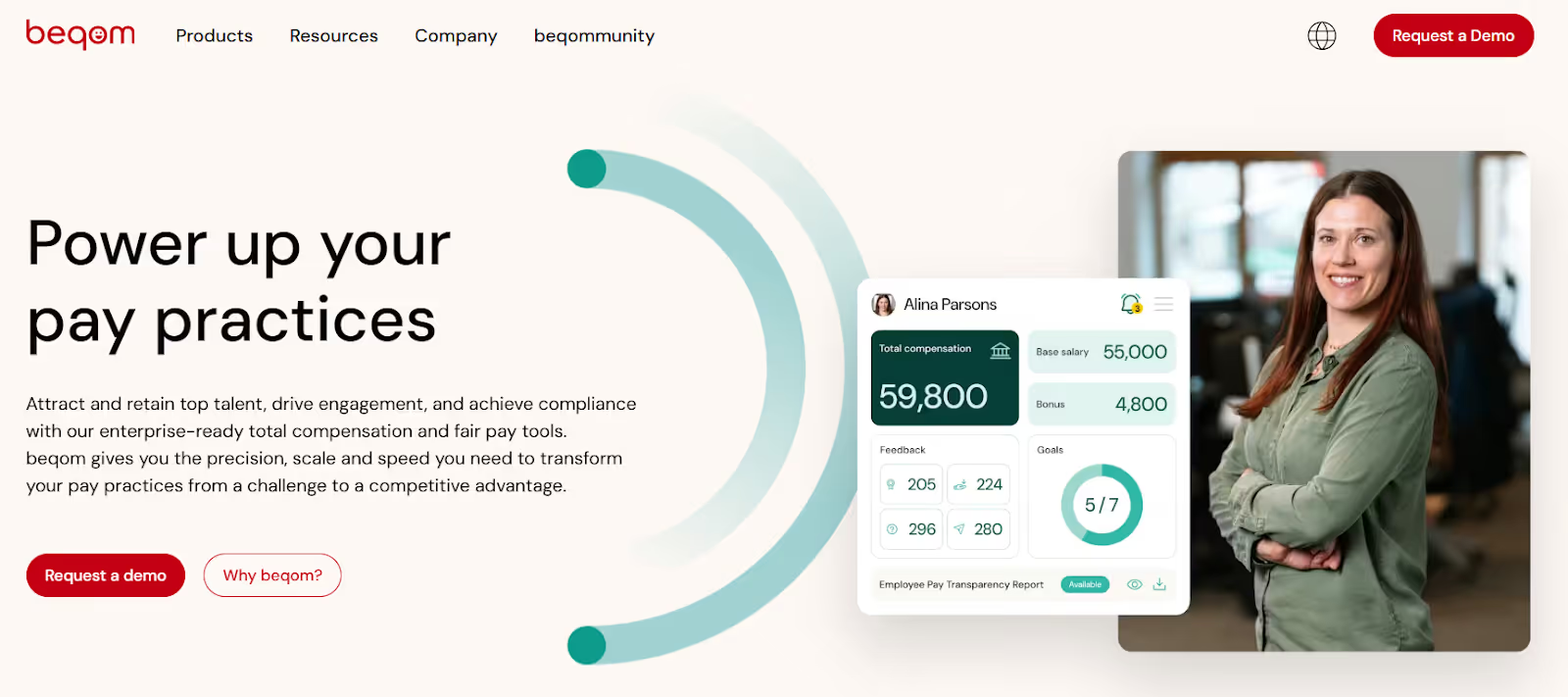
Beqom specialises in total compensation management for large enterprises with complex pay structures. The Swiss-based company offers solutions for base pay, bonuses, sales incentives, and equity compensation. Beqom is particularly strong for organisations requiring sophisticated modelling across multiple business units and geographies.
Key features:
- 📊 Compensation predictions for merit increases, promos, and new hires.
- 🌍 Multi-country salary review management with local guideline compliance.
- 💰 Complete total rewards spectrum from salary to executive compensation.
- ⚖️ Pay equity analytics using machine learning to identify and prevent pay gaps.
- 📈 Budget planning and forecasting with iterative workflows across countries.
Best for: Complex enterprise compensation with sales incentives and equity.
Company size: Large enterprise (1,000+ employees).
Pricing: Custom pricing – demo available.
9. Rippling
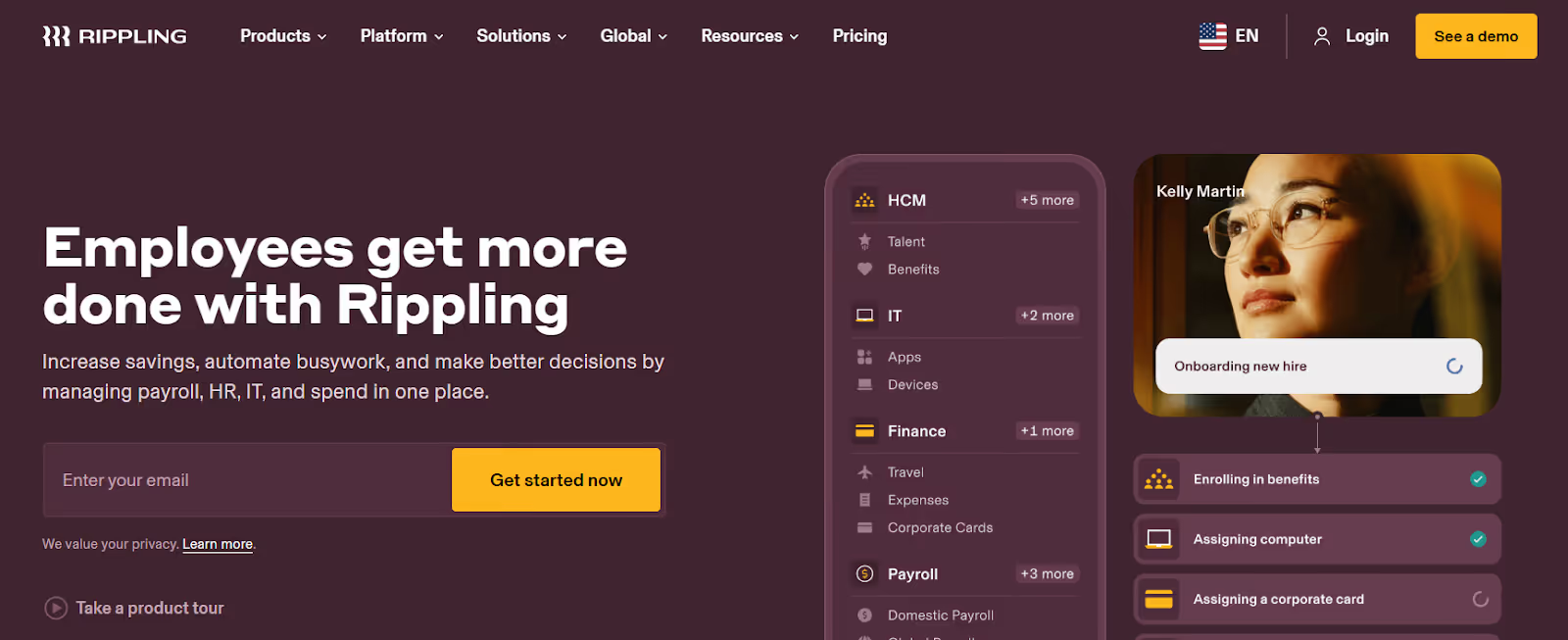
Rippling combines HR, IT, and Finance into a unified platform with compensation management built in. The platform excels at automation – when you update an employee’s salary, the change flows through payroll, benefits, and IT systems automatically. Rippling offers compensation bands and benchmarking alongside its broader workforce management capabilities.
Key features:
- 🔄 Single database architecture that auto-updates across all systems.
- 💼 Full employee lifecycle management from recruiting to offboarding.
- 📊 Compensation bands with automatic enforcement of pay guidelines.
- ⚡ Performance data integration for merit-based compensation decisions.
- 🌍 Global payroll with automatic currency conversion from US-based accounts.
Best for: Growing companies wanting unified HR/IT automation.
Company size: Small-to-mid (10-1,000 employees).
Pricing: Custom pricing – demo available.
10. Pave
Pave has gained traction in the tech sector with its visual offer letters and equity compensation tools. The platform helps companies communicate total rewards effectively to candidates and employees. Pave’s benchmarking data comes from its customer base, which skews heavily toward technology companies – something to consider if you’re in a different industry.
Key features:
- 📊 Real-time compensation benchmarks from 8,000+ companies.
- 💎 Visual offer letters that showcase equity value with share price modelling.
- 🎯 Total rewards portals with compensation simulators for employee engagement.
- 📈 Merit cycle management with recommendation and approval workflows.
- ⚖️ Pay equity analysis with role-based access controls for sensitive data.
Best for: Tech companies focused on equity compensation and candidate communication.
Company size: Mid-market (50-5,000 employees).
Pricing: Custom pricing – demo available.
11. HiBob
HiBob offers a modern HRIS with compensation management features designed for mid-sized companies. The platform includes compensation cycles, salary bands, and analytics within its broader HR suite. HiBob is particularly popular with tech-forward companies seeking a user-friendly alternative to legacy HRIS systems.
Key features:
- 📊 Compensation worksheets with salary history, benchmarks, and guidelines.
- 👥 Real-time collaboration between HR, finance, and managers.
- 🌍 Multi-currency management with localised salary benchmarks.
- 📈 Performance and tenure data integration for informed pay decisions.
- ⚖️ Pay gap identification and flight risk alerts within compensation reviews.
Best for: Modern mid-sized companies wanting integrated HRIS with compensation.
Company size: Mid-sized (50-3,000 employees).
Pricing: Custom pricing – demo available.
12. Lattice
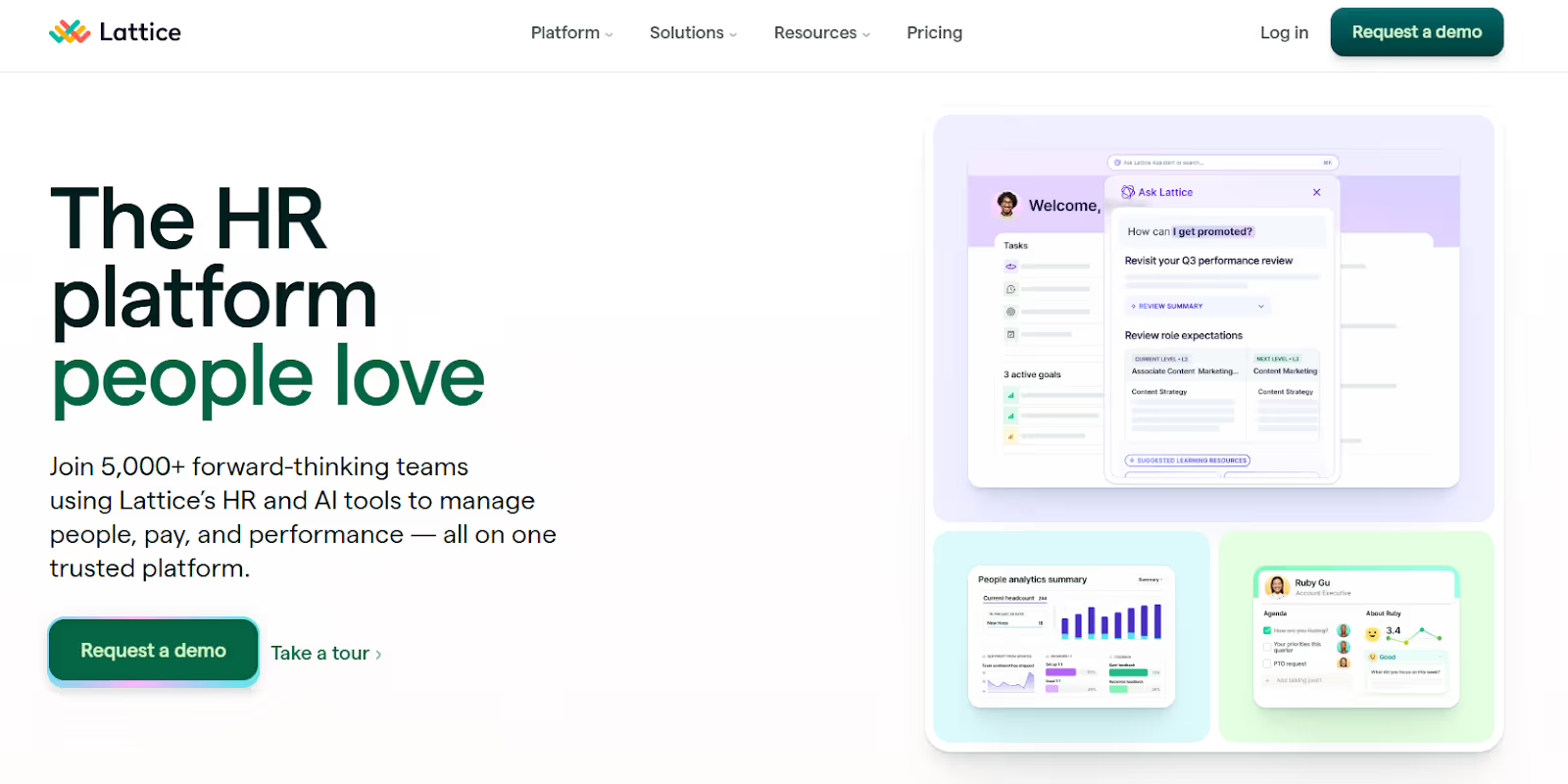
Lattice began as a performance management platform and has expanded into compensation. The integration means compensation decisions can be directly linked to performance reviews and goals. Lattice uses Mercer data for benchmarking, providing credible market rates. The platform is particularly strong for organisations wanting to formalise pay-for-performance connections.
Key features:
- 🎯 Direct performance-to-compensation connection for merit-based decisions.
- 📈 Compensation bands with visualisation tools for salary band management.
- ⚖️ Built-in analytics for pay equity monitoring and budget tracking.
- 📋 Shareable compensation statements explaining pay decisions with context.
- 📊 Real-time merit cycle tracking with collaboration tools and approval workflows.
Best for: Companies linking compensation directly to performance management.
Company size: Mid-market (50-5,000 employees).
Pricing: From £8/month per employee – demo available.
13. Compport
Compport focuses on total rewards communication alongside compensation planning. The platform helps organisations create visual total rewards statements that show employees the full value of their compensation package beyond base salary. Compport also includes compensation planning, budget allocation, and analytics features.
Key features:
- 📊 Real-time salary review simulations with budget impact analysis.
- 🎯 Bonus, sales incentive, and long-term incentive plan management.
- 📈 Pre-built analytics library with thousands of reports.
- ⚖️ Pay equity management with demographic analysis and gap identification.
- 🌍 27+ language support with localised screens for global teams.
Best for: Organisations prioritising total rewards communication to employees.
Company size: Mid-to-large (100-10,000 employees).
Pricing: Custom pricing – demo available.
How to choose the right compensation software for your organisation
Follow these three steps to find the right fit:
Step 1: Assess your needs
Before evaluating platforms, get clear on what you actually need:
- Define your compensation objectives clearly.
- Identify required features based on company size.
- Document your budget range and ROI expectations.
- Consider your team’s expertise in compensation management.
- Determine if you need global or regional coverage.
Step 2: Evaluate core features
When shortlisting platforms, verify these capabilities:
- Verify access to real-time benchmarking data with relevant filters.
- Check for automated compensation cycle management workflows.
- Confirm pay equity analysis capabilities for compliance reporting.
- Assess salary band creation and visualisation tools.
- Evaluate reporting and analytics customisation options.
- Test scenario modelling for budget forecasting.
Step 3: Consider practical factors
Beyond features, assess these practical considerations:
- Security and compliance requirements (ISO 27001, SOC 2, GDPR).
- Integration capabilities with existing systems.
- Scalability for future growth.
- Pricing transparency and total cost of ownership.
- Vendor support quality and training resources.
- Implementation timeline and complexity.
- User-friendliness and adoption potential.
Matching software to company size
Size really does matter in some cases! Once you’ve made the above assessments, consider these in line with your employee headcount. After all, a comp process that works for 30 people will usually start coughing and need to lie down somewhere around employee number 40.
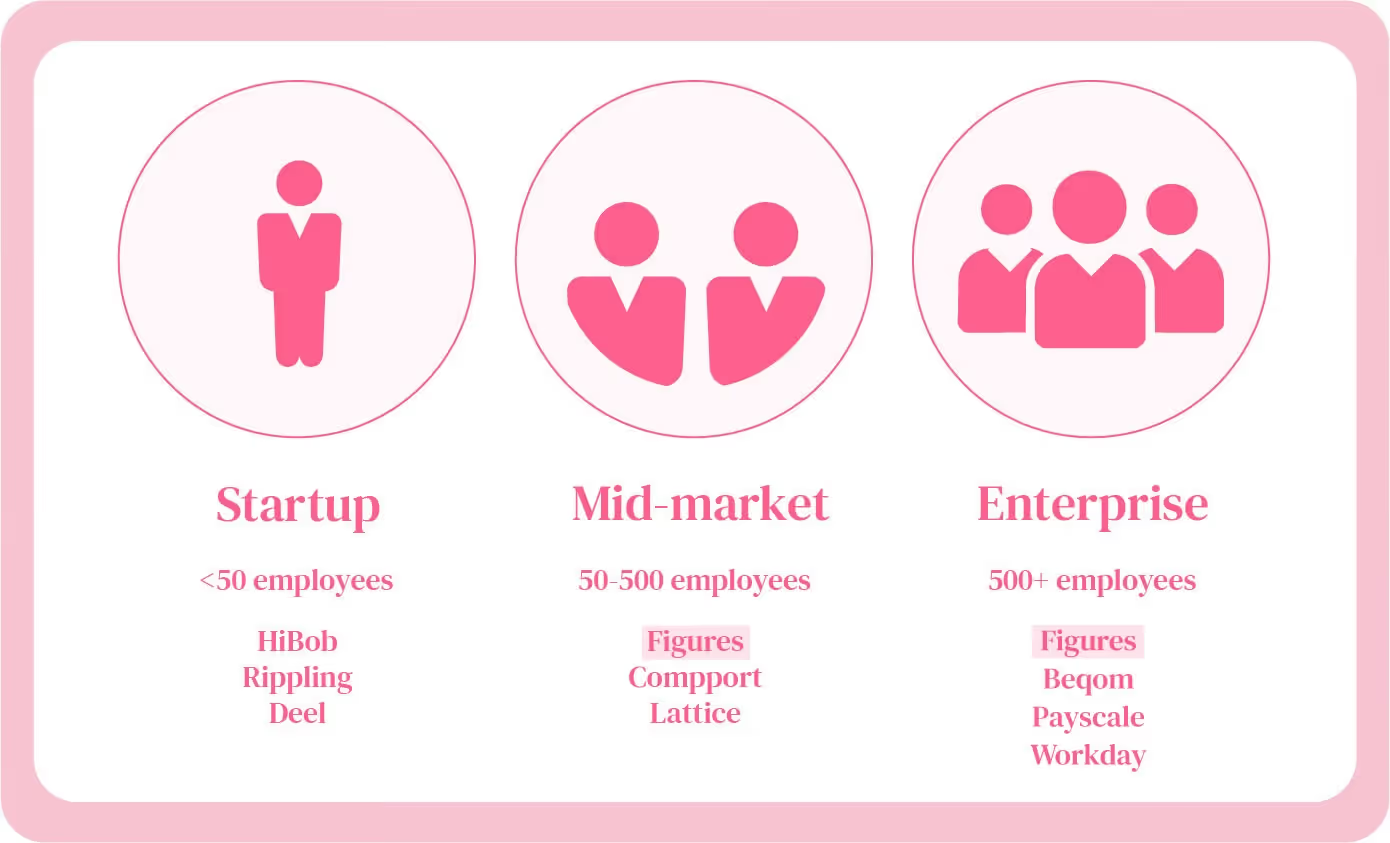
Small businesses (fewer than 50 employees)
Small businesses need basic compensation planning and budgeting tools. Pricing typically ranges from £5-15 per employee monthly, and priority features include payroll integration, simple merit increases, and market data access.
Implementation typically takes two to four weeks for small businesses.
Recommended platforms: HiBob, Rippling, Deel
Mid-market companies (50-500 employees)
Mid-market companies require structured salary bands and pay equity analysis. Annual costs can range from £5,000-30,000, and essential features include benchmarking, compensation reviews, compliance reporting, and HRIS integration.
Implementation typically takes four to eight weeks for mid-size companies.
Recommended platforms: Compport, Lattice, Figures
Large enterprises (500+ employees)
Enterprise organisations need global compensation management and complex workflows. Custom pricing is typically used for enterprise deployments – ensure your software includes multi-currency support, advanced analytics, custom integrations, and dedicated support.
Enterprise deployments typically require three months+ for full implementation.
Recommended platforms: Figures, Beqom, Payscale, Workday
Security due diligence checklist
Before sharing sensitive salary data, verify vendor security standards. Ask these questions during demos:
Certification questions
- Which security certifications do you hold? (Required: ISO 27001, SOC 2 Type 2, GDPR compliance.)
- When were certifications last audited?
- Can you provide certification documentation?
Data protection questions
- Where is employee data stored geographically?
- What encryption standards protect data in transit and at rest?
- Who has access to our data within your organisation?
- What are your data retention and deletion policies?
Compliance questions
- How do you track regional labor law changes?
- Does the platform support EU Pay Transparency Directive reporting?
- What audit trails are available for compensation changes?
💡 Keep in mind that Figures holds ISO 27001, SOC 2 Type 2, and GDPR certifications, with data stored exclusively in European AWS regions. This is the kind of information you need confirming before parting with a penny of your hard earned software budget.
“I don’t know how a company can prepare for the salary transparency directives without Figures. It provides the objective criteria you need to create bands, share them internally, and build a policy that’s fair and defensible.”
– Teresa Patau, Team Lead Human Resources at HolidayPirates
Implementation timeline and support
Understanding implementation timelines helps set realistic expectations and plan resources accordingly. Keep the following in mind and you’ll have more than an inkling of the scale of your task ahead.
Typical implementation phases
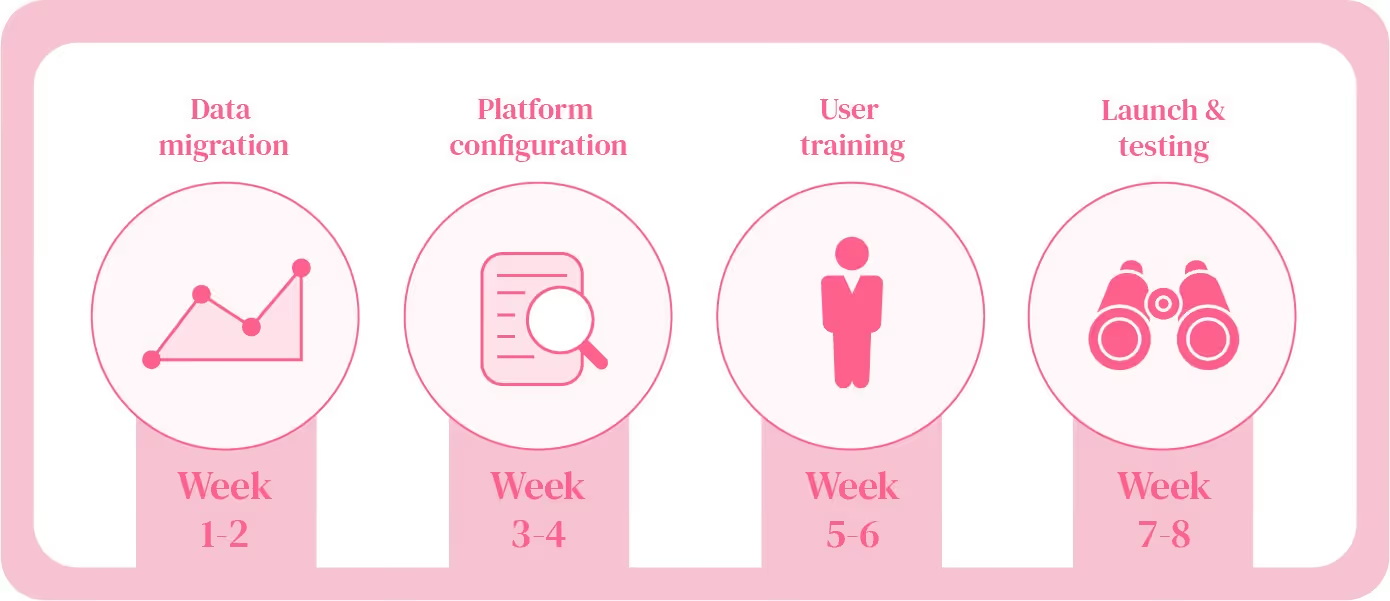
As we’ve seen, implementation can take four to eight weeks for mid-size companies, while enterprise deployments require at least three months for full rollout.
Here’s what to expect in more snack-sized terms:
- Week 1-2: Data migration from existing systems.
- Week 3-4: Platform configuration and salary band setup.
- Week 5-6: User training for HR team and managers.
- Week 7-8: Launch and post-implementation testing.
Vendor support evaluation
When evaluating vendors, assess onboarding process quality during demos. Verify availability of training resources and documentation, and check customer support response times and channels. If you’re an enterprise client, confirm the levels of dedicated account management that you’re entitled to.
By way of example, Figures provides European market expertise during implementation, with dedicated support for navigating EU Pay Transparency requirements.
"I found the support offered by Figures to be very qualitative and meticulous. The team and the solution adapt to each stage of development, which is very reassuring."
– Mathilde Fontaine, People Operations Team Lead at Welcome to the Jungle
Optimise your compensation management with Figures
The days of managing compensation through spreadsheets are numbered. With EU Pay Transparency requirements approaching in 2026, European companies need platforms that can handle compliance, pay equity analysis, and strategic compensation planning in one place.
Selecting compensation software is a major decision that impacts your entire organisation. By evaluating platforms against your specific needs, prioritising security and compliance, and choosing a solution that scales with your growth, you’re setting your HR team up for long-term success.
“Compensation isn't just about paying people fairly – it’s about building trust. When employees understand how pay decisions are made, engagement and retention follow.
– Virgile Raingeard, CEO and ex-HR, Figures
Ready to see how Figures can transform your compensation management? Request your free demo and experience Europe’s leading compensation platform for yourself.