With the EU Pay Transparency Directive around the corner, many companies are asking the same question: will we still be able to negotiate for top talent?
Short answer: yes — the Directive doesn’t explicitly ban salary negotiations. However, it does introduce new rules that will change how they happen.
The Directive also requires companies to justify pay differences based on objective, gender-neutral criteria. In this context, our prediction is that negotiations will get less and less common as companies find them harder and harder to defend.
In this article, we’ll explore where negotiation happens today, how this will change under the Directive, and what you can do to make any remaining negotiations fair and defensible.
At a glance: salary negotiations under the Directive
- Not banned — but much harder to justify
- Salary ranges must be shared before interviews
- Employers can’t ask about salary history
- Pay decisions must be based on objective, gender-neutral criteria
- Negotiation becomes less central to how pay is set
When and why salary negotiations happen
In most companies, there are two major opportunities for negotiation. The first is during the hiring process: often, a tight market and an urgent need to fill a role gives candidates a certain amount of leverage when it comes to pay.
Allowing some level of negotiation in the hiring process means employers don’t have to go in with their top offer straight away. This enables them to effectively compete for top talent without paying more than they need to.
But this approach can lead to offers outside the salary range assigned to the role — which can have a compounding impact across an organisation.
Plus, without clear information about what the company is willing to pay, employees sometimes end up “negotiating” a salary that’s below their market value (though this will change under the Pay Transparency Directive).
The other moment when negotiations sometimes happen is during the compensation review process. In many organisations, managers begin the process by asking employees what increase they think they deserve and using their answer as a starting point for discussion.
However, this approach results in increases that reflect who speaks up the loudest, not who actually deserves them — we don’t recommend it.
What the Pay Transparency Directive actually says about salary negotiations
The EU Pay Transparency Directive does not explicitly ban salary negotiations. However, it does introduce some new rules that will significantly change what they look like. Specifically:
- Employers must share the salary or range before the interview stage
- Employers cannot ask candidates about their past or current salary
This shifts the balance of power in salary negotiations, which has historically been weighted in favour of employers. Some employers may stop salary negotiations for this reason alone.
The Directive also requires employers to justify pay decisions using objective, gender-neutral criteria. Basing salaries or raises on negotiation is hard to defend, especially if it leads to pay outside the stated range for a role.
“Employers shall make easily accessible to their workers the criteria that are used to determine workers’ pay, pay levels and pay progression. Those criteria shall be objective and gender neutral.”
Directive (EU) 2023/970 (EU Pay Transparency Directive)
5 reasons to avoid negotiation in the pay transparency era
Our prediction is that negotiation will become much less widespread in the pay transparency era. As companies become more transparent about how pay decisions are made, basing them on negotiation becomes harder to justify.
“Any time you leave room open for negotiation, you create unfairness and a compliance risk. I’m absolutely certain pay transparency will reduce negotiation.”
Virgile Raingeard, Figures CEO and Founder
In our view, that’s not a bad thing. External pressure from the Directive isn’t the only reason to end salary negotiation. Too much reliance on negotiation can create real system issues within an organisation. Here are five reasons to consider removing it from your processes:
- Introduces bias into pay decisions: When pay decisions rely on negotiation rather than structured systems, fairness depends on individual managers. Without clear safeguards, this increases the risk of biased outcomes.
- Creates unequal outcomes: Different groups approach negotiation differently. While exact differences are debated, this makes negotiation an unreliable basis for pay decisions.
- Leads to inconsistent pay for similar roles: When two employees work in the same role, they should be paid the same. While the Directive allows differences based on objective factors (like performance or tenure) negotiation is unlikely to meet that standard.
- Erodes internal equity over time: One-off exceptions may not seem like a big deal, but too many of them can create unjustified pay gaps. This could trigger compliance issues under the Pay Transparency Directive.
- Makes decisions harder to explain: Under the Directive, employers need to show that their pay decisions are based on consistent, objective criteria. Decisions based on negotiation are inherently harder to explain.
The big problem: too much negotiation undermines your pay system
All of these issues get at the same problem: overreliance on negotiation actively works against the systems and processes you’ve put in place to ensure fair pay. After all, most companies above a certain headcount have already invested in structures like:
- A well-defined job architecture
- A consistent salary band structure
- A clear compensation review process
In other words, the things you need to make sure pay decisions are fair, consistent and repeatable. Negotiation leads to exceptions — and each one weakens the structure you’ve built. Over time, this makes your system less reliable and your pay decisions harder to explain.
“The more discretionary elements there are — manager decisions without objective criteria, negotiation — the more risk you carry. The more systematic and objective the decision-making, the more ready you are.”
Virgile Raingeard, Figures CEO and Founder on preparing for pay transparency
How to reduce reliance on negotiation without losing flexibility
The goal isn’t necessarily to eliminate negotiation entirely. But with new pay transparency regulations, you do need to ensure every pay decision is justifiable — which means putting strong guardrails in place.
Here are a few ways to reduce reliance on negotiation and ensure any flexibility in your system still leads to fair, explainable outcomes.
Define salary bands for each role
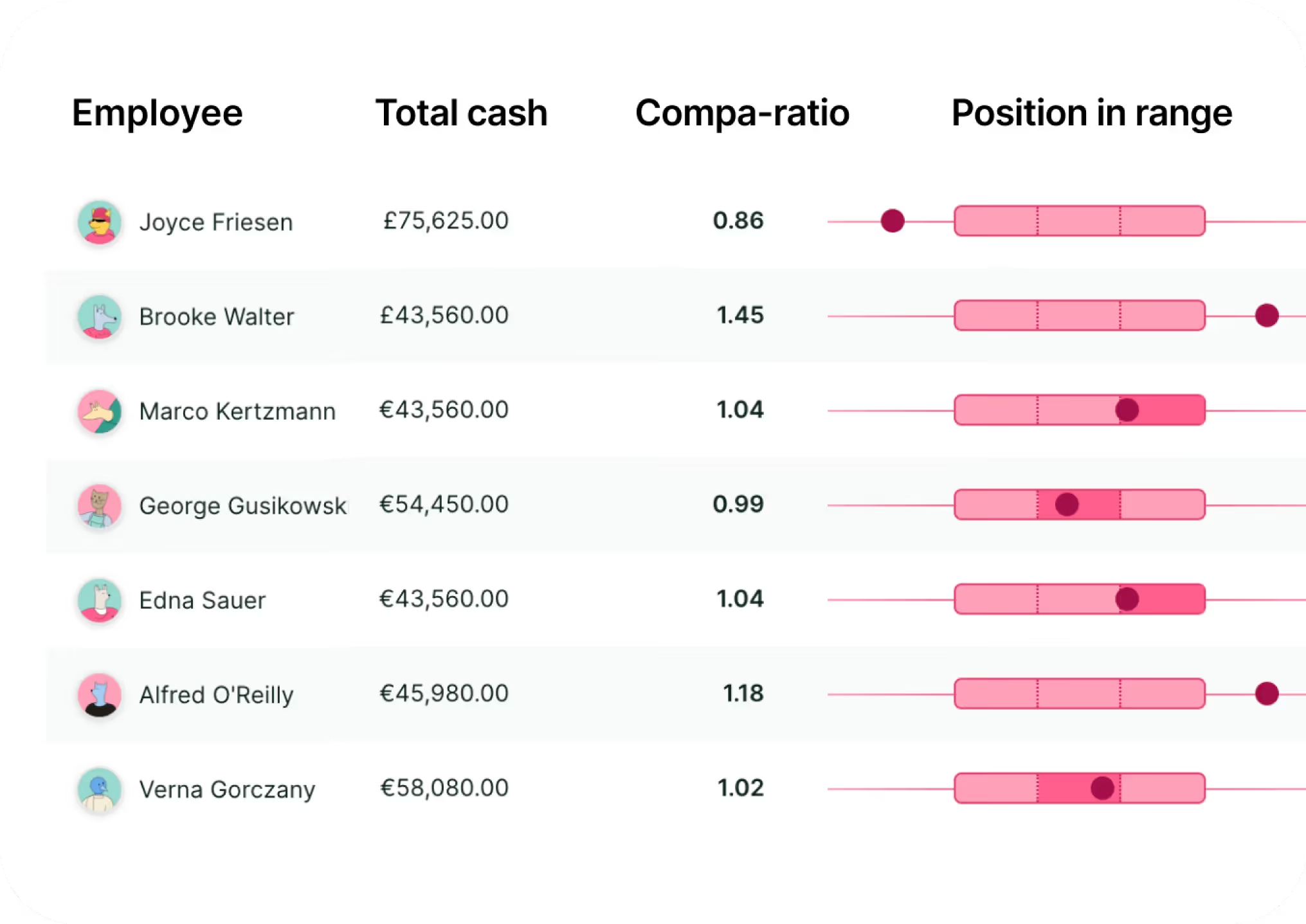
Strong salary structures should guide every pay decision in your organisation — so you don’t have to rely on ad hoc logic or manager discretion. For many companies, this means developing salary bands, with clearly defined pay ranges for every role and level. If you already have these systems, it’s a good time to review them.
Define clear criteria for pay and progression
To keep pay decisions fair and objective, you’ll need to formalise the criteria used for salary-setting and progression. While the Pay Transparency Directive doesn’t prescribe specific criteria, it does require them to be objective and gender-neutral. For example, you might choose to include:
- Performance
- Experience
- Role scope
- Location
- Tenure
These criteria help determine where employees sit within a salary range, and when they should move to the next level. They should be clearly defined and understood across the organisation.
Control and document exceptions
Even when you have a strong system in place, exceptions do occasionally arise. For example, a candidate may be able to negotiate a higher salary if:
- They bring additional or unusual skills
- You’re competing for hard-to-find talent
- The market has shifted since you posted the range
To keep this fair and justifiable under the Directive, it’s important to:
- Define in advance when exceptions are allowed
- Design a clear, consistent approval process
You should also make sure to document the rationale behind each decision so you can refer back to it later. As a useful rule of thumb, if there’s a genuine, objective reason for paying above range, this may be acceptable. If not, you may need to reconsider the exception.
Design strong compensation review processes
In some companies, negotiation is a core feature of the compensation review process. But this can lead to unfair outcomes like pay gaps or discrepancies between employees in the same role, eroding trust and potentially causing compliance issues.
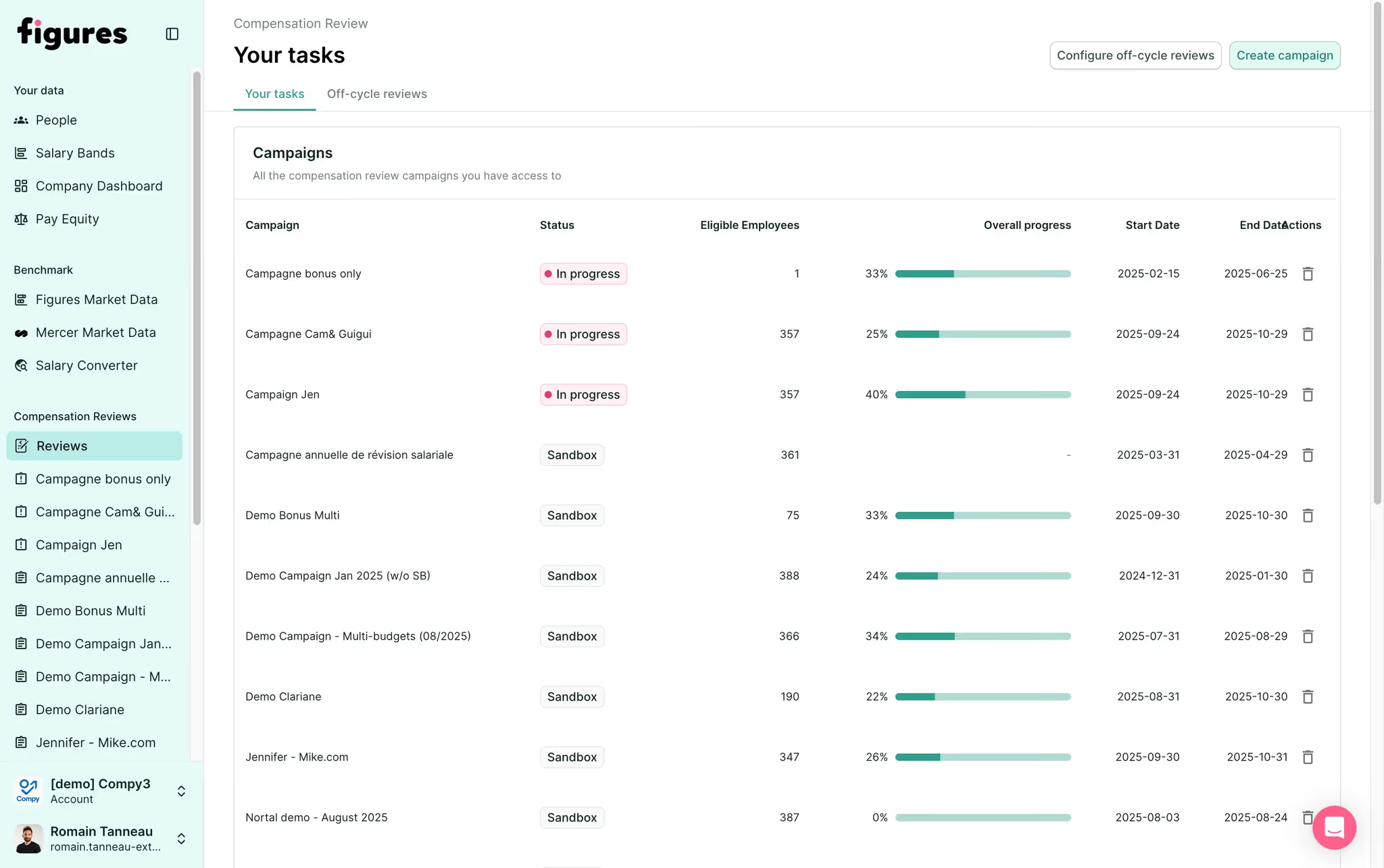
To avoid this, don’t let employee negotiation drive the conversation. Instead, decisions should be anchored in structured evaluation processes, with systems in place to calibrate results across departments. In short, similar inputs should lead to similar pay decisions, regardless of the employee, manager or team involved.
So, should companies stop salary negotiations altogether?
Some companies see negotiation as a key part of hiring, helping them compete for talent and fill difficult roles. But these companies will need to tread extremely carefully under the Pay Transparency Directive.
At Figures, we believe negotiation is inherently difficult to defend under the new rules. Pay decisions need to be based on fair, objective criteria — and how strongly someone argues their case is unlikely to meet that standard. While there may be rare cases where negotiation is reasonable, it must always be controlled and explainable.
From negotiation to structured compensation
Salary negotiation is unlikely to disappear entirely, but uncontrolled, ad hoc decisions are becoming less and less defensible as pay transparency obligations increase. As scrutiny rises, companies will need to ensure pay decisions are based on structured systems applied consistently across the organisation.
Tomorrow’s companies need the right tools to build robust salary structures and run effective pay equity analysis to ensure legal compliance. Only then can they confidently justify their pay decisions — which is no longer optional in 2026 and beyond.
Want to find out more? Sign up for a Figures demo to get started.

Summarize this article with AI
No time to read it all? Get a clear, structured, and actionable summary in one click.