Your compensation system might work great when everything happens as expected.
But what about when a manager says a key employee might leave? A recruiter wants to offer above the band? Or someone’s role has grown faster than the promotion cycle can keep up with?
Suddenly, the usual rules start to feel less useful than they did on paper.
Exceptions don’t mean your system has failed. But it can be useful to think of each one as a test: can you respond to the immediate problem without weakening your salary bands, creating an equity issue or making the next request harder to refuse?
A strong compensation system should keep these cases rare, and give you enough structure to assess, document and learn from the ones that remain.
What is an exception in compensation?
A genuine exception is a decision that sits outside your established rules, salary ranges or approval process. That might mean:
- Offering a candidate more than the maximum of the relevant salary band
- Approving an unusually large retention increase
- Departing from the normal criteria for progression
Timing alone does not make something exceptional. An off-cycle adjustment, pay equity correction or statutory increase may still follow a clear policy and established process.
In a well-designed compensation system, exceptions should be rare. When the same situation keeps coming up, the better answer is usually to update the framework rather than approving one-off departures again and again.
Unmanaged exceptions can cause problems including:
- Unexplained pay differences between comparable employees
- Confusion about how pay is determined
- Better outcomes for people who negotiate or escalate more forcefully
- Pay equity issues and legal risks under the EU Pay Transparency Directive
- Less confidence in the wider compensation system
A strong system should absorb most “exceptional” situations
Plenty of situations might feel exceptional when they land on your desk. But in reality, most are fairly predictable.
Companies regularly deal with retention risks, hard-to-fill roles, changing responsibilities, internal moves and sudden market pressure. Most of these should already have a place in the system.
For example, most companies have:
- Clear rules for off-cycle promotions
- Defined criteria for market adjustments
- Temporary allowances for expanded responsibilities
- Established processes for pay equity corrections
When salary bands are clear, benchmarks are reliable, job architecture is solid and review cycles are repeatable, there is much less need to improvise. Genuine exceptions stay rare, instead of gradually becoming the way pay decisions get made.
Four questions to ask before approving an exception
When an exception request comes in, it’s best to start by working out what’s actually happening. The situation may be genuinely unusual — or it might already be covered by a process or policy. It may also point to a wider problem in the way pay is structured. These four questions will help you work out what you’re dealing with.
- What problem are we trying to solve?
A manager may ask for a retention increase because someone is considering leaving. But the real issue could be slow progression, a change in role scope, poor management or something else that’s unrelated to compensation.
The same applies to hiring. A recruiter asking to go above the salary band may genuinely have found an exceptional candidate... Or the range may be outdated, the role may be levelled incorrectly, or the candidate may simply be overqualified.
- Does the existing framework already cover it?
In some cases, unusual timing might make a request feel exceptional. But off-cycle promotions, temporary allowances, market adjustments or pay equity corrections may already be covered by policy, and it’s always best to use the existing process if that’s the case.
It’s also worth checking how similar cases have been handled elsewhere in the business — comparable situations should lead to comparable decisions, after all. And, if the same request keeps coming up, it probably needs a formal place in the framework.
- Is the evidence strong enough to justify an exception?
A confident manager, a forceful employee or a tight deadline can make a request feel more convincing than it really is. It’s important to make sure you have the evidence to show why the usual process isn’t enough.
Exactly what that looks like will depend on the case, but it might include:
- The employee’s role scope and level
- Their position within the salary band
- Relevant market benchmarks
- Internal comparisons
- Performance or contribution
- Documented retention risk
- The availability of comparable candidates
Applying the same evidence standard each time ensures things like the seniority of the person asking, an employee’s negotiation skills or the perceived urgency of the request don’t have an undue impact on the outcome.
- What knock-on effects would it create?
No compensation decision exists in a vacuum — and you need to consider how it will impact the people around it before approving an exception. Start by looking at employees in comparable roles, levels and locations. Would they have a reasonable case for similar treatment? Could the decision create an unexplained pay difference, weaken the salary band or make future requests harder to assess consistently?
It’s also worth considering the behaviour the exception rewards. For example, while retention increases can be useful in preventing attrition, they do reward employees who threaten to leave over equally valuable colleagues who stay quiet.
That doesn’t necessarily mean making an exception isn’t the right call — but it’s worth considering the wider implications.
How a strong compensation system handles (genuine) exceptions
Once you’ve established that an exception is genuinely needed, the process you use should be clear and controlled. The following steps help keep the decision fair, consistent and connected to the wider compensation framework.
Decide when the exception process applies
Not every unusual request needs to go through the same level of scrutiny. Set clear triggers for when extra review is required, such as offers above the salary band, increases beyond a set threshold or decisions that skip the usual progression criteria. The process should identify when additional scrutiny is needed without deciding the outcome in advance.
Set approval authority and escalation thresholds
Exceptions often need input from people with a wider view of the compensation system. Managers should know who can approve different types of request and when HR, Compensation or senior leadership needs to step in. Higher-value or higher-risk cases may need more senior sign-off. Clear escalation rules also make it harder for influential leaders to push decisions through outside the agreed process.
Real-world example: GitLab
According to GitLab’s published compensation guidelines, promotion increases above 10% require extra justification and executive approval. The company’s Total Rewards team also reviews transfer compensation for internal equity before offers are approved.
Test the request against the full compensation framework
An exception still needs to make sense within the company’s wider approach to pay. To make sure it does, look at the relevant salary band, job level, market benchmarks, internal peers and previous comparable decisions. The outcome should also align with your compensation philosophy and market positioning.
“I’m very keen on procedural equity. How do you ensure that decisions are objective and go through a process that is the same for everyone?”
— Virgile Raingeard, CEO and co-founder of Figures
Choose the least disruptive response
Depending on the problem at hand, a permanent increase to base salary might not be the best answer. In some cases, a temporary allowance, one-off payment, accelerated role review or conditional retention bonus may solve the problem with fewer long-term consequences. Make sure you match the response to the reason for the exception, and be clear whether it is temporary, permanent or subject to review.
Important: Don’t bypass the system just because something is “urgent”
A candidate deadline or resignation threat can make it feel like you need a quick decision — but don’t fall into the trap of skipping process steps just because the situation is urgent. Even if you need to move quickly, make sure you follow the same standards for evidence, equity and sign-off.
Document the decision, precedent and review point
Good documentation makes it much easier to handle the next unusual case consistently. Record what was requested, why the standard process was not enough, what evidence supported the decision, who approved it and what equity checks were completed. Be explicit about whether the outcome creates a precedent or remains case-specific, and add a review date where the circumstances may change.
What repeated exceptions can tell you about your compensation system
One exception may be exactly that: an unusual case. But a pattern of similar requests is probably indicative of a wider issue. Tracking where exceptions happen, who requests them and why can help you to spot these patterns over time. The table below gives some examples of signals you might see and what they could mean.
If the same patterns keep appearing, that could be a signal to review the system itself. The right response may be a new process, an updated benchmark, a wider salary band or a change to your review cycle.
A strong system can handle exceptions without losing its logic
Even the best-laid compensation system can’t anticipate every situation. At some point, a case will come along that doesn’t fit neatly into the rules you’ve built.
Ironically, how you handle exceptions can tell you a lot about the strength of your system. Because even in exceptional cases, you should be able to explain why the decision makes sense, check it against your wider pay structure and understand what it means for employees in similar situations. Documenting how you got there means you’ll be able to handle the next case in the same way.
Figures helps teams bring those checks into the day-to-day compensation process, with salary bands, market data, internal equity checks and a clear decision trail across offers, raises and other pay decisions.
The goal isn’t a system with zero exceptions — that just isn’t realistic for most companies. Instead, you should aim to build a system strong enough to handle the genuine ones without letting them undermine the structure and processes you’ve created.
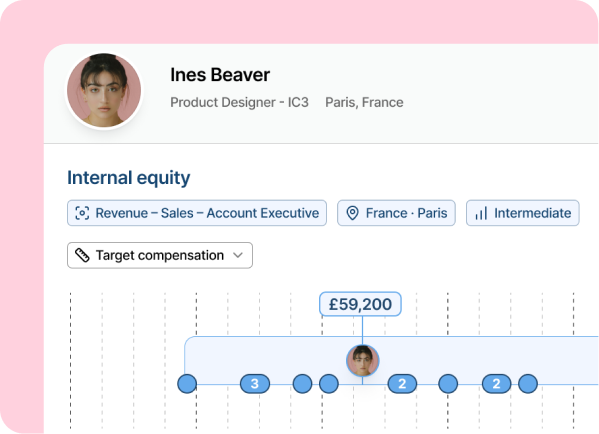
Exceptions piling up? We help you build salary bands solid enough to absorb them, and document the ones that remain.
Ask a demo