When companies choose to reward performance, employees in the same role might earn different salaries. And there’s nothing inherently wrong with this — as long as the differences are fair and based on objective criteria.
{{ ai }}
The real tension is how to differentiate pay based on performance without creating pay inequity. And, in this era of increasing pay transparency, that question is getting harder and harder to avoid.
Under the EU Pay Transparency Directive, employees will have the right to request information about how their pay compares to others doing the same work or work of equal value. Any unexplained pay gaps or discrepancies could expose structural weaknesses in your compensation process. So, is pay for performance even possible in this context?
Short answer: yes — but only if you follow a structured, repeatable process. This article explores the different ways performance-based systems can cause pay equity problems, and how to design a fair system that will stand up to scrutiny.
“Pay transparency will shine a light on companies’ practices and force them to justify their compensation decisions. There are new reporting obligations, but the biggest work will be to be ready for the potential flurry of questions that are going to come from candidates and employees that will put scrutiny on compensation processes and how fair and objective they are.” — Virgile Raingeard, CEO at Figures
Fair pay doesn’t mean paying everyone the same
Pay equity doesn’t mean paying everyone the same amount — even within the same role and level. It means equal pay for equal work or work of equal value.
In other words, it’s perfectly normal to have differences in pay based on things like location, tenure, job level and performance. What’s not acceptable are differences you’re unable to explain, based simply on manager preferences, employee negotiations or other factors that aren’t clearly related to the employee’s work.
“Paying for performance is more than okay as long as you’re strong in how you evaluate, fair and objective in how you evaluate performance, and you use the output to make compensation decisions.” —Virgile Raingeard, CEO at Figures
When pay for performance creates pay inequity
When you can consistently explain any pay gaps or differences — and those explanations are based on fair, gender-neutral criteria — you don’t have an issue. Problems arise when similar situations lead to different results depending on the employee, with no clear reason why. Here are a few examples of what that looks like in practice.
Problem #1: Managers decide increases case by case
Even in organisations with documented pay review rules, managers may be given some level of discretion over pay decisions. This might mean them adjusting increases on a case-by-case basis, based on various factors that may or may not be defensible.
When similar performance ratings produce different outcomes depending on individual circumstances, the link between performance and pay becomes difficult to trace. At that point, pay differences come from context rather than performance — which creates pay equity risk.
Problem #2: The same rating means different things to different managers
If every team uses the same performance rating scale, your process might look consistent on paper. But managers may still interpret that scale differently. For example, one might treat “exceeds expectations” as the standard for employees performing well, while another reserves it for truly exceptional work.
As a result, employees at the same performance level receive different ratings simply because of who reviewed them.
Problem #3: The person who asks gets more
Here’s a practice we’ve seen quite frequently through our work with clients: managers start the review process by asking employees what raise they think they deserve. If one employee argues their case confidently while another doesn’t negotiate at all, they may end up with different pay outcomes — even if their performance is comparable.
Over time, increases begin to reflect negotiation behaviour rather than performance — which can lead to some groups being rewarded more than others. The result? A significant (and avoidable) pay equity risk.
“Negotiation is not an objective, gender-neutral factor. On average — even if numbers differ — studies tend to show women negotiate less or get less than men. So any time you leave room open for negotiation, you create unfairness and a compliance risk.” — Virgile Raingeard, CEO at Figures
Problem #4: Ratings aren’t calibrated from team to team
Even the clearest performance rating scales are somewhat open to interpretation — and some managers are bound to rate more generously than others. The difference only becomes visible at the organisational level, where it’s possible to spot if one team’s ratings skew higher (or lower) than the rest.
If there’s no effort to calibrate ratings across different teams and departments, employees will end up with different performance ratings — and therefore different pay — depending on who their manager is.
Performance-based pay depends on consistent, structured processes
These examples have one thing in common: pay for performance in itself isn’t the issue. The problem is that pay outcomes depend on who makes the decision, which team the employee is in, or how well they advocate for themselves — none of which is really related to performance.
To make performance-based pay fair, you need to be sure the same situations will lead to similar outcomes. That requires clear rules and a strong, repeatable process. In practice, this comes down to a few concrete steps:
- Define work of equal value
Before linking performance to pay, make sure you’re comparing like with like. Otherwise, it’s impossible to tell whether a pay difference comes from performance or from differences in role scope.
To ensure fair comparisons, you should assess roles using factors like skills, effort, responsibility and working conditions to determine which positions are truly of equal value. Only once this baseline exists can performance-based increases be applied meaningfully.
Need support? Start with our guide to defining work of equal value.
- Standardise evaluation criteria
For performance-based pay to work, a rating has to represent the same level of performance across the organisation. That means you need to clearly define what each rating level looks like. If you’ve done this right, it shouldn’t matter which manager is assessing an employee — they should all come to the same rating based on observable outcomes and behaviours.
5 Figures tips for designing an effective performance rating scale
- Use an even number of levels to avoid “safe” middle ratings
- Define each rating clearly so managers apply the same standard
- Train managers with practical examples
- Calibrate ratings before linking them to pay
- Ensure employees understand what ratings mean
Learn more in our guide to designing fair performance rating scales.
- Define pay-setting rules
Consistent ratings alone aren’t enough — you also need clear rules for how they impact pay. Define in advance how each rating translates into pay increases, taking the employee’s position in the salary range into account.
You’ll know you’ve got it right when you can estimate increases before the compensation review cycle ends, and employees understand how performance influences their pay progression.
- Train managers on the process
Some managers may want to review employees more favourably than they really deserve, just because they have a good working relationship. Others might simply not be very good at applying written performance ratings to real-life behaviours. And many, many managers struggle with discussing performance with employees — especially when they need to provide negative feedback.
You need to provide thorough training to managers on how to apply your framework, with clear, real-life examples to help them understand. Managers should feel both confident in how your performance ratings and compensation review systems work, and empowered to calmly discuss these things with employees.
- Calibrate ratings before compensation decisions
Even with clear criteria, performance ratings tend to look different across teams. That’s because some managers rate more generously, while others are more conservative.
Calibration is the step where managers review outcomes together and align on what each rating level represents in practice. This ensures a rating reflects the same level of performance across the organisation before it translates into pay.
Our guide to performance review calibration is a good place to start if you’re new to this process.
- Run equity checks to stress-test your process
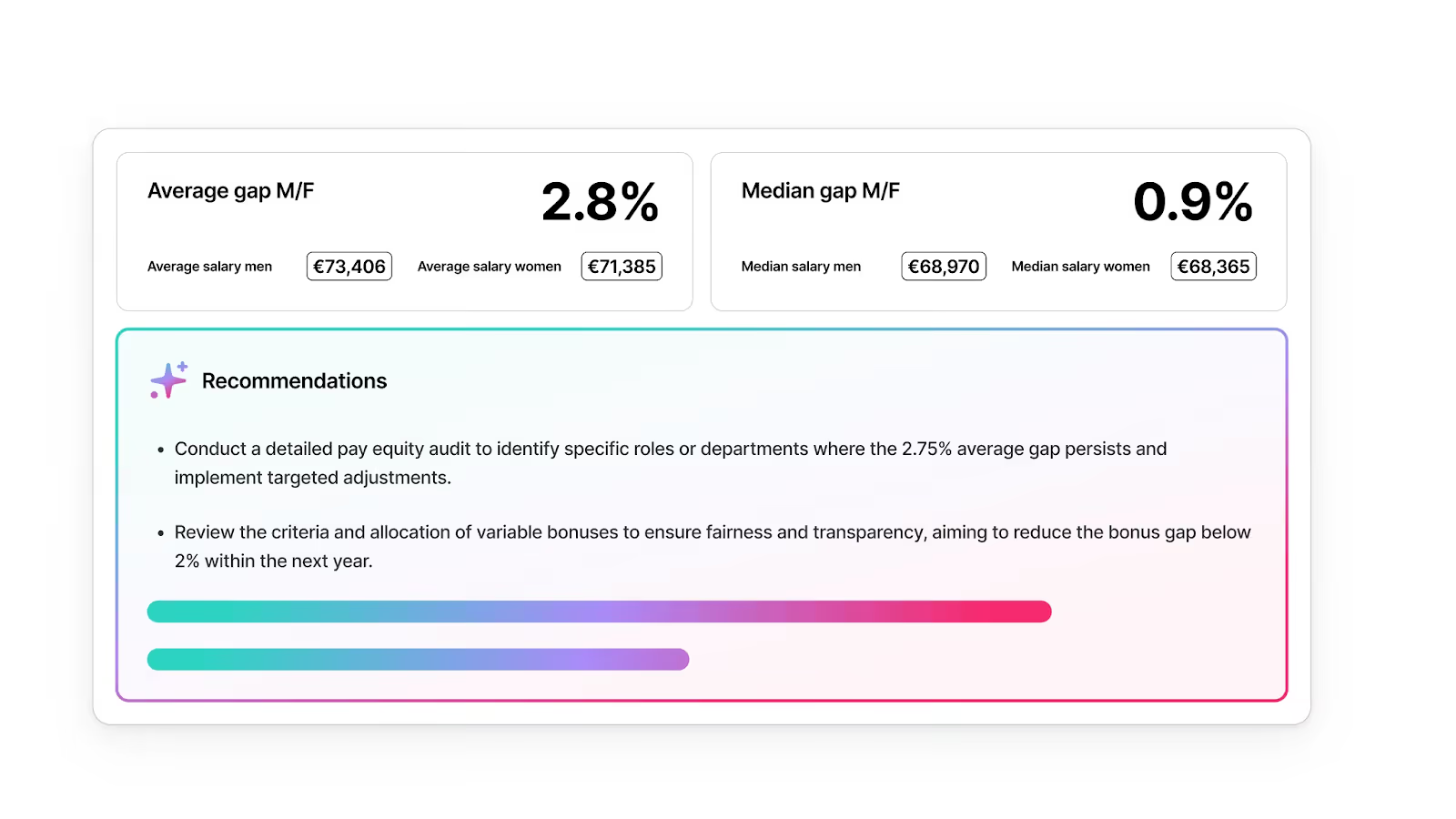
Finally, check whether your system has actually produced the fair outcomes you expect. In practice, this means:
- Comparing outcomes across comparable employees
- Documenting any exceptions and the reasons behind them
- Identifying pay gaps and assessing their root causes
If differences remain, you should be able to point to a documented factor — or adjust the outcome.
Checklist: Is your pay-for-performance model compatible with pay equity?
✅ Job architecture documented and used in reviews
✅ Written criteria defined for each rating level
✅ Pay matrix linking rating and range position to increases
✅ Ratings finalised before pay decisions
✅ Calibration meeting held before increases applied
✅ Exceptions require written justification
✅ Managers given guidance for explaining pay decisions
✅ Decisions recorded in a central source of truth
✅ Post-cycle pay equity analysis conducted
✅ Individual pay decisions traceable to documented factors
Why this matters in 2026
The EU Pay Transparency Directive doesn’t prohibit performance-based pay — but it does require employers to explain how pay and pay progression are determined.
Under the new rules, employees can ask what criteria influenced a pay increase and expect a clear answer. And if two people doing comparable work receive different outcomes, you need to point to objective, gender-neutral factors rather than informal judgement or negotiation.
The challenge is making sure every pay decision is documented and explainable in practice. Organisations with structured, consistent systems in place will handle this easily, while those relying on ad-hoc decisions and manager discretion will struggle.
What the Pay Transparency Directive says about performance-based pay:
“The application of the principle of equal pay should be enhanced by eliminating direct and indirect pay discrimination. This does not preclude employers from paying workers performing the same work or work of equal value differently on the basis of objective, gender-neutral and bias-free criteria, such as performance and competence.”
Translation:
Differences in pay are allowed — as long as they’re justified by clear and fair criteria.
Performance-based pay in the pay transparency era
To sum up, yes — performance-based pay is compatible with pay equity. But only if it’s backed up by a clear, consistent process. As transparency requirements grow, organisations will need to be sure they can confidently explain every pay decision. That doesn’t mean employees in the same role need to earn the same — but any difference does need to be explainable and defensible.
In this context, employers will need the right tools to effectively document pay decisions and create a historical record that stands up to scrutiny. Figures helps bring together market benchmarks, salary bands, structured compensation reviews and pay-equity analysis, giving HR teams and compensation leaders a structured way to defend and explain every pay decision in a way that’s compliant, equitable and fair.
Want a clearer view of how your pay decisions hold up? Learn how Figures supports pay equity and explainable compensation.

Summarize this article with AI
No time to read it all? Get a clear, structured, and actionable summary in one click.