Key points:
- Pay equity means equal pay for equal value, not identical jobs: It ensures fair compensation across all protected characteristics (gender, race, age, disability), comparing roles that contribute similar value even when responsibilities differ.
- UK law sets the floor, but the EU directive raises the bar: The Equality Act 2010 prohibits discrimination, but the June 2026 EU Pay Transparency Directive requires detailed gap reporting, salary ranges in job ads, and action plans for gaps exceeding 5%.
- 82% of companies have gaps too wide for 2026 regulations: Most organisations joining Figures exceed the 5% threshold that triggers mandatory audits and remediation plans under incoming transparency rules.
- Manual analysis in Excel creates outdated, error-prone results: By the time spreadsheet-based pay equity audits are complete, promotions and hires have already changed the data, leaving you perpetually behind.
2026 has arrived! You’re probably already hearing mutterings around pay equity, and it probably feels like one more compliance box to tick… Especially with the EU Pay Transparency Directive looming in June. But it would be foolish to think of pay equity solely as a requirement, especially given the impact it can have on your company.
Because when employees know they're paid fairly for their contributions, regardless of who they are or where they come from, they stay longer, work harder, and recommend you to others. The opposite? A revolving door of talent and a reputation that makes hiring feel like pushing water uphill.
If you want to build a compensation structure that’s actually fair, you’re in the right place. This guide breaks down what pay equity actually means, how UK law shapes your obligations, and how to turn a complex audit into a manageable process. Better yet, we'll show you how the right tools can transform this from a headache into a competitive advantage.
So, let's make fairness measurable.
{{ ai }}
What is pay equity?
Pay equity is “equal pay for work of equal value.” It ensures employees in similar roles – or contributing equally to the organisation – receive the same compensation, regardless of gender, race, age, disability, or other protected characteristics. This is what makes pay equity different from equal pay.
Notice we said "equal value," not "identical jobs." A software engineer and a project manager might have completely different job titles and responsibilities, but if their roles contribute similar value to the business, pay equity principles apply.
Here's what pay equity covers:
- Base salary.
- Bonuses and performance pay.
- Benefits packages.
- Pension contributions.
- Any other perks tied to employment.
How pay equity differs from the gender pay gap
Pay equity encompasses all protected characteristics (race, sexual orientation, age, etc.), and compares roles that may appear different on paper but provide similar value to the organization.
The gender pay gap, by contrast, is an average figure. It's the difference in median earnings between all men and all women across your entire organisation. A company can have a gender pay gap (showing systemic issues) while still complying with equal pay law (if individuals in like roles are paid fairly).
Why is pay equity important?
"Because it's the law" is a good place to start.
Legal compliance matters. The Equality Act 2010 prohibits pay discrimination, and tribunals aren't cheap. Companies lose an average of £10,000 to £50,000 per case, and that’s before you factor in legal fees and reputational damage.
Those last two words are important because a poor reputation often results in talent loss. Because pay equity directly relates to talent retention and acquisition.
In a world where employees compare notes on Glassdoor and Slack channels, unfair pay doesn't stay secret for long. 82% of companies joining Figures have pay gaps too high for 2026 regulations. When high performers discover they're underpaid relative to peers, they leave. And they tell others why.
Pay equity also connects to social responsibility. ESG (Environmental, Social, Governance) criteria now influence investor decisions, client relationships, and your ability to attract top talent. Fair pay is a measurable, credible proof point for your S in ESG.
Finally, there's the moral side. Fair compensation for fair work is simply the right thing to do.
When are pay differences justified?
Pay equity doesn't mean everyone gets paid exactly the same. That would be neither fair nor practical.
Legitimate reasons for pay differences include:
- Experience and tenure: Someone with 10 years in the role typically earns more than someone with two years.
- Performance: Documented, consistent performance ratings can justify higher pay.
- Location: Cost of living varies. London salaries differ from Manchester for good reason.
- Market forces: Specialised skills in short supply command premium rates.
- Qualifications: Advanced degrees or certifications that add measurable value.
The question isn't "do differences exist?" It's "can you explain and defend them with data?"
What laws govern pay equity in the UK?
Understanding the legal framework helps you know where the lines are and why staying ahead of them matters.
The Equality Act 2010
This is your primary reference point. The Equality Act 2010 consolidates previous anti-discrimination laws and prohibits pay discrimination based on protected characteristics:
- Gender
- Race
- Disability
- Age
- Sexual orientation
- Religion or belief
- Pregnancy and maternity
- Gender reassignment
- Marriage and civil partnership
The Act specifically requires equal pay for equal work or work of equal value. If someone believes they're being paid less than a colleague of a different sex doing comparable work, they can bring a claim to an employment tribunal.
The EHRC Code of Practice
The Equality and Human Rights Commission (EHRC) publishes a statutory code of practice that serves as the "rulebook" for equal pay. It provides practical guidance on:
- Conducting equal pay audits
- Identifying work of equal value
- Defending pay differences with objective justification
- Avoiding common pitfalls
Employment tribunals refer to this code when making decisions. Following it isn't legally mandatory, but ignoring it can strengthen a claimant's case against you.
The looming giant: EU Pay Transparency Directive
Here's where things get interesting.
The EU Pay Transparency Directive was adopted in 2023 and requires full implementation by June 7, 2026. Even though the UK has left the EU, this matters if you:
- Operate subsidiaries or branches in EU member states.
- Employ workers based in the EU.
- Want to stay competitive with European peers.
The directive introduces requirements that go beyond UK law:
- Pay gap reporting by worker category: Companies with 100+ employees must report gender pay gaps broken down by job categories, not just organisation-wide averages.
- Salary range disclosure: Job advertisements must include salary ranges or starting salaries before candidates reach the interview stage.
- Employee right to information: Workers can request details about their pay level and how it compares to colleagues doing equal work.
- Action plans for gaps exceeding 5%: If your gender pay gap exceeds 5% within a worker category, you must conduct a pay audit and create an action plan showing how you'll close it.
Now, you may be wondering what the EU directive has to do with UK companies. Well, the job market is increasingly competitive, and with the rise of remote work, there are more opportunities beyond the borders for UK workers than ever before.
If your workers start seeing that the grass is greener on the other side of the channel, you might have to shake up how you look at pay equity.
🤔 Under the EU directive, if you’ve got a gap exceeding 5%, employees don’t need to prove they’re being underpaid. Instead, it’s the companies that need to prove that those gaps are justified. If they can’t do that, they’ll have to undergo joint pay assessment meetings and develop a plan to close those gaps and prevent them from happening again.
Understanding how pay equity is achieved
Pay equity is a continuous cycle: analyse, identify, fix, monitor, repeat. Here's the streamlined version of how it works:
Step 1: Data analysis and grouping
Group employees performing "equal work" or "work of equal value." This means looking beyond job titles to actual responsibilities, required skills, and contributions to the business.
Pull your pay data and organise it by:
- Job function or role.
- Gender and other demographics.
- Seniority level.
- Performance ratings.
- Location.
Step 2: Identifying gaps
Calculate two types of gaps:
- Unadjusted gaps: The raw pay difference between groups with no context applied. If women earn £35,000 on average and men earn £40,000, that's a 12.5% unadjusted gap.
- Adjusted gaps: The difference after accounting for legitimate factors like experience, performance, and location. This is where discrimination shows up. If someone's paid less than peers in identical circumstances, that's a red flag.
Look for patterns like:
- Glass ceilings (certain groups capped at lower levels).
- Pay quartiles (disproportionate representation in lowest-paid roles).
- Unexplained differences within job categories.
Step 3: Remediation
Create a budget to close unjustified gaps. You don't have to fix everything overnight, as regulators accept phased approaches if you have a clear plan and timeline.
One rule is non-negotiable: you cannot reduce anyone's pay to close gaps. Adjustments only go upward.
Step 4: Pay transparency
Share salary bands and your compensation methodology with employees. Pay transparency builds trust and makes unfairness visible before it becomes a tribunal claim.
The EU directive will require this by 2026, but companies doing it now gain a competitive advantage in talent markets. That competitive advantage also applies to UK companies, too… As long as you do it right.
That means no meaningless statements about offering competitive pay packages. Jobseekers want to know exactly how much they’ll be paid and what opportunities are available to advance in a company. Include that information, and you’ll be miles ahead of your competitors who won’t.
How to achieve pay equity using software
We know HR. And for that reason, we also know that many HR teams, both in the UK and in the EU, manage compensation through Excel.
Manual pay equity analysis means version control nightmares, formula errors that compound across tabs, and data that's outdated the moment someone gets promoted. By the time you finish your analysis, the organisation has already changed. You’re stuck in Exhell.
💡 That's where dedicated pay equity software makes the difference.
The Figures approach to pay equity
Figures combines pay equity analysis with real-time market benchmarking, powered by 3.5 million+ data points from our partnership with Mercer. This means exceptional data accuracy, particularly for tech, SaaS, consulting, and financial services sectors where Mercer's coverage is strongest.
Implementation takes 2-4 weeks, not months. You'll have 3-4 calls with our Customer Success team to ensure a smooth onboarding process, then you're up and running.
What you get:
- Continuous monitoring: Track gaps in real-time as your workforce changes, not just during annual audits
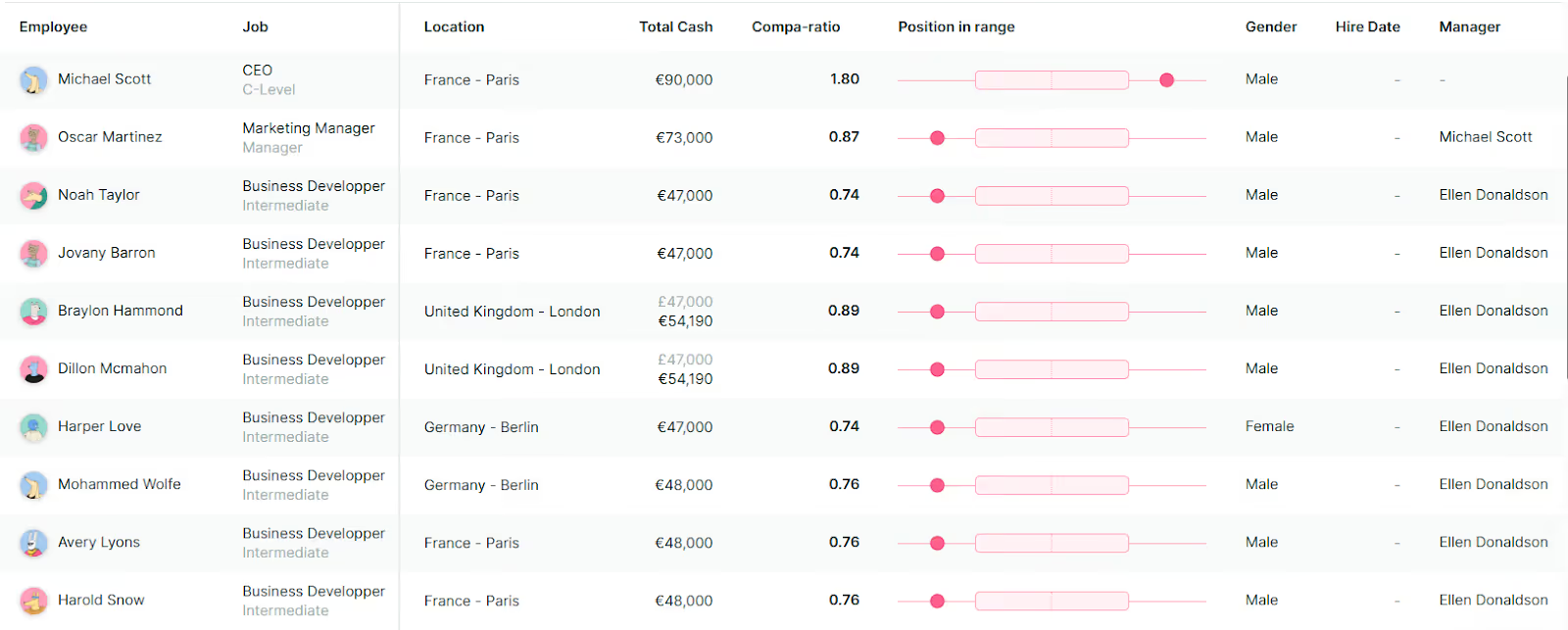
- Visual breakdowns: Identify patterns like glass ceilings, pay quartiles, and top earner distribution across departments, seniority levels, and demographics at a glance
- Compliance-ready reports: Pre-filled templates aligned with UK and EU requirements, including employee information letters required under the 2026 directive
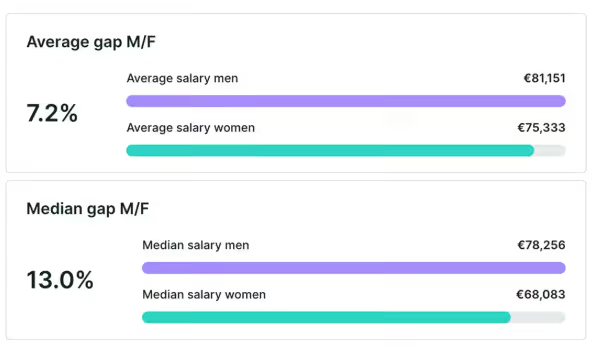
- Gap detection: Identify gaps above 5% at a glance, directly from the Figures dashboard
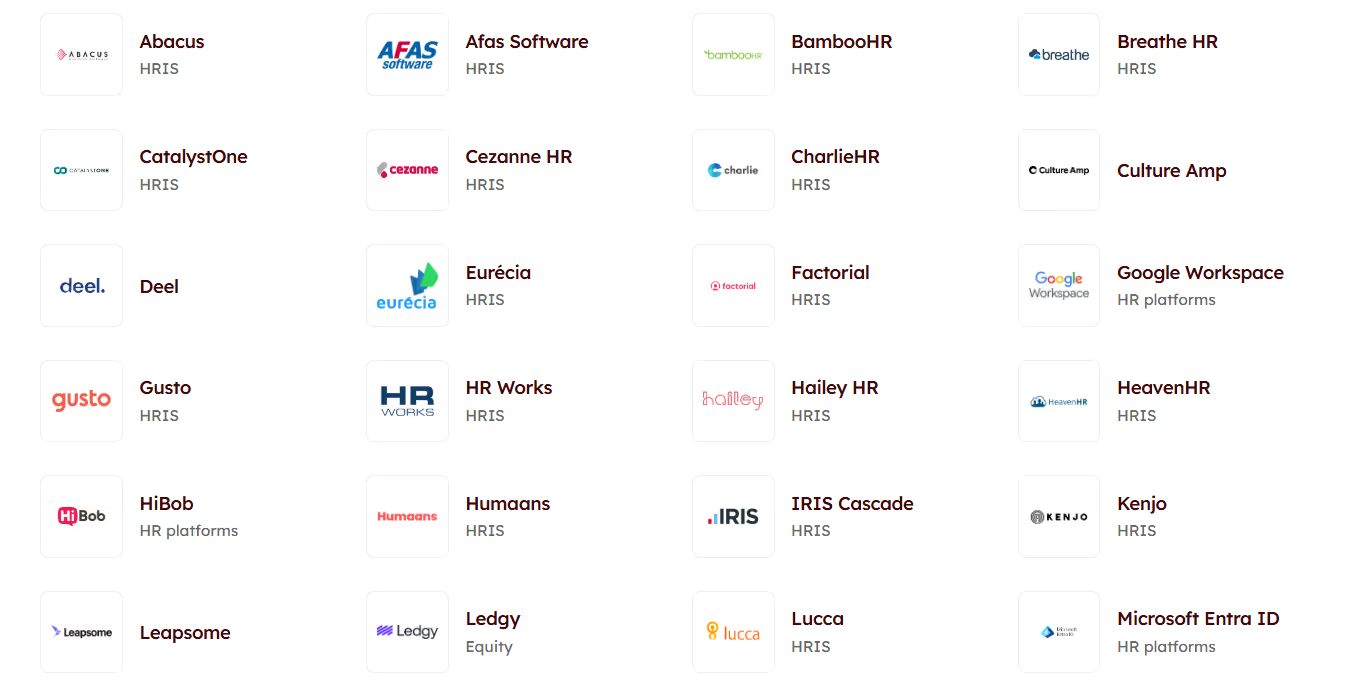
- Direct integration with HRIS: Figures integrates with 50+ HRIS systems. You can pull all of your data directly from your HRIS each month to ensure you only work with the most recent figures.
Security matters when handling sensitive pay data
Figures maintains ISO 27001 and SOC 2 Type 2 certifications, with GDPR-compliant data handling built in. Your compensation data stays encrypted and stored exclusively in European cloud infrastructure.
✨ With Figures, UK and European companies can navigate the tightening transparency requirements and build sustainable fairness into how they manage compensation.
Your next steps towards pay equity
The best way to view pay equity is as an ongoing commitment that turns compliance panic into strategic retention.
However, you can't fix what you can't see. Start with a clear view of where you stand today: your unadjusted and adjusted pay gaps, which departments show disparities, and whether you can justify every significant difference with data.
The June 2026 deadline is closer than you think, and remediation takes time.
Ready to see where you stand? Book a demo and discover how Figures turns complex pay equity analysis into clear, actionable insights.

Summarize this article with AI
No time to read it all? Get a clear, structured, and actionable summary in one click.