The EU Pay Transparency Directive sets new standards for pay transparency across Europe, but the practical rules depend on how each Member State transposes it into national law.
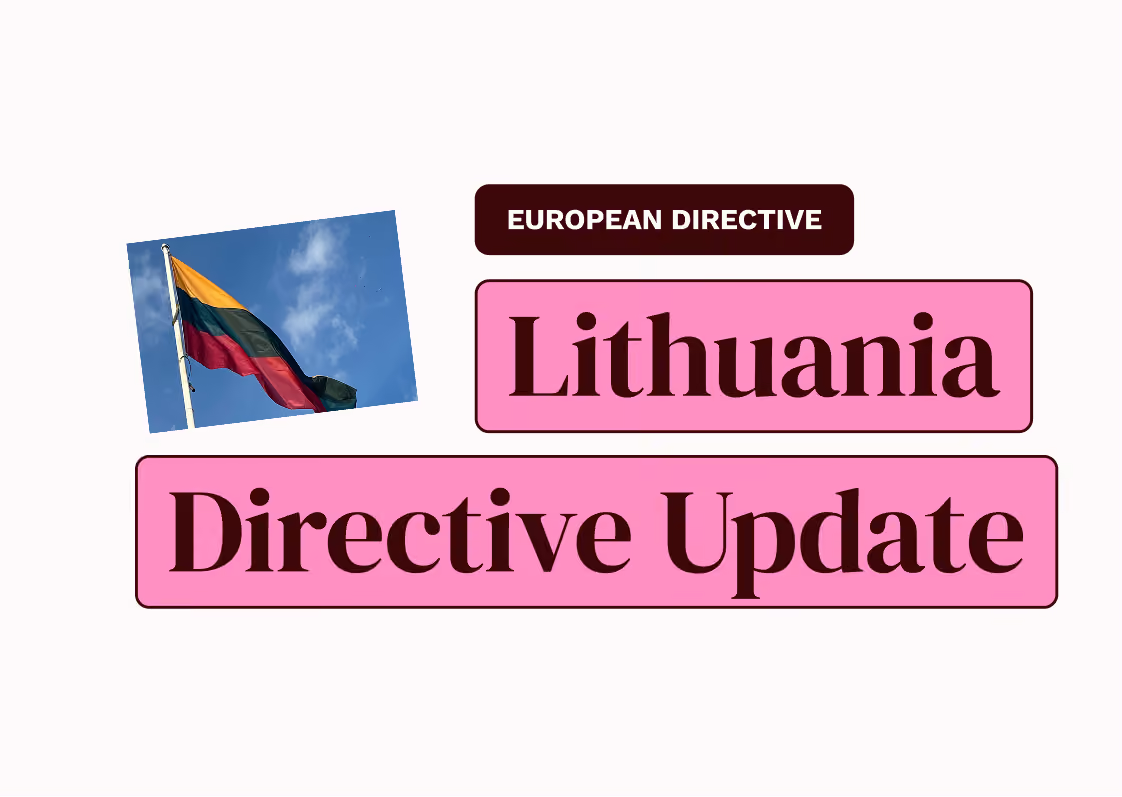
Lithuania has now transposed the Directive, turning those broad requirements into concrete rules employers need to follow. Lithuania is one of a small group of Member States, alongside Italy, Slovakia and Malta, that completed transposition legislation around the original 7 June 2026 deadline, while most Member States have missed it.
Below, we break down what Lithuania's law says, where it adds country-specific detail, and what employers should pay close attention to when preparing.
Transposition status in Lithuania at a glance
Lithuania's pay transparency law in detail
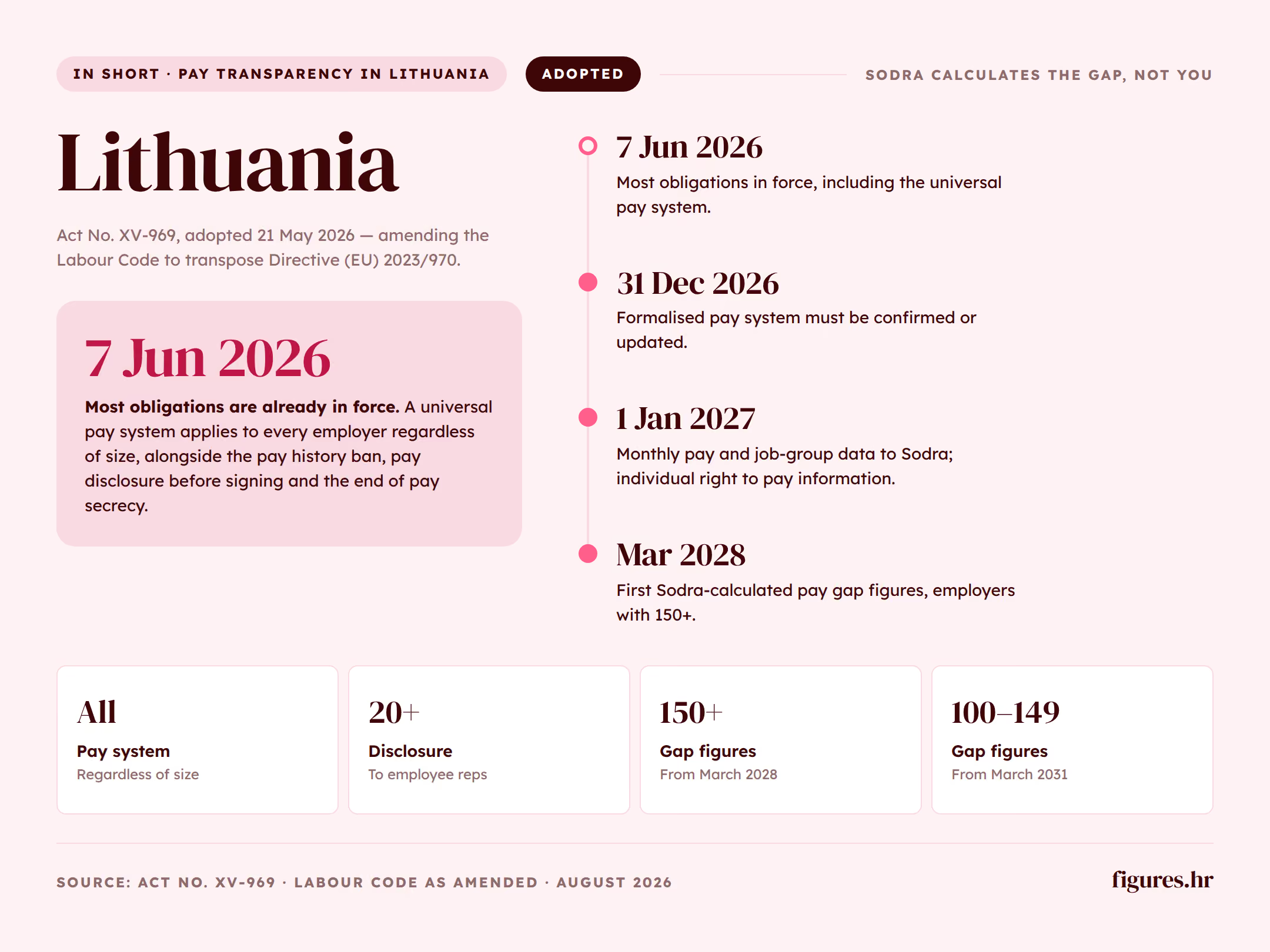
Lithuania has transposed the Pay Transparency Directive by amending its Labour Code through Act No. XV-969. The law applies to all employers regardless of size for the core pay-system obligation, while reporting duties to Sodra and other documentation requirements scale by headcount.
Compensation covers full recovery of unpaid pay and in-kind payments, material and non-material damages, and lost work-related opportunities, with no EU-level cap. Equal-pay breaches are also treated like a late wage payment, triggering automatic statutory penalty interest during ongoing employment, or liquidated damages equal to a month's average pay per month of delay on termination. Courts may also depart from standard litigation-cost allocation rules in pay-discrimination cases. Specific administrative fine amounts are not yet set.
Analysis: What Lithuania's law means in practice
Employers in Lithuania now need to adapt their pay practices to meet the new rules. Four areas deserve especially close attention: the universal pay-system obligation, the works-council disclosure threshold, the centralized reporting model, and the financial consequences of a breach.
1. Every employer must formalize a pay system, regardless of size
The Directive lets documentation duties scale with headcount in most Member States. Lithuania goes further: every employer, no matter how small, must adopt and publish a formal pay system that groups roles using the same four objective, gender-neutral criteria — skills (including soft skills), effort, responsibility and working conditions.
The only size-based relief is narrow: employers with fewer than 50 employees don't have to document the pay-increase criteria and procedure within that system, though they still need the rest of it in place. For most employers, this means the pay-system build-out that other countries treat as a mid-size or large-employer obligation is, in Lithuania, a day-one requirement for everyone.
2. A low, 20-employee threshold triggers pay disclosure well before the main reporting regime starts
Ahead of the individual right to information taking effect in 2027, Lithuania already requires employers with more than 20 employees to give worker councils or unions anonymized average-pay-by-group-and-gender data on request, at least once a year. This is a lower threshold and an earlier trigger than the Directive's own reporting thresholds, which start at 100 employees.
In practice, mid-sized employers that might not expect to be in scope of pay transparency obligations for another year or two are already exposed to disclosure requests today.
3. Sodra, not the employer, calculates the pay gap: but the first figures arrive later than the Directive's own dates
Lithuania uses a distinctive centralized-calculation model. From 1 January 2027, employers submit monthly wage, working-time and position-group data to the state social insurance fund (Sodra), which computes the gender pay gap figures itself, rather than employers calculating and reporting their own numbers, as in most other Member States.
This shifts calculation effort away from employers, but it comes with a trade-off: the first data delivery for both the 150–249 and 250+ employee bands is deferred to around March 2028, roughly nine months after the Directive's own June 2027 deadline, and the 100–149 band is deferred to around March 2031. Employers should not assume the deferred delivery dates change the underlying data-quality expectations, the monthly feed to Sodra still starts in January 2027.
4. The financial and procedural consequences of a breach are unusually strong
Lithuania treats an equal-pay breach, mutatis mutandis, like a late wage payment: it triggers the same automatic statutory penalty interest during ongoing employment, or liquidated damages equal to a month's average pay for every month of delay if the employment has ended. On top of that, compensation is uncapped and can include material and non-material damages and lost work-related opportunities, and courts have discretion to depart from the standard cost-allocation rules in litigation based on how each party behaved.
Specific administrative fine amounts for failures like not reporting or not running a Joint Pay Assessment are not yet set — they likely sit in the Code of Administrative Offences or forthcoming secondary legislation. But the civil-law consequences already in force make the cost of getting equal pay wrong significant.
Key preparation steps for employers in Lithuania
Several of Lithuania's obligations are already in force, with more phasing in through 2027. If you have not yet started preparing, focus on these steps first:
- Formalize (or confirm and update, by 31 December 2026) a pay system that groups every role using the four objective criteria: skills (including soft skills), effort, responsibility and working conditions.
- If you have 50 or more employees, document your pay-increase criteria and procedure within that pay system as well.
- Remove salary-history questions from your hiring process, and disclose applicable collective-agreement pay terms before signing any employment contract.
- Review contracts and practices to remove any pay-secrecy clauses, pay can never be treated as confidential when disclosed to assert equal pay.
- If you have more than 20 employees, prepare to respond to work-council or union requests for anonymized average pay by group and gender, this obligation is already active.
- Build a data pipeline to submit monthly wage, working-time and position-group data to Sodra starting 1 January 2027.
- Prepare a process to handle individual employee pay-information requests from 1 January 2027, with a one-month response window.
- Watch for the Minister of Social Security and Labour's implementing regulations, due 31 July 2026, which will fix the detailed reporting and Joint Pay Assessment procedures.
- Document your pay-setting rationale carefully, equal-pay breaches carry uncapped compensation plus wage-arrears-style penalty interest or liquidated damages.
Learn more about the Pay Transparency Directive
Pay transparency preparation will look different from one country to the next. For employers operating across several markets, Lithuania is one part of a wider country-by-country compliance picture.
To see how other countries are handling pay transparency, head to our full guide.
Ready for the Directive? We help you build a compensation policy you can explain to your teams, your candidates, and regulators.
Ask a demo