Key points:
- Retention bonuses work short-term, not long-term: They're effective for specific events like mergers or restructures, but they delay departures rather than prevent them.
- The bonus cliff is a real risk: Employees often leave shortly after a lump sum pays out. Staggered instalments reduce this significantly.
- 88% of organisations don't measure effectiveness: Most retention bonus programmes run on faith, with no data on whether they actually worked.
- Bonuses treat the symptom: Proactive benchmarking, salary bands, and regular compensation reviews fix the root cause.
We all know the panic when a critical worker starts hinting that they’re restless and might be looking for greener pastures elsewhere. The costs of hiring someone with their expertise would be astronomical, so you need a strategy to keep them settled at your business. Like a retention bonus.
It's one of the most common tools in the compensation playbook — and it's easy to see why. According to CIPD's 2024 Resourcing and Talent Planning report, 56% of organisations now say talent is more difficult to retain than it was the previous year. When someone valuable is at flight risk, offering a financial incentive to stay feels like a logical fix. Problem solved.
Except it's rarely that simple.
Spending £10,000 or more to keep someone for six months is a significant budget decision; one that deserves a lot more scrutiny than it usually gets.
This guide walks you through how retention bonuses are calculated, structured, and formalised. More importantly, it answers the question that actually matters when you're making the business case: do they actually reduce turnover?
{{ ai }}
What is a retention bonus?
A retention bonus is a one-off financial incentive tied to a service agreement, offered to keep a specific employee for a defined period.
It's worth being clear on what it isn't, because the terms get mixed up constantly:
- Performance bonus: rewards past work already delivered.
- Pay rise: a permanent increase to base salary.
- Retention bonus: a time-limited payment conditional on staying.
Now that’s out of the way, let’s look at some situations where retention bonuses are used:
- Mergers and acquisitions: keeping key people stable through uncertain transitions.
- Organisational restructuring: holding critical roles while the business reorganises.
- Competitive talent defence: protecting employees who are actively being headhunted.
- Smooth transitions: Critical employees are encouraged to stay on for a transition period, providing a smoother handover to new employees coming into the role.
For an actual example of what retention bonuses look like in practice, let’s look at an example in the public sector. Currently, the UK government is offering £3,000–£6,000 targeted retention payments to chemistry, computing, maths, and physics teachers in some state-funded schools.
Why? Because there’s a scarcity of qualified teachers in those subjects… though dealing with Generation Alpha is probably quite difficult, too.
Getting back to it, retention bonuses are rarely something you can just make up on the spot. You’ve got to consider what an acceptable bonus looks like, and what you can squeeze out of your budget. So, let’s show you how you might do that.
How retention bonuses are calculated and structured
So you've decided a retention bonus is the right move. Now comes the practical question: how much, paid how, and to whom? Let’s get started with the most pressing one: how much should you actually pay?
How much should a retention bonus be?
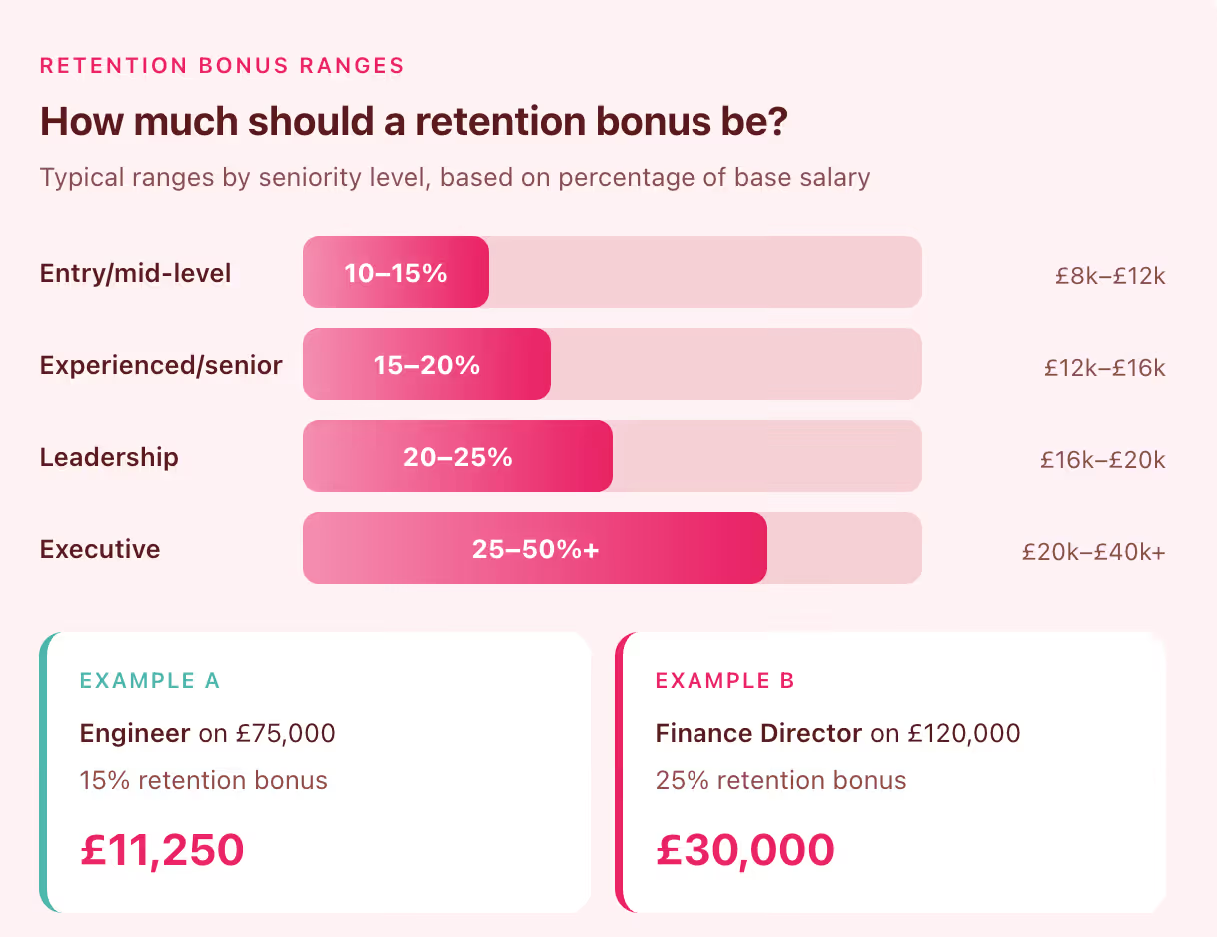
The commonly cited range is 10–25% of base salary, though executive-level bonuses can exceed 50% in exceptional circumstances. Here's what that looks like in practice:
- A £75,000 engineer at 15% receives £11,250.
- A £120,000 finance director at 25% receives £30,000.
To take the guesswork out of it, here's a breakdown by seniority:
That 10–25% range sounds manageable – until you realise it's a £12,000 margin of error on an £80,000 salary. This is exactly where compensation benchmarking data filtered by role, level, and geography becomes valuable. Guessing is expensive and can result in some PO’d employees who feel like you’re lowballing them.
Lump sum or instalments?
While lump sum or instalment payments are much more common, there’s actually a third option.
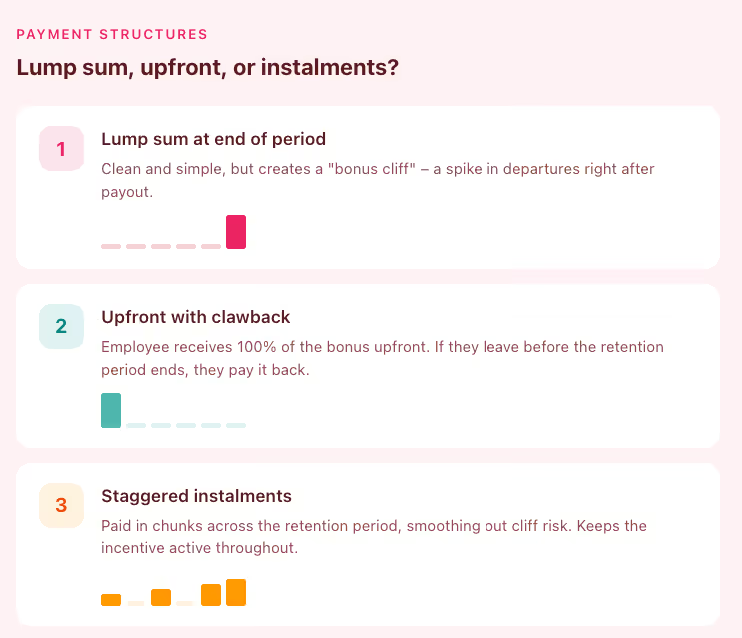
- Lump sum at end of retention period: clean and simple, but creates a "bonus cliff" (more on that shortly).
- Upfront payment with clawback: employee gets the money early, but must repay it if they leave before the period ends. One commonly seen structure: 25% upfront, 75% after 18 months.
- Staggered instalments: paid in chunks across the retention period, which smooths out the cliff risk considerably.
‼️ Let’s talk about the bonus cliff. It's the spike in departures that happens right after a lump sum pays out. Employees wait, collect, and leave. Instalments reduce this risk by keeping the incentive active throughout the full retention period.
That being said, instalments need to make sense. If you’re expecting an employee to stay on over 18 months, but you’re offering £6,000, giving a small chunk every month isn’t going to make your employee feel valued. Instead, consider giving £3,000 at the end of six months, with the other half being paid at the end of the agreed period.
Who should be eligible?
Retention bonuses typically go to employees who are hardest to replace or most critical during a transition – think senior technical roles, people with specialist expertise or key client relationships, and project leads whose departure would create genuine bottlenecks.
The operative word here is targeted. A retention bonus offered to everyone is less a bonus and more an expensive salary round. Be smart about it.
Retention bonus agreements, clawbacks, and tax treatment
A retention bonus without a properly structured agreement is just a handshake with a price tag. Before any money changes hands, you need documentation that protects both the business and the employee. Plus, a few design choices that will determine whether the whole thing actually holds up.
What goes into a retention bonus agreement?
A solid retention bonus agreement should cover, at a minimum:
- Retention period: typically 6–18 months, clearly defined with start and end dates.
- Vesting date: the specific date the bonus becomes payable.
- Bonus amount: the exact figure, with no ambiguity.
- Employment status requirements: what constitutes "active employment" for the purposes of the agreement.
- Confidentiality obligations: whether the employee is expected to keep the arrangement private.
- Clawback provisions: the repayment terms if the employee leaves before the period ends.
🤔 Confidentiality obligations can make sense for a lot of businesses. If employees learn that one employee is getting a huge bonus just so they don’t leave, it can destroy morale. Or worse, employees threaten to leave on the basis that it might result in a retention bonus.
If you’re going for a fully transparent process, make sure your managers are prepared for any questions from their teams. Some employees are going to feel hard done by, so managers need to be able to answer at the drop of a hat why only one employee received that bonus. Transparency can be tough, but it’s a noble goal regardless!
How to design a clawback that's actually fair
Clapback provisions require their own section; mostly, because it’s what can cause most issues.
A clawback clause says that if you leave before the retention period ends, you pay back some or all of the bonus. In theory, it's a sensible safeguard. In practice, full-repayment clauses – where the employee owes 100% back regardless of when they leave – tend to feel punitive and can create real enforcement challenges.
Prorated clawbacks are fairer and more defensible. Here's an example structure that works well in practice:
This approach rewards employees who stay longer, reduces resentment, and holds up better if the clause is ever challenged.
‼️ Beware "sole discretion" language that gives the company unilateral power over whether the bonus actually pays out. It creates serious perception problems among employees – and compliance risk if it's ever questioned. If the criteria for receiving the bonus aren't clearly defined upfront, you've already undermined the whole point of offering it.
How retention bonuses are taxed in the UK
Retention bonuses count as earnings.
That means employers must add them to the employee's other earnings for the relevant pay period and deduct PAYE tax and Class 1 National Insurance as normal, which is the exact same treatment as regular salary. There's no special rate or favourable tax status, no matter how much the employee wishes they were exempt.
🤔 It's worth flagging this early in your planning, because a £15,000 bonus looks different to an employee once tax is applied. Being upfront about the net figure helps manage expectations and avoids an awkward conversation after the fact.
What the EU Pay Transparency Directive means for retention bonuses
The EU Pay Transparency Directive comes into force this year, though reporting starts in 2027. But that doesn’t mean that you shouldn’t have a strong, defensible record on explainable pay structures. And guess what? That includes bonuses.
Employers will need to be able to show the criteria behind pay decisions, including why certain employees received retention payments and others didn't. A bonus quietly handed to one person with no documented rationale could lead to trouble down the line.
💡 The Directive applies to UK companies that have EU-based employees – so even post-Brexit, it's not something UK HR teams can ignore entirely. Even if you don’t have current EU employees, if you want to hire from the continent, you’ll need to get up to speed with EU regulations.
The evidence on whether retention bonuses reduce turnover
This is the question the whole article has been building toward. And the honest answer is: it depends on what you're trying to achieve.
The short-term case: retention bonuses do work
For event-specific, time-bound situations, retention bonuses can be effective. Keeping a team stable through an acquisition close, holding a critical project lead through a system migration, protecting specialist knowledge during a restructure – all areas where retention bonuses can harbour results.
As long as the business case is straightforward and the terms are set in stone, of course. But when you start looking at the long-term? In the words of Run DMC, it’s tricky…
The long-term case: the evidence gets shaky
You need to understand that the bonus cliff we mentioned earlier is not a documented pattern. COPC, which tracks this across its client ecosystem, describes it plainly: agents wait for the bonus, then resign almost immediately on payout.
In other words: you've paid to delay a departure, not prevent one.
What makes this particularly uncomfortable is the measurement gap sitting underneath it. According to WorldatWork, only 12% of organisations using bonus programmes actually measure their effectiveness. The majority of companies spending significant budget on retention bonuses have no idea whether the spend worked.
‼️ That means 88% of organisations are essentially running retention bonus programmes on faith.
Why bonuses treat the symptom, not the cause
Retention bonuses are a financial intervention. But most of the reasons employees leave aren't primarily financial.
Career development, management quality, lack of progression clarity, and work-life balance consistently rank alongside pay as attrition drivers. A one-off payment doesn’t magically stop those issues from existing.
The fact is, any employee who leaves after they’ve received their retention bonus isn’t disloyal. They just never had their issues adequately solved.
This doesn't mean retention bonuses are the wrong call – it means they work best when the underlying compensation structure is already sound, and you're solving for a specific, temporary risk. When they're used as a substitute for addressing root causes, the bonus cliff is almost inevitable.
Key benefits and drawbacks of retention bonuses for employers
Now that we’ve gone over all of that, let’s give you a quick rundown of the good and bad. We’re considerate of skimmers.
What to do instead of (or alongside) a retention bonus
If retention bonuses treat the symptom, this section is about treating the cause.
That’s not a criticism of anyone who’s used them. Treating the symptom first can be a way to a healthier future… Just as long as you don’t forget the wider problems that created the symptom in the first place.
But that’s what this section is for.
Proactive benchmarking: spot the gap before they do
By the time an employee starts interviewing, they already know they're underpaid. The goal is to find that gap first.
Salary benchmarking gives you live market data filtered by role, level, location, and industry – so you can identify below-market employees before they start updating their CVs. Spotting a £5,000 gap proactively is considerably cheaper than offering a £12,000 retention bonus reactively.
Salary band design: give employees clarity on where they stand
A lot of retention risk comes not from employees being underpaid, but from employees not knowing where they stand – or watching a new hire come in at a higher salary with no explanation.
Transparent, documented salary bands give people clarity on their current position and what progression looks like. That transparency reduces the "why am I paid less than the person who joined six months ago?" resentment that quietly drives exits.
Regular compensation reviews: catch problems before they compound
Your employees want to be recognised for their progression as professionals. Leveling up skills and taking on new responsibilities is all well and good, as long as the pay is there. That’s why regular compensation reviews are so important. Ensure your employees are being paid fairly for what they’ve achieved.
Swan, a European fintech, achieved 100% of employees positioned within salary bands after implementing structured reviews with Figures. Their HRBP, Mathilde Sou, put it well: "Implementing a tool to manage our salary reviews forced us to structure our campaign much more precisely."
Read the full Swan case study here.
Stay interviews: ask before it's too late
A stay interview is a proactive conversation designed to understand what would make an employee leave before they've decided to. A simple prompt works well: "If you were to leave tomorrow, what would be the primary reason?" Low cost, high signal, and genuinely underused.
Why make guesses when you can have your employees tell you?
The "alongside" argument
According to the CIPD Good Work Index, 35% of UK workers leave for better pay and benefits. Notice that we put the ‘and’ in italics? That’s because it’s important you offer both.
Pay is the foundation, but it's rarely the whole picture. A well-structured total rewards strategy — one that combines competitive base pay with benefits, career development, and flexibility — gives employees far more reasons to stay than a one-off payment ever could. If you want to dig into what that looks like in practice, this guide to building a reward strategy is a good place to start.
A six-month retention bonus during an acquisition, paired with a compensation review that addresses structural gaps once the dust settles, is a defensible strategy. The bonus buys time. The review fixes what caused the flight risk in the first place.
But if you’re offering retention bonuses every year, with little in the way of career progression or salary increases? Well, you’re just putting cellotape over the massive hole in your comp structure. An unsustainable fix.
Building a compensation strategy that reduces flight risk
If there’s one thing you should take away from this, it’s that retention bonuses are tools, not fixes.
They work well for short-term, event-specific situations: mergers, critical project deadlines, periods of organisational uncertainty. What they can't do is substitute for a compensation structure where pay is fair, explainable, and regularly reviewed.
When that foundation is in place, the retention bonus conversation becomes the exception rather than the rule. That way, it can be used for the genuine edge cases, rather than a patchwork repair of a broken system.
There's also the compliance angle worth keeping in mind. With the EU Pay Transparency Directive coming into force in 2026, quietly handing out one-off bonuses without documentation is a good way to shoot yourself in the foot. A structured compensation review ensures your approach is equitable, defensible, and audit-ready.
The best place to start is a compensation review that maps your team against live market rates and identifies gaps before they trigger departures – not after.
Book a free demo of Figures to see how structured compensation reviews can replace reactive bonuses with a proactive approach that actually sticks.

Summarize this article with AI
No time to read it all? Get a clear, structured, and actionable summary in one click.