Key points:
- A total reward statement (TRS) shows an employee the full yearly value of their employment. This usually means salary plus pension, benefits, leave, equity and perks as a single figure, not just the pay that reaches their bank account.
- It exists because most people underestimate their own package: Benifex found 80% of employees get it wrong, and the average person registers only 67% of what they're actually paid.
- A credible TRS covers four categories: direct cash, employer-funded benefits, quantifiable non-cash rewards, and intangible perks.
- The hard part is the data, not the design. Bespoke (per-person) statements build trust; averaged ones are quicker but weaker – and both need accurate, structured pay data behind them first.
- If you employ people in the EU, the EU Pay Transparency Directive (in force June 2026) makes clear pay communication a legal expectation, so a TRS now doubles as compliance groundwork.
One of your best people is off to a competitor for £8,000 more in base pay. And you know – you know – your package is worth more once you add up the pension, the private medical cover, the learning budget, the equity quietly vesting in the background. They just never saw it that way.
That's the trouble with compensation. Employees really only see one number. Base salary lands in the bank each month, so that's the figure that sticks. Everything else you spend on them sits out of sight.
A total reward statement (TRS) solves this by putting a single, honest number on the full value of someone's employment – so the person weighing up whether to stay can finally see what staying is actually worth.
What is a total reward statement (TRS) in the UK?
A total reward statement is a personalised document that shows an employee the full monetary value of their employment – not just the money that reaches their bank account each month.
The cleanest way to tell it apart from a payslip:
- Payslip: what your employee earned this month.
- TRS: what your company invests in an employee across the year.
A payslip stops at gross pay, tax, and a handful of deductions. A TRS picks up all the employer-funded things that never appear on a payslip but cost real money: pension contributions, private medical insurance, your learning budget, and equity vesting this year. Each one gets a pound figure, and the whole lot is added into a single total.
That total tends to surprise people – and not by a little. Zellis found that 38% of UK employees don't understand the basics of their own payslip, so a good TRS quietly does some teaching alongside everything else.
What goes into a total reward statement?
A credible TRS is built from four categories.
As you can see for yourself, that last category doesn’t only include monetary rewards but also softer benefits. A good TRS will cover both, with the only difference being that intangible rewards are usually listed without a pound figure, because forcing a number onto "flexible working" tends to do more harm than good. Better to name something honestly than to invent a value nobody believes.
And then, the other three categories have all the numbers you can add up: the pension, the insurance, the leave, the training, and any equity. With everything included, the total commonly lands 20–40% above base pay alone.
What you need to remember is that a TRS should only count what the employer genuinely spends on that person. There's a fair debate about employer National Insurance – it's a real cost, but it isn't a benefit the employee receives, so many teams leave it out. The same goes for benefits someone is eligible for but hasn't actually taken. Count what's truly theirs, or the statement starts to feel padded.
🆕 A new category for 2026 One benefit category didn't exist on TRS templates a year ago: employer-funded AI tool subscriptions. In Figures’ 2026 European survey, 46.5% of companies now fund at least one AI subscription for employees – from zero adoption the year before. The call is yours: companies treating it as a personal-use reward should include it on the TRS; companies treating it as operational tooling shouldn't.
How total reward statements improve retention and employer brand
Two things make HR teams care about TRS: retaining good people and looking like a good place to work. Both come down to the same mechanism.
Start with the problem. Most employees have no real idea what their job is worth. Benifex found that 80% significantly underestimate their total reward, and the average person registers just 67% of what they're actually paid. The reason is simple. Base salary is the one number employees see clearly every month, so it's the number they latch onto when an outside offer turns up. The pension, the medical cover, the training budget – all of it sits in the background, uncounted. For a software role especially, that visible salary is close to the entire cash figure – so almost all of the hidden value is non-cash: the pension, the benefits, the equity.
Of course, HR and payroll teams are the exception. They read their own packages far more accurately, simply because they understand how rewards work. A TRS gives everyone else that same clarity.
There's a hidden cost in that gap, too. Every pound spent on a benefit that an employee doesn't notice is a pound that buys you no goodwill and no loyalty. You've paid for it either way – you're just not getting the credit.
Here's how it plays out:
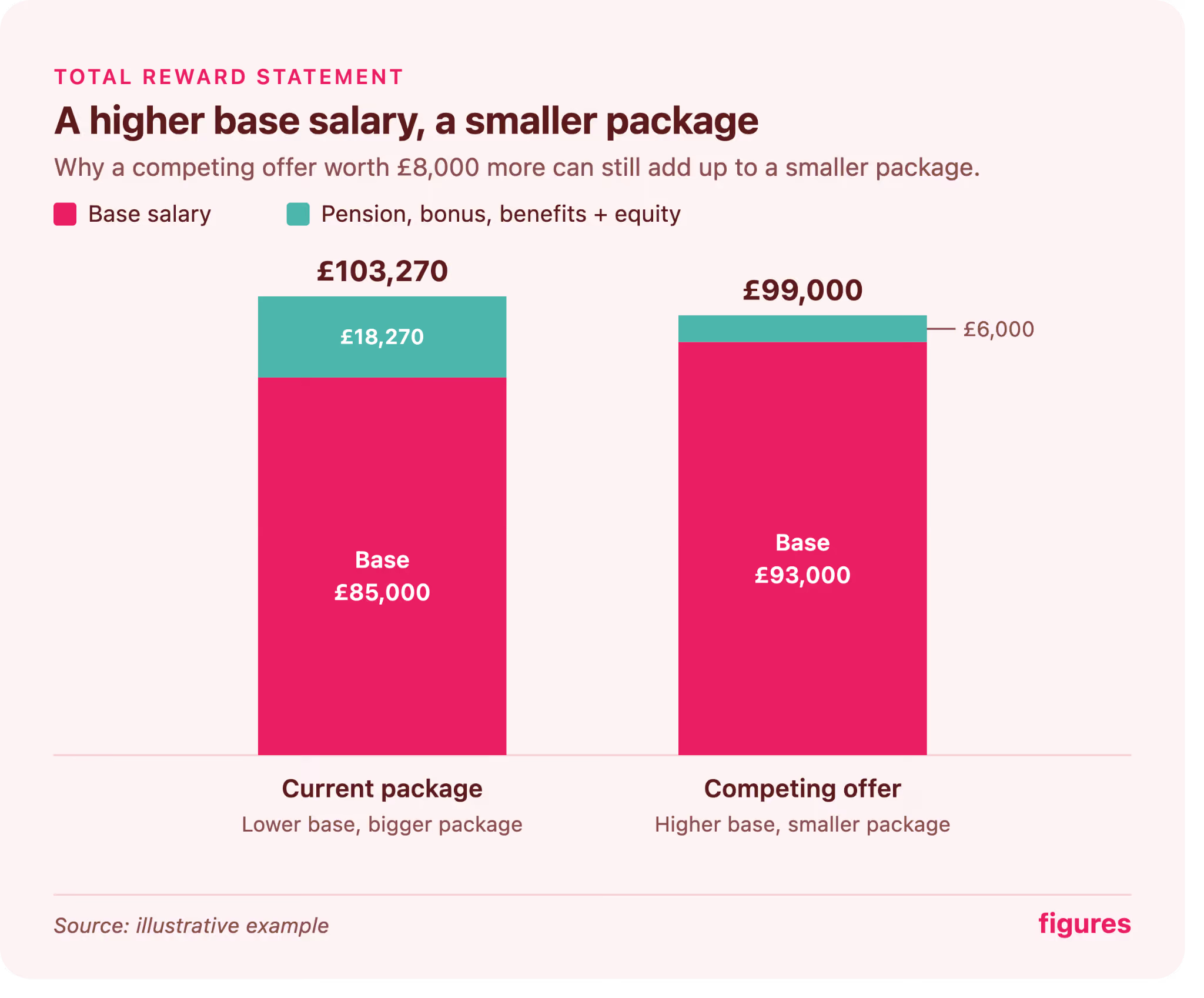
A software engineer at a 320-person London SaaS company earns £85,000. A competitor offers her £93,000, and on base salary alone, she's halfway out the door. Then her total reward statement lands:
The competing £93,000 offer comes with a 5% pension and thinner benefits – around £99,000 all in. So the pay rise is real, but the total package is roughly £4,000 lower than what she already has. So she stays, even though nothing about her pay changed. What changed is that she could see it.
Even beyond scenarios, the benefits are easy to see. In MetLife's 2026 research, 73% of employees want benefits communication tailored to their needs, but only 56% say their employer delivers it – and employees who understand their benefits are 1.6× more likely to feel connected at work.
The employer-brand payoff works the same way. When candidates and current staff can see the full investment, you look different in a market where most competitors only ever talk about base salary. The statement that keeps your engineer also makes it easier to win your next hire.
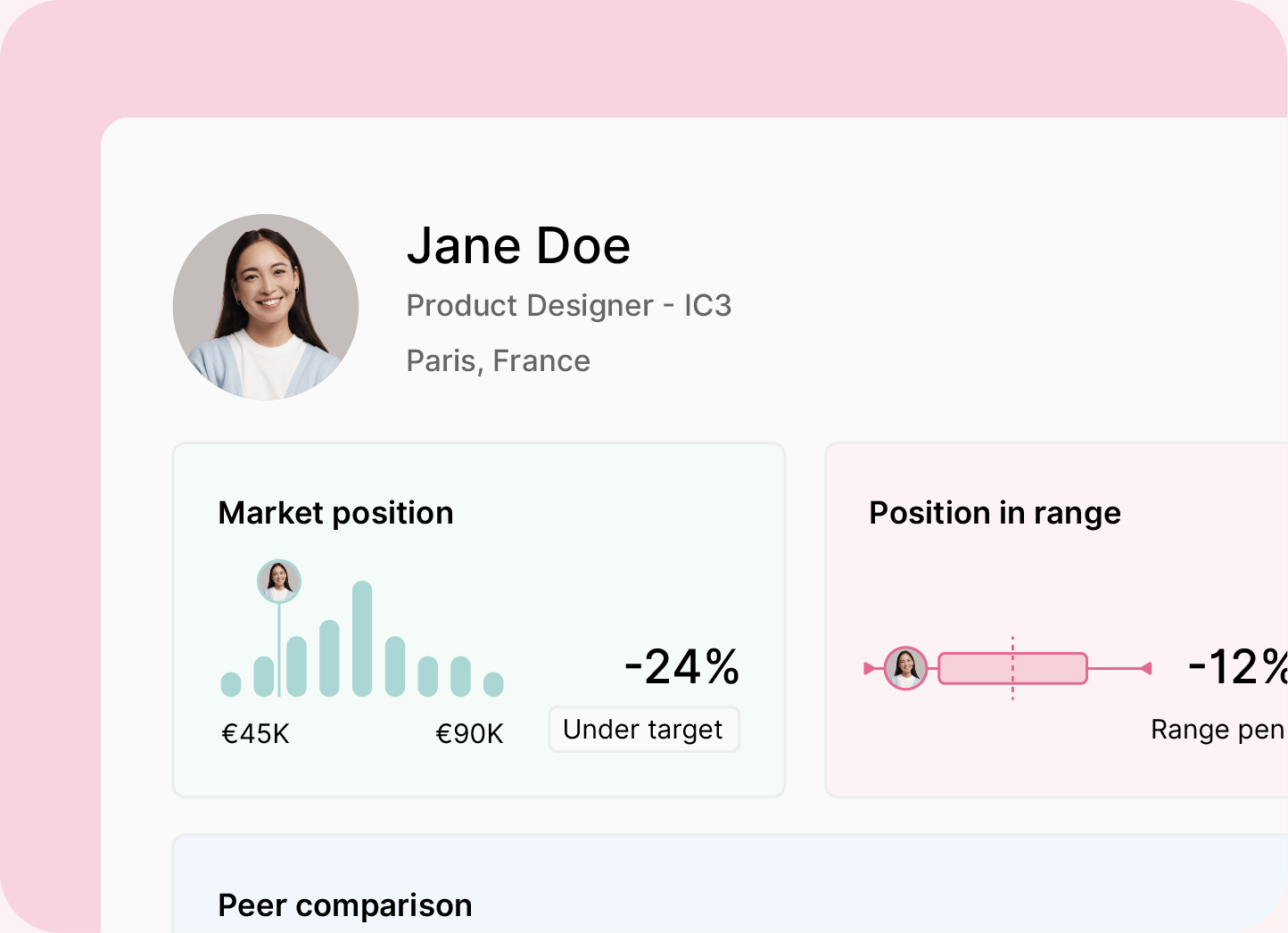
Pay data for fast-growing UK and EU companies, from 3.5 million datapoints, updated monthly.
Discover salary benchmarkingGetting the data right before you build
Most teams go about designing their statement in the wrong order. They mock up a nice-looking document, pick the colours, decide where the total goes – then realise they don't have clean, per-person numbers for half the line items.
That’s obviously not the ideal way to go about it. So what do you do? First, you decide on the type:
- Averaged statements show the typical employer investment for a group, a team, a pay band, or a function. Quick to produce, but employees trust them less, because the numbers aren't actually theirs.
- Bespoke statements give each person their own figures. Far more work, but the impact is also a lot more impressive.
If you really care about retention, the latter is what we recommend. However, if your data isn't ready for bespoke yet, start averaged and move across once it is.
Okay, but what does "data ready" actually mean? Let’s break it down:
- One authoritative source per component. Payroll owns salary, benefits admin owns insurance, your L&D platform owns training spend, and your equity tool owns vesting. Know which system holds the real number for each line.
- A known update frequency. Stale figures produce statements employees can disprove from their own records, and nothing erodes trust faster than a TRS someone can catch out.
- A validated sample. Check a handful of draft statements against reality before you send anything. An inaccurate TRS is worse than no TRS at all.
The catch is that payroll, benefits admin, L&D, and equity systems rarely talk to each other. So HR ends up reconciling it all by hand, every year – which is exactly why so many TRS programmes get scoped, postponed, and quietly forgotten.
Use Figures.hr for accurate pay data
Figures is a compensation management platform that fits in perfectly within the process. While it doesn’t generate the statement itself, it sorts out the pay data underneath it.
- Figures draws on two sources: its own real-time benchmark, built from the pay data of HRIS-integrated companies, plus 3.5 million Mercer data points across 110 countries through the Figures × Mercer partnership – so the salary line, the most contested number in any package, holds up to scrutiny.
- Salary Bands give you a structured pay framework you can use across departments and job families.
- Compensation Review module keeps each person's figures accurate and individual, which is exactly what bespoke statements need.
With 30+ HRIS integrations pulling pay data into one place, the annual reconciliation gets a lot smaller.
Important: Figures handles the cash compensation side. Pension, insurance and perks still come from your benefits systems. But the salary figure is where most TRS credibility lives or dies, so that's the part worth getting structured, market-checked, and accurate first – before any of it reaches a statement.
When to share a total reward statement for maximum impact
A TRS isn't a document you produce once a year and file away. Treat it as a live retention tool, and three moments do most of the heavy lifting:
- Onboarding: Share it in the first few weeks, before a new hire has formed any sense of what "normal" looks like. It sets the baseline for every pay conversation that follows.
- Annual reviews: Pair the statement with the salary and performance review, so people weigh up the whole package, not just the one line that changed.
- Counter-offer conversations: When someone's holding a higher-base offer, the full statement changes the comparison they're actually making.
And to clear up a common mix-up: this isn't an NHS-only thing. The NHS is just the most visible UK example. Any private company with more than a handful of benefits has everything it needs to produce a meaningful statement.
Important: a bespoke statement can invite awkward pay comparisons between colleagues, and a TRS dropped on people with no context can breed resentment rather than appreciation. Brief your managers, prepare an FAQ, and run a short Q&A at launch. The statement does the maths; your managers handle the conversation.
There's a regulatory nudge here too. The EU Pay Transparency Directive, in force from June 2026, requires companies with employees in the EU to share pay information and the criteria behind how it's set. Once you're already explaining how pay works, a total reward statement is a natural next step – same data, same openness, just told in a way employees actually find reassuring.
Building your first total reward statement
So here's the path: understand the four components, accept that your people genuinely don't see most of what they're paid, get your compensation data structured and market-checked, then share the statement at the moments that matter.
The first step is the least glamorous one. Get your pay data accurate, structured, and benchmarked – because without it, every line of the statement is up for debate.
That's the part we can help with. Figures' Compensation Review is where that groundwork starts. Book a free demo, and we'll show you how the data foundation comes together.
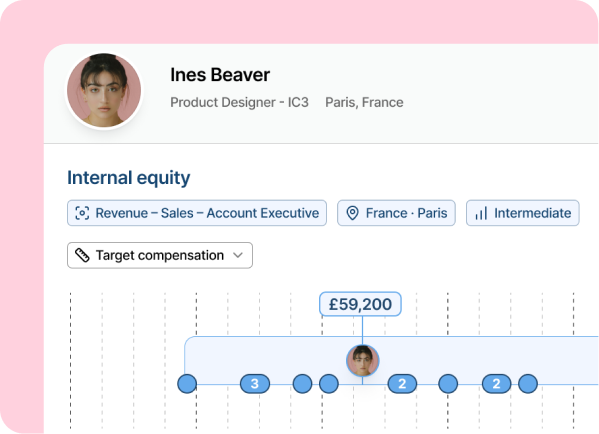
Exceptions piling up? We help you build salary bands solid enough to absorb them, and document the ones that remain.
Ask a demo