Key points:
- Equal value beats job titles: The EU Directive defines categories by skills, effort, responsibility, and working conditions.
- The 5% threshold carries real teeth: Unjustified 5% gaps unfixed for six months trigger mandatory joint pay assessments with employee representatives.
- Broad cohorts conceal risk: Averaging roles smooths numbers on paper, but high internal variance triggers employee disclosure requests and remediation nightmares.
- The burden of proof shifts: Failing transparency duties reverses legal presumptions in discrimination claims, forcing employers to prove innocence.
- Tooling replaces spreadsheet chaos: Figures Pay Equity converts job architecture into defensible cohorts, automated gap detection, and Article 7 letters.
The phrase “categories of workers” means very different things depending on who you ask. In UK employment law, it determines legal status (employee, worker, or self-employed). To an HR team, it often describes operational arrangements like full-time, part-time, or agency roles. But under the EU Pay Transparency Directive, it takes on a precise, high-stakes meaning: groups of employees performing the same work or work of equal value.
Getting this grouping right is urgent. While the directive set 7 June 2026 as the member state transposition deadline, national adoption timelines are shifting. Regardless of local delays, first compliance reports are scheduled for 7 June 2027 based on 2026 data. If you want to get ahead, get started!
Categories of workers under the EU Pay Transparency Directive
Under Article 3(1)(h) of the EU Pay Transparency Directive, a “category of workers” consists of employees performing the same work or work of equal value. This is not just a loose collection of job titles; it’s an objective grouping built on shared factors. Where workers’ representatives exist, employers must involve them when establishing these category definitions, though reaching a formal agreement on the exact methodology is not mandatory.
To determine whether different roles constitute “work of equal value”, Article 4(4) outlines four core, gender-neutral criteria:
✅ Skills: Required qualifications, professional experience, and technical knowledge.
✅ Effort: Physical, mental, and psychological demands.
✅ Responsibility: Scope for decision-making, financial oversight, and managing people or assets.
✅ Working conditions: Physical environment, shift patterns, and health or safety hazards.
Compliance reporting under Article 9 operates on a staggered timetable based on headcount:
- 250+ employees: Annual reporting, with the first submission scheduled for 7 June 2027.
- 150-249 employees: Reporting every three years, starting 7 June 2027.
- 100-149 employees: Reporting every three years, starting 7 June 2031.
- Fewer than 100 employees: Voluntary reporting at the EU level.
Careful cohort design matters because of the enforcement mechanism in Article 10. If reporting reveals a gender pay gap of 5% or higher within any worker category – and the business cannot justify it using objective, gender-neutral grounds or remedy it within six months – a mandatory joint pay assessment with employee representatives is triggered.
For a complete breakdown of compliance requirements and local implementation timelines, see Figures’ guide to the Pay Transparency Directive and live country-by-country tracker.
Should worker categories be wide or narrow?
When structuring your employee cohorts, lean toward the narrowest grouping you can statistically defend. Broad categories might feel safer because they smooth out numbers, but averaging hides the precise pay gaps the directive exists to surface.
Test any proposed cohort against four benchmarks:
- Equal value: Clear alignment across all four Article 4(4) criteria (skills, effort, responsibility, working conditions).
- Sample size: A statistically meaningful population that protects anonymity and yields valid comparisons.
- Granularity: Sufficient detail to identify specific pay inequities.
- Defensibility: Clear, objective rationale that holds up to scrutiny from works councils or employment tribunals.
⚠️ To build these groupings, rely on job grading and salary architecture. Under Article 4(2), member states must provide gender-neutral evaluation tools. In practice, job families, functions, and structured salary levels form the operational core (developed alongside employee representatives where present).
What do defensible worker categories enable?
Well-defined categories make three of the directive’s duties far simpler to manage:
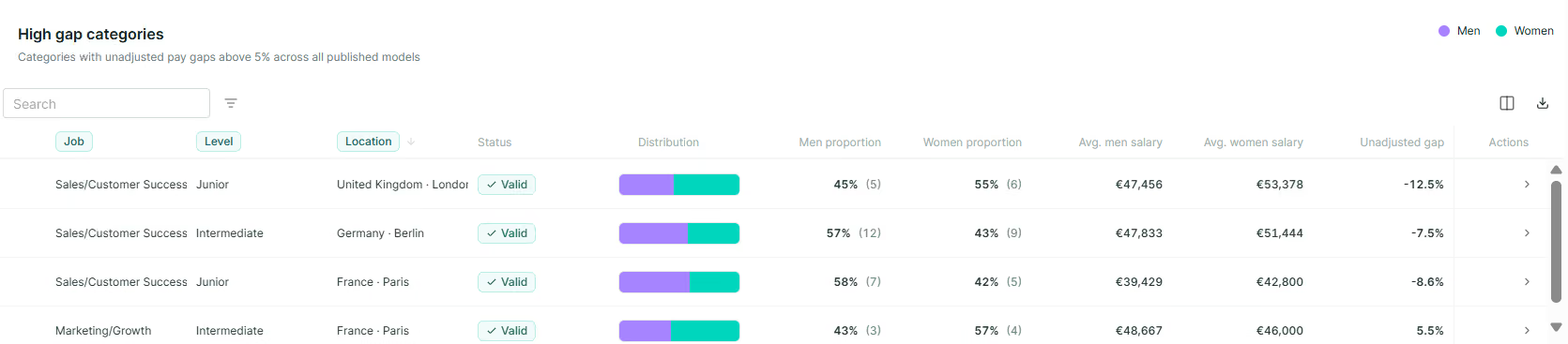
- Proactive gap detection: Under Article 10, any unjustified pay gap of 5% or higher within a category that remains unresolved after six months triggers a mandatory joint pay assessment with employee representatives. Properly constructed categories pinpoint these disparities early, allowing for targeted remediation before formal escalation.
- Mitigating legal risk: Article 18 reverses the burden of proof in gender discrimination claims. If an employer fails to comply with transparency duties under Articles 5, 6, 7, 9, or 10, the legal presumption shifts, requiring the company to prove discrimination did not occur.
- Fulfilling information rights: Under Article 7, employees have the right to request their individual pay level alongside average pay levels, broken down by sex, for their specific worker category. Employers must respond within two months and remind staff of this right annually.
Clear categories also distinguish market-driven adjustments from structural equity issues. When salary bands and external benchmarking align with well-defined cohorts, compensation teams can easily tell whether a gap stems from competitive talent markets or internal pay friction. This is precisely where a dedicated pay equity workflow delivers value by moving beyond passive benchmarking to active, defensible pay management.
Ready for the Directive? We help you build a compensation policy you can explain to your teams, your candidates, and regulators.
Ask a demoA note for UK readers on ‘categories of workers’
👉 If you arrived here through the lens of UK employment law, “categories of workers” usually refers to something distinct: legal status (employee, worker, or self-employed contractor), contractual terms (full-time, part-time, fixed-term), or agency status.
While those classifications matter for statutory rights and payroll tax, they are not what the EU Pay Transparency Directive means by worker categories. The directive disregards contractual arrangements to focus solely on functional value: grouping people who perform the same work or work of equal value. So don’t sweat, and keep it simple. That value-based cohort is the foundation for driving pay equity across your organisation.
Building your category structure with the right tooling
Establishing defensible worker categories requires solid job architecture – mapping clear job families, functions, levels, and grading across your organisation. Managing this complexity in static spreadsheets quickly leads to broken formulas and compliance risks.
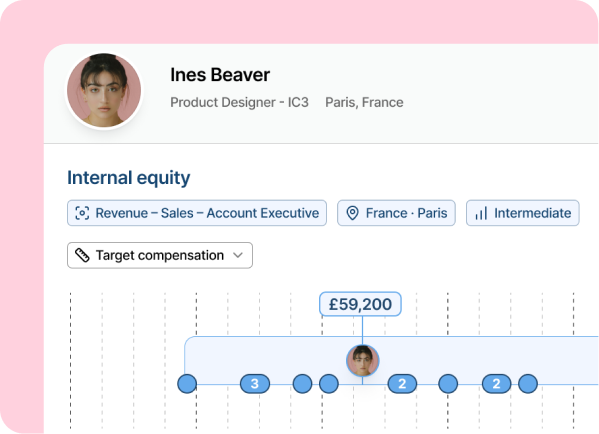
Figures Pay Equity automates this entire lifecycle in a single platform. It converts your job categories into real-time gap detection, builds actionable budget scenarios to close pay disparities, and automatically generates Article 7 disclosure letters for employees.
The timeline makes early action vital. For employers with 250+ staff, initial compliance reports are scheduled for June 2027 based on 2026 salary data. Even as national transposition dates vary across EU member states, the compensation decisions you make now form the exact data set you will be required to disclose.