Most employers preparing for the EU Pay Transparency Directive are focused on the obvious requirements: defining work of equal value, getting ready for reporting and putting processes in place for employee information requests.
But there’s another change coming too, and it’s much more immediate: everyday conversations about pay are going to look different.
Once the Directive is in effect, candidates will know more before they accept an offer. Employees will have firmer ground for asking why they are paid what they are, or why their increase differs from someone else’s. Managers will have less room to pass awkward questions back to HR and move on.
There’s also a cultural shift underneath all of this: pay is slowly becoming a more normal topic to raise with colleagues, friends and people in your wider circle, and the Directive will push that change further.
We spoke to Figures compensation expert Iléana Wist about what all of this could look like in practice as the Directive comes into force across Europe.
Reminder: What the Pay Transparency Directive will change in practice
First, a quick refresher on the changes most relevant to pay conversations. Under the Directive:
- Salary or pay ranges must be shared with candidates before the interview stage.
- Employers can no longer ask candidates about their salary history.
- Employees can request information about their own pay and others’.
- Employers need to share their criteria for pay and progression.
- Pay differences need to be supported by objective, gender-neutral criteria.
Those broad rules will apply across the EU, but the detail will vary by country. Some national laws may require pay ranges in job ads, for example, while others simply require employers to share them before the interview stage. Reporting thresholds, timelines and processes will vary too.
How the Directive will change pay conversations: 4 key moments across the employee lifecycle
Most employers already talk about pay at a few predictable moments, like hiring, promotions and compensation reviews. But once the Directive is in effect, even these familiar conversations will be harder to improvise. Employees will have more information going in, and employers will need clearer answers ready.
Here’s what that could look like at four points in the employee lifecycle.
- Hiring and offers
Hiring conversations will change in a few important ways under the Directive. Candidates will know the starting salary or range for the role ahead of time, and employers will no longer be able to ask about salary history.
Employers will also need to be clear on where a new employee sits in a range — and why. For example, if a role pays €55k–€65k, employers need a clear reason why one candidate starts at €57k and another at €63k. Experience, level, location and market positioning all need to feed into that decision in a consistent way.
- Compensation reviews
Compensation reviews are already one of the trickier moments in the pay cycle, and the Directive will make vague explanations even harder to get away with.
If one employee receives a 3% increase some someone else gets 6%, they’ll want to know why. Managers will need to tie those differences back to something concrete, such as performance, promotion, position within the salary band or an internal equity adjustment.
“I’ve had a lot of cases where employees were frustrated about the salary increase they were getting and compared themselves to other team members who had received more. We would always say, ‘We’re talking about you, we’re not talking about your colleagues.’ That argument no longer stands with the Directive.”
Iléana Wist, internal compensation expert at Figures
- Promotions and progression
Promotions are another moment where a vague answer is unlikely to go very far. If moving to the next level affects pay, employees will reasonably want to understand what progression actually requires.
That means explanations like “you’re not quite ready yet” need something solid behind them: clear job levels, progression criteria and salary bands that managers can point to.
- Off-cycle raises and retention decisions
Off-cycle decisions are often where an otherwise tidy compensation process starts to get a bit messy.
An employee gets an external offer, their manager wants to keep them, and suddenly there’s pressure for a significant raise outside the usual cycle. Under greater transparency, it becomes harder to treat that as a one-off decision that doesn’t need explaining.
Clear approval rules, internal equity checks and decision records give employers something concrete to point to. With these things in place, they’ll be able to explain why the exception was justified, and whether they’d make the same call in a comparable case.
The wider organisational impact of pay transparency
The impact of the Directive won’t stop at formal moments like job offers and compensation reviews. Employees will have more information, clearer rights and more opportunities to ask how pay decisions are made.
That means some conversations that rarely happen today may become much more common.
Employee rights will create conversations that may not have happened before
Some pay concerns have traditionally stayed below the surface. Say an employee suspects a colleague doing similar work earns more than they do. Until now, they may not have had enough information to confirm that suspicion — let alone question it.
The Directive gives workers a clearer route to finding out. They won’t see individual colleagues’ salaries, but they can request comparative pay information that helps them understand how their own pay stacks up against people doing the same work or work of equal value.
That makes it much easier to turn a vague feeling of “I think I’m underpaid” into a direct conversation about whether the difference has a legitimate explanation.
Pay will become a more legitimate topic to raise
The Directive gives employees clearer rights to ask questions about pay. But it’s arriving at a time when people are already becoming more open about discussing what they earn — not just with HR or their manager, but with each other too.
That shift won’t happen at the same pace everywhere, especially in countries where salary is still a fairly taboo subject. But there are signs it’s already underway: research suggests younger workers are more likely than older generations to discuss pay openly, including with colleagues.
The Directive is likely to give those conversations a little more legitimacy — and make pay feel less like a topic employees are expected to keep to themselves.
Managers will have to own more of the conversation
In the past, many managers have treated compensation as something HR or Compensation handles behind the scenes. And let’s face it: that can be quite convenient, especially when there’s bad news to deliver.
The Directive makes that distance harder to maintain. Managers are often the first person an employee turns to with a question about pay, so they’ll need enough understanding of the company’s compensation approach to handle the basics and explain the decisions they’ve been involved in. HR and Compensation can provide the structure, guidance and escalation support, but managers will still need to own the conversation.
There’s another reason for that too: many of the factors used to explain pay, from performance ratings to promotions, depend on input from managers themselves. Greater transparency means those decisions will be more visible — and managers will have less room to simply pass the question back to HR.
Transparency isn’t just about sharing numbers
When we think about pay transparency, it’s easy to focus on the numbers: salary bands, pay ranges or even exact salaries. But the numbers only tell part of the story. Employees also need to understand the logic behind them.
Iléana Wist, Figures’ internal compensation expert, gave us a useful example. Imagine an employee who appears to earn around €8,000 less per year than her peers. On the face of it, that looks seriously unfair. But once you factor in things like location, job family, seniority and performance, most of the difference may have a perfectly reasonable explanation.
Here’s the tricky bit: if the employee only learns that geography, performance or job family affect pay after seeing the €8,000 gap, HR suddenly has two jobs to do at once. They have to explain the individual difference and the company’s whole compensation approach.
That conversation is much easier if the employee already has some idea of how pay works: how salaries are set, which factors influence progression, and why two people in similar roles may still be paid differently.
As Iléana puts it, companies will need to be more transparent “not only about the figures, but more importantly about the how and the why.”
In practice, that means being clear about things like:
- How salary bands are set and used
- Which factors influence starting pay and progression
- How performance feeds into compensation decisions
- Why pay may differ across roles, levels or locations
- How exceptions and off-cycle decisions are handled
Pay transparency is not just a compensation issue
If there’s one big mistake employers make when preparing for pay transparency, it’s treating it as a Compensation project: something HR or Comp can handle while the rest of the organisation carries on as usual.
In practice, the Directive will put more pressure on a whole range of systems that feed into pay decisions, including some that sit well outside the Compensation team.
Take performance. A company may use performance ratings to explain why two employees in the same category are paid differently. But that only works if the performance process itself can stand up to scrutiny. The same goes for job levels and grading, promotion criteria, hiring decisions, manager discretion and the way exceptions are approved.
Treating the Directive as a Compensation-only project therefore risks missing a large part of the work. Pay decisions draw on performance management, job architecture, recruitment, promotion processes and managerial judgement. If those systems are fuzzy or applied differently across teams, greater transparency is likely to bring that to the surface.
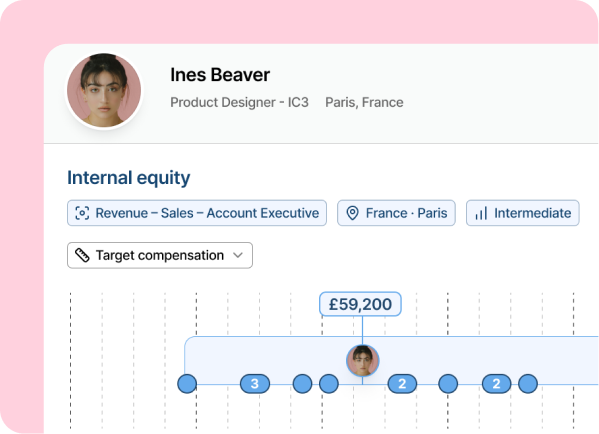
Ready for the Directive? We help you build a compensation policy you can explain to your teams, your candidates, and regulators.
Ask a demoExplainable decisions need the right systems behind them
As pay becomes more transparent, employers will need to rely less on improvised explanations and more on clear, consistent decision-making.
That’s much easier when salary bands, market data, internal equity checks, and review processes are connected rather than scattered across separate processes. Figures brings those elements together, giving teams a clearer basis for making decisions and answering the questions that follow.