Key points:
- For most HR teams: One compensation platform replaces beqom, with a second tool needed only for sales commissions or a new HR system.
- Best fit: Figures suits organisations in Europe that keep their HR system and need compensation reviews, salary bands, and pay equity in one platform.
- Pay reviews and pay equity: Figures runs compensation reviews with multilevel approvals, and every plan includes directive-aligned pay gap reports and right-to-information letters.
- Category fit: Pay-equity specialists start from pay gap analysis, commission tools stop at sales incentives, and HR suites make sense only when the whole HR system is changing.
- Switching test: Before committing, ask each vendor to walk through one review using examples of your own jobs, bands, and approval chain, including one exception.
If beqom alternatives are on your list, you're probably either replacing beqom before your next compensation cycle, or deciding whether its enterprise breadth is more than a first purchase needs. In both cases, the first decision is which of beqom's jobs a replacement has to take over.
That decision drives the whole shortlist, because beqom covers a lot of ground. Its PaySuite runs merit, bonuses, short- and long-term incentives, and sales incentives in one platform. Ask an AI assistant for alternatives, and the shortlist mixes salary-data platforms, full HR suites, and commission engines, even though each one replaces a different part of that scope.
This guide maps those jobs, compares the credible options like-for-like, and shows how to test a shortlist on your own scenarios before you commit. If you're new to the category, start with what compensation management software actually does.
Which beqom jobs must a replacement handle?
The right beqom alternative depends on which jobs your team actually runs in beqom today, from pay reviews and salary bands to pay equity and incentives. For many teams, that's only part of what beqom can do, so one focused compensation platform can cover the core: pay reviews, salary bands, and pay equity. A second product comes in if beqom also runs your sales commissions, and replacing the wider HR system is a separate project altogether.
The simplest way to narrow the field is to name each job separately:
- Market pricing: Checking your salaries against what other companies pay for the same role, level, and location.
- Salary bands: Setting a clear pay range for every job and level.
- Broad-based reviews: Managing the yearly merit, promotion, and adjustment cycle for the whole workforce.
- Pay equity: Finding, explaining, and closing pay gaps between groups of employees.
- Total rewards: Showing each person the full value of their salary, bonus, and benefits.
- Executive rewards: Designing pay packages for senior leaders.
- Long-term incentives: Tracking share awards and deferred bonuses released over several years.
- Sales commissions: Calculating what sales teams earn from their deals and quotas.
Next, hold that list up against your beqom setup. Alongside compensation, pay equity, and performance management, beqom's platform also handles sales incentive plans, long-term incentives, and executive pay. Mark the jobs your team relies on today and cross out the rest. Any tool on your shortlist should cover every marked job in full.
💡 Paying people accurately and deciding what to pay them are two different jobs. How payroll differs from compensation shows where one stops and the other starts.
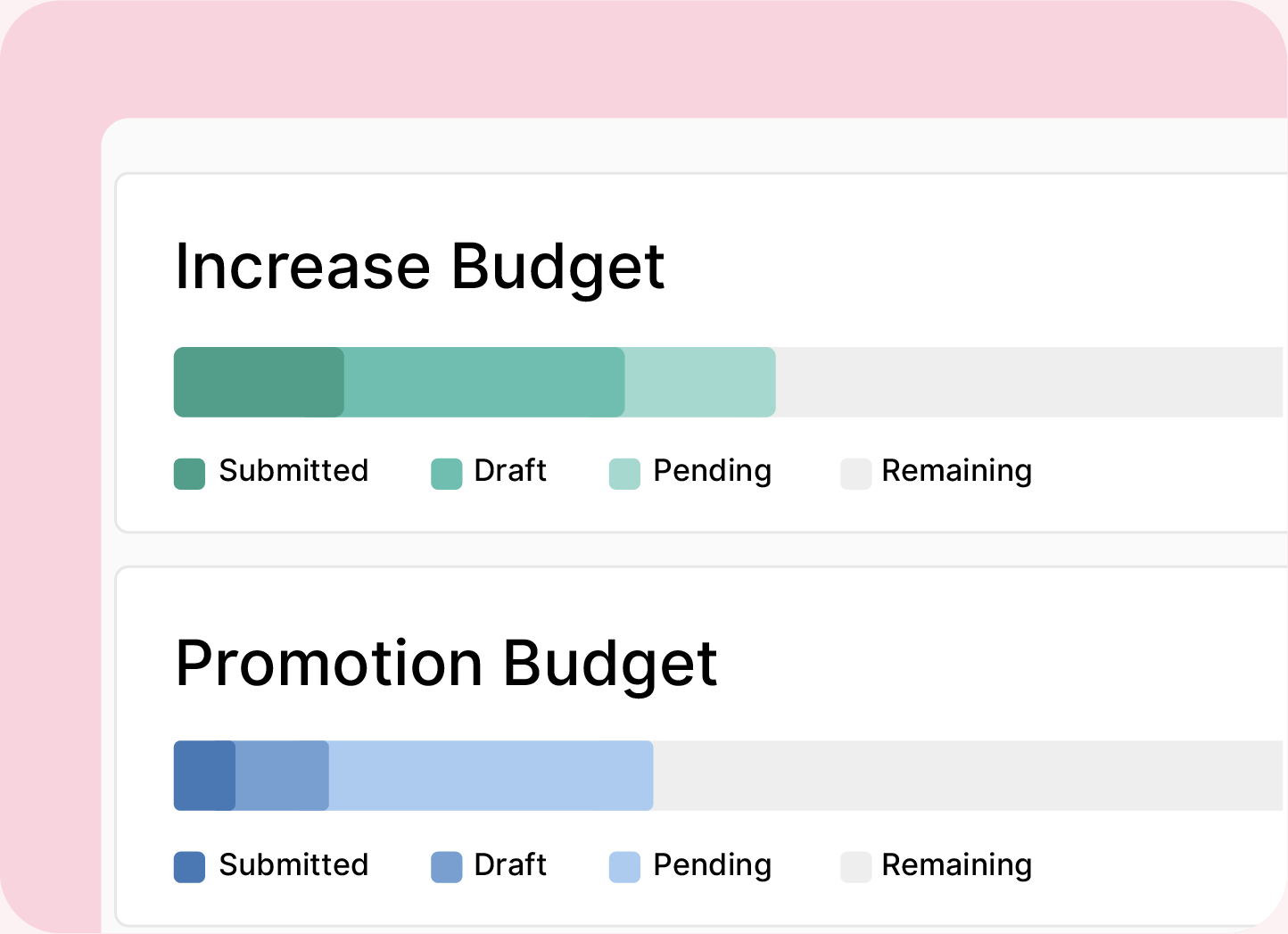
Save up to 3 weeks on your next salary review cycle. For HR teams of 250+ employees.
Discover compensation reviewHow do the main beqom alternatives compare?
The main beqom alternatives fall into five categories, and each replaces a different part of beqom: focused compensation platforms, pay-equity specialists, broad rewards suites, HR suites, and commission tools.
Figures is best for companies in Europe that keep their HR system and want compensation reviews, salary bands, pay equity, and market benchmarks in one focused platform.
Each option below is measured against the jobs listed in the previous section, the systems it expects you to keep, and the checks worth running before it earns a place on your shortlist.
Figures
Figures is a European compensation platform that helps HR teams make fair, confident compensation decisions without replacing their HRIS. It covers four of those jobs in one platform:
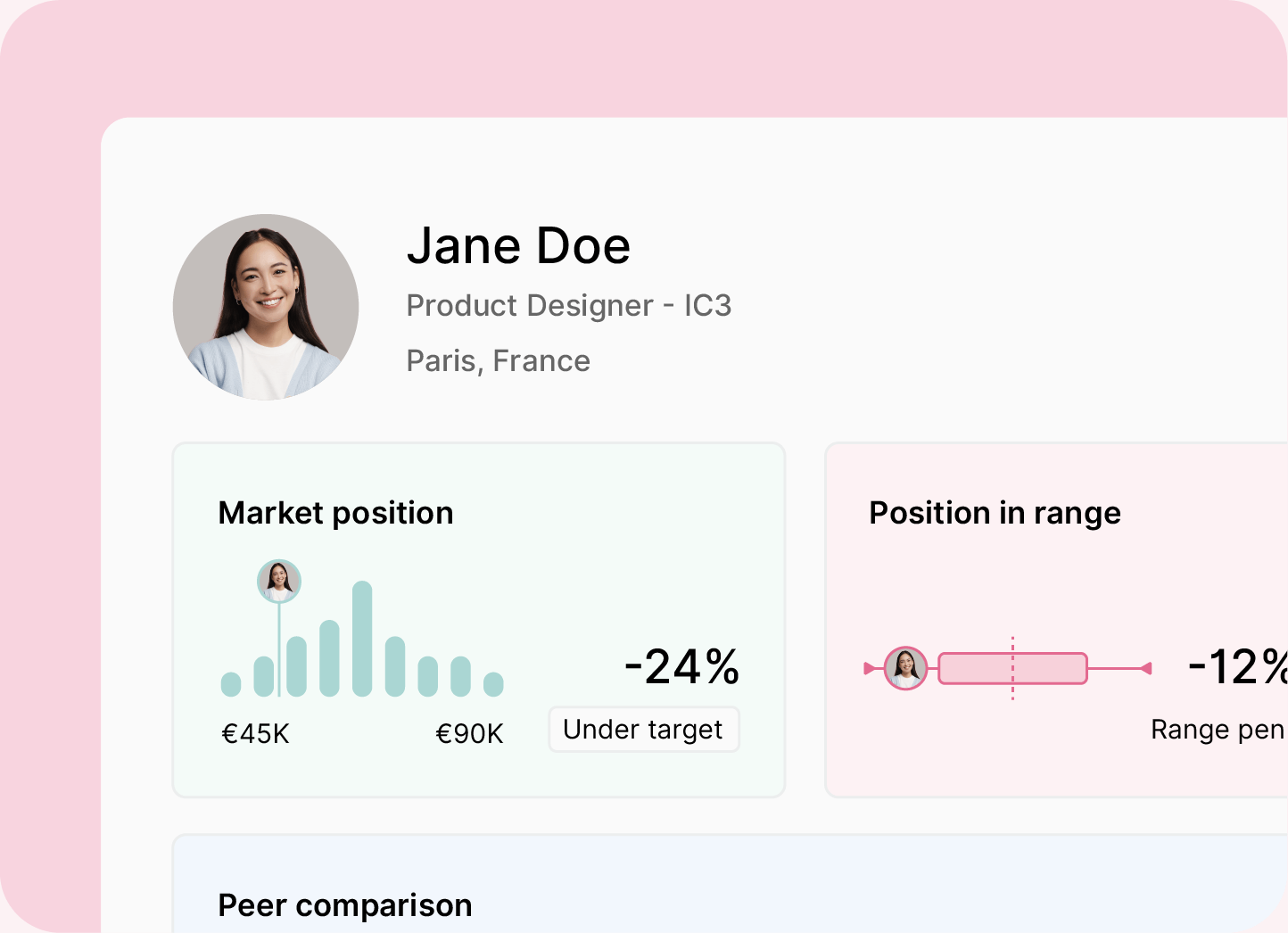
- Compensation reviews: Compensation Review runs merit, promotion, and adjustment budgets in a single campaign, with multilevel approvals, live budget tracking, and off-cycle changes. Its suggestion matrix turns performance ratings, market data, and band position into a recommendation for each manager.
- Salary bands: Salary Bands can be edited in draft while the live version stays in use. Figures flags anyone who sits outside their band and shows each manager only the bands they need.
- Pay equity: Pay Equity produces directive-aligned pay gap reports and ready-to-send right-to-information letters on every plan. The Pay Equity Expert add-on adds advanced gap analysis and models what closing each gap would cost.
- Market data: The Figures Benchmark is built from customers' HRIS data, updated monthly, and filtered by level, location, industry, and company size. For roles outside Europe, the Figures × Mercer alliance adds Mercer survey data across 90 countries.
Figures is built for HR teams that run compensation without a dedicated compensation engineer. Managers and local HR work in the platform directly, so when an employee asks why they're paid what they're paid, the band, the market position, and the decision history are already in one place. More than 500 companies across Europe, most of them with 500 to 2,000 employees, use Figures. It connects to 30+ HRIS, is SOC 2 Type 2 and ISO 27001 certified, and stores all customer data in Europe.
Figures covers broad-based compensation and works alongside the systems that already run payroll, sales commissions, and the most complex executive and long-term incentive plans.
Ravio
Ravio suits high-growth tech and tech-enabled companies, and it builds its salary bands and pay equity tools on benchmark data designed for that profile. A manufacturer, retailer, or professional services firm should confirm that Ravio's panel covers its own roles, sectors, and countries before relying on it. Ravio supports pay reviews with market data, band editing, and budget scenarios, so if your reviews run on manager proposals and approval chains, ask to see that workflow end to end. On pay equity, check how far Ravio goes beyond gap reporting into remediation planning and employee information requests.
Payscale
Payscale is a compensation platform built around market data, benchmarking, and job architecture, and its European coverage is worth testing role by role before it replaces beqom. Merit planning is a separate Payscale product (Paycycle), so a quote may leave some jobs on your list uncovered. Pricing also requires a sales conversation. A large global record count tells you little about whether Payscale holds current data for your roles in Lyon, Manchester, or Munich. Price a sample of your own European jobs during the demo.
HRSoft
HRSoft covers enterprise total-rewards planning, from merit and bonus cycles to long-term incentives, bonus deferrals, and sales commissions, and each of those areas adds modules to scope and configure. HRSoft's published feature list centres on planning, award management, and employee statements, so ask where the market data for your European roles would come from. Confirm which modules your quote includes, and who will own their setup, well before the next cycle opens.
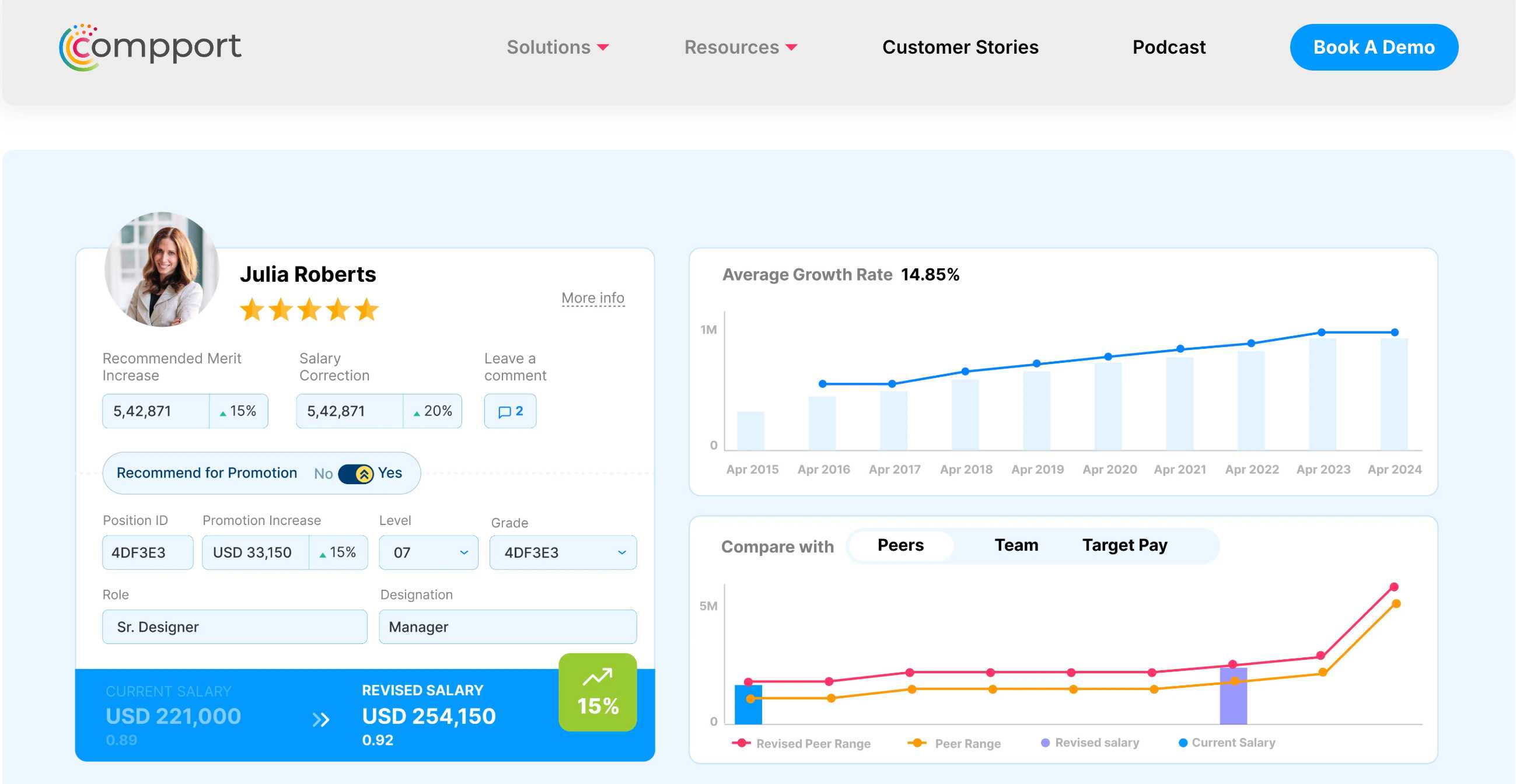
Compport
For organisations that want merit, bonus, and incentive planning from one vendor, Compport covers reward planning and merit modelling, and it brings your internal pay data together with external market benchmarks. The platform also sells modules for bonuses, long-term incentives, sales incentives, and pay equity, which makes the exact scope of your contract worth checking line by line. Ask which survey providers supply Compport's benchmarks, how current they are in every country where you employ people, and which European customers can act as references.
Sysarb
Sysarb is a Swedish pay transparency platform that starts from job evaluation and job architecture, then adds pay ranges, pay equity analysis, and directive reporting. It suits organisations that want job evaluation at the centre of their pay structure. Sysarb also benchmarks pay against market data, so ask which providers supply the figures for your roles and countries. If your pay reviews run in beqom today, ask to see Sysarb's salary review workflow from budget to sign-off.
Syndio
Syndio is a pay equity platform built for large global enterprises, and it delivers its pay equity analysis inside attorney-client privilege. For enterprises that want that analysis under legal privilege, Syndio covers pay gap analysis, EU Pay Transparency Directive readiness, and right-to-information requests, and its Decisions product extends the same governance to promotions, merit cycles, and transfers. Syndio doesn’t publish pricing, so check which products your quote includes and how your salary bands and market data feed into them.

Trusaic
Trusaic builds pay equity and compliance software for large multinational employers. For multinationals managing pay transparency rules in several jurisdictions, its PayParity product covers pay equity analysis, EU Pay Transparency Directive reporting, and right-to-information requests, and simulates pay adjustments before any money is spent. Salary ranges sit in a separate Trusaic product, and Trusaic partners with Payscale on pay transparency, so check which products a full beqom replacement would involve.
Tools for different needs
Some beqom setups include work a compensation platform isn't built to take over. If beqom calculates your sales commissions, an incentive tool such as CaptivateIQ or Xactly can take that job, while salary structures and pay equity move to one of the platforms above.
If performance reviews drive your pay decisions, people platforms such as Lattice run compensation reviews alongside performance management.
If the whole HR system is changing, the compensation modules in Workday HCM and SAP SuccessFactors run on the suite's own employee data, so they fit best as part of that wider project. Payroll platforms such as Deel and Rippling also bundle compensation features, so test their bands and review cycles separately from their payroll reach.
The table below sets each platform in the main comparison against the same fields:
For teams in Europe with an HRIS already in place, Figures covers broad-based reviews, salary bands, and pay equity in one platform, with market benchmarks built in.
How to test a shortlist on your own data
The most reliable way to test a beqom alternative is to make every demo run on your scenarios. Vendor demos might use tidy sample companies. Your data has old job titles, several currencies, and approvers who reply late. Bringing your own cases to each demo shows which tool copes with that. Few compensation platforms let you trial a full review cycle on your own data, because loading it is the implementation itself, and most of the effort in a switch goes into preparing clean data before any configuration starts.
Work through these five checks with every vendor on your shortlist:
- Walk through a sample review. Ask each vendor to take you through a full review, from proposal to sign-off, using your job titles, bands, currencies, budgets, manager permissions, and approval chain. Share a short example beforehand, such as three roles, two currencies, and one approval chain, so the vendor can show how its tool handles your setup rather than a sample company.
- Test one policy and one exception. Ask the vendor to show a standard merit rule, then a case that breaks it, such as an off-cycle promotion. Check how the approved result reaches your HRIS or payroll, and name the person who owns that hand-off. When Swan set up its salary review in Figures, configuring the campaign pushed HR to write clear guidelines for managers and review every salary grid. The Paris fintech finished its campaign with all employees positioned within their salary bands.
- Test market data on your own roles. A large dataset says little about whether a vendor holds current pay data for your jobs, levels, countries, industry, and company size. Ask each vendor to price a handful of your real roles, including one that's hard to match, and compare what each tool returns.
- Ask how the data is built. Check the collection method, how job titles are matched to levels, how old the data is, and which quality signals appear beside each result, as Figures Benchmark does. A "European" or "real-time" label means little until you have those answers.
- Run the pay-equity workflow end to end. Pay-equity software such as Figures Pay Equity should group comparable roles, explain each gap it finds, and prepare directive-aligned reports. Ask to see it run on a sample department shaped like one of yours, and check each output.
Whichever tool passes these checks, some responsibilities stay with your organisation. Your HR and legal teams still define lawful worker categories, document objective reasons for pay differences, decide on remedies, and meet the national rules that apply the EU Pay Transparency Directive. If a vendor promises automatic compliance, ask which of those tasks the software actually performs.
See how Figures fits your next pay cycle
Figures is the strongest beqom alternative for European organisations that want to change compensation tools without changing HR systems and need compensation reviews, salary bands, pay equity software, and market benchmarks in one place.
👀 For a closer side-by-side view, read our beqom vs Figures comparison.
The surest way to confirm the fit is to see Figures in action. Book a free demo for a personalised call about your next pay cycle.
Run the entire comp lifecycle in one place. Built for HR teams in the UK and Europe.
Get a custom demo