


.avif)
Key points:
- Broadbanding replaces narrow salary grades: Broad bands typically include 4–5 bands spanning 80–200% of a market midpoint, shifting the focus from paying for a job title to paying for skills, contribution, and market value.
- Wide bands don't create chaos: Vague rules and undertrained managers do. The structure itself is sound; the risk lies in giving managers more discretion without the criteria, training, and data to use it fairly.
- Broadbanding isn’t for everyone: Broadbanding works best in flat organisations, skill-heavy functions, and companies preparing for pay transparency, but it requires a solid job levelling framework in place before a single band is designed.
- EU Pay Transparency Directive deadline in June 2026: Pay structures need to be defensible, documented, and data-backed. Broadbanding can absolutely meet that bar… but only if progression criteria are clear and decisions are auditable from day one.
Broadbanding is a compensation method that puts multiple job classifications into wider pay bands. Imagine a traditional development department: you’ve got your seniors, juniors, front-ends, back-ends, UX, and QA… all with different salaries and skills. With broadbanding, instead of classifying each individually, you unify them into a few, wider bands.
It’s a good way to keep your HRIS and compensation software clean and manageable. But the way broad bands are implemented can cause issues, especially if your managers aren’t prepared. With such wide salary bands, managers might use personal discretion to figure out where new (or existing) employees sit within a band.
And that can lead to pay compression, poor frameworks for development, and issues with pay equity. Considering that broad bands are supposed to reward skill acquisition and personal contributions to departments and the company as a whole, you might as well have stuck with the narrow job classifications instead.
But it doesn’t need to be difficult. This guide explains what broadbanding is, how it differs from traditional pay grades, and whether it fits your organisation. Let’s get started.
{{ ai }}
What is broadbanding, and how does it work?
Broadbanding is a compensation structure that consolidates many narrow salary grades into a small number of wide pay bands. Instead of 10–15 grades with small increments between them, a broadbanded structure typically uses 4–5 bands with salary ranges spanning 80% to 200% of the band's midpoint.
Let’s show you how they differ from more traditional pay bands.
Traditional grades vs. broad bands
Traditional pay structures rely on many narrow grades. Each grade covers a small salary range, and moving up usually means a title change or a formal promotion.
With broadbanding, however, employees can progress significantly in pay without changing their job title. The focus shifts from climbing a rigid ladder to developing skills and increasing contribution within a wider range.
🤔 For the gamers out there, imagine two separate role-playing games; one gives you many levels, but there’s not much depth. Level-ups feel meaningless, with the only significant changes happening every tenth level. But on the other hand, you’ve got the RPGs that have fewer levels, but actually provide meaningful changes every level up.
That’s basically how traditional structures and broadbanding differ. But for those of you who don’t care a jot for RPGs, we’ve also developed a table below. It’s no Clair Obscur, but it gets the job done:
How consolidation works in practice
Imagine a company currently running 12 salary grades. Under a broadbanded structure, those 12 grades might be consolidated into 4 bands:
Notice the overlap between bands. That's intentional – it allows for flexibility and reflects the reality that a highly experienced Senior can legitimately earn more than a newly promoted Lead.
Lateral career movement
Broadbanding is particularly well-suited to flat organisations where there simply aren't enough "Head of" roles to go around.
In a traditional structure, an employee who has maxed out their grade but isn't ready for a promotion is stuck. In a broadbanded structure, they can continue growing their pay by expanding their skills, taking on cross-functional work, or deepening their expertise – all within the same band.
This is also great for high performers who don't want to move into management. It allows a senior engineer to be rewarded for genuine expertise without being pushed into a leadership role they don't want.
The market midpoint
Every broadband needs a reference point. That reference point is the market midpoint. It’s the salary that reflects what the external labour market pays for a given role, level, and geography.
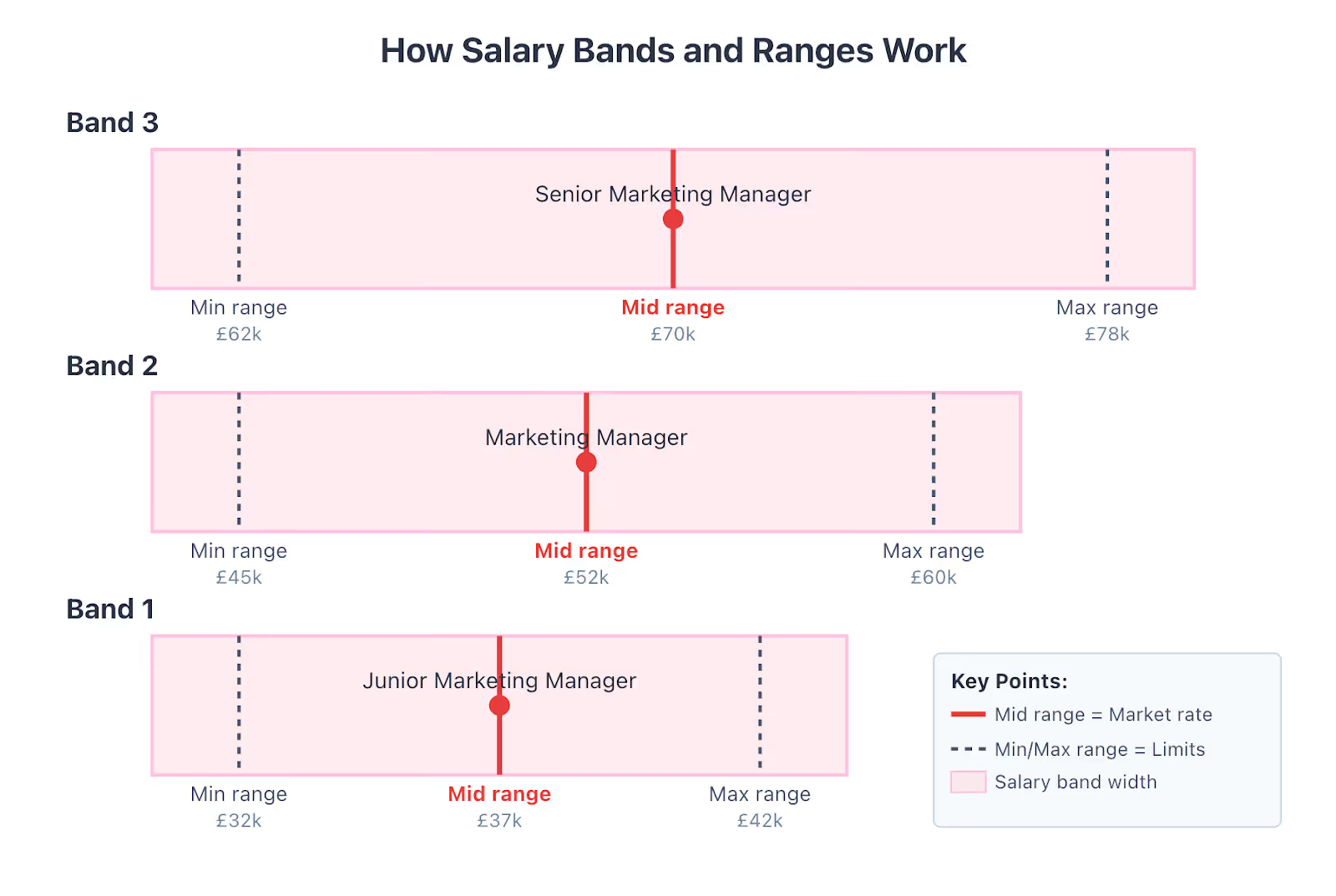
The midpoint sits at the centre of each band. Salaries below it typically reflect employees who are still developing in the role, while salaries above it reflect those who have mastered the role and are delivering at the highest levels.
Getting the midpoint right requires reliable, up-to-date market data. That's the foundation everything else is built on, and it's where many organisations run into trouble when they rely on outdated salary surveys, generic benchmarks, or ChatGPT.
Advantages and disadvantages of broadbanding
Every compensation structure involves trade-offs. Broadbanding is no different. The good news is that most of the risks are manageable, as long as you go in with your eyes open.
The benefits
- Flexibility for fast-moving organisations: When roles change quickly – as they do in tech, healthcare, and fast-growing scale-ups – narrow grades become a constant administrative headache. Broad bands allow roles to evolve without reclassification hassles every six months.
- Reduced grade hunting: In traditional structures, employees sometimes seek superficial title changes just to get a pay increase. Broadbanding removes that incentive, allowing pay to grow within a band based on skills and performance instead.
- Rewards mastery, not just management: High-performing individual contributors can be compensated for their genuine market value without being pushed into leadership roles.
- Supports lateral growth: Employees who move across teams or take on new responsibilities can see meaningful pay recognition, even without a formal promotion.
- Lower admin overhead: Fewer grades means fewer reclassification requests and less time spent debating whether a role belongs in Grade 7 or Grade 8. For HR teams, that’ll be some time off the clock.
- Budget predictability: When governed well, broadbanding is generally cost-neutral. Wider ranges don't automatically inflate payroll; they shift where within the range employees sit, based on performance and market data.
💡 Read more about the benefits of salary bands.
The risks
- Budget creep: Wide bands create more room for salaries to drift upward over time, especially when managers have discretion but lack clear guidelines. Without defined progression criteria, payroll can expand quietly and quickly.
- The promotion void: Employees used to frequent title changes can feel stagnant inside a broad band. If they spend years in "Band 3" with no visible milestones, motivation can suffer, even if their salary has grown.
- Pay equity gaps: High manager discretion inside wide bands often results in pay disparity. Without clear rules for placement decisions, two employees doing similar work can end up on very different salaries. And we already know that it does wonders for motivation, talent acquisition, and retention (not really).
- Transparency challenges: When employees see their entire team clustered at the top of a band with no room for increases, it surfaces uncomfortable conversations. The data is useful, but organisations need to be ready to act on its findings.
- Harder to reverse: If broadbanding doesn't work out, switching back to a granular grade structure isn't a simple undo. It requires rebuilding your entire pay architecture and re-communicating your compensation philosophy from scratch.
- EU Pay Transparency Directive risk: With the June 2026 deadline approaching, EU-based companies need pay structures that are defensible and data-backed. Wide bands with vague progression criteria are difficult to justify. Broadbanding can be compliant, but careful preparation and implementation is the only way to keep you on the right side of The Directive.
Where broadbanding works (and where it doesn't)
Broadbanding isn't a universal fix. In certain companies, it’ll be the solution to many of your compensation woes. For others? It’ll be the source of more problems.
Before you decide on whether it’s for you, let’s take a look at environments where broadbanding thrives or dies.
Where it fits well
Broadbanding works best in organisations that already have or are actively building a culture of skill development over title chasing. Good fits include:
- Flat hierarchies: where there aren't enough senior titles to reward everyone vertically.
- Tech, engineering, and healthcare: where employees stay in roles long-term and develop deep expertise.
- Fast-growing scale-ups: that need pay flexibility without constantly restructuring their grade system.
- Organisations moving toward pay transparency: that want fewer, cleaner bands to communicate to employees.
Where it struggles
Some environments aren't ready for broadbanding, and pushing ahead anyway tends to create the exact chaos it's supposed to prevent:
- No defined job levels: wide bands without a solid levelling framework underneath them are just wide bands with no rules. The levelling work has to come first.
- Legacy HRIS tools: some older systems, like Workday or Oracle, struggle to handle flexible band logic, creating practical implementation headaches.
- Promotion-oriented cultures: if your employees measure progress primarily by title, broadbanding can feel like a step backward.
- Low manager capability: if your managers aren't equipped to have confident, data-led pay conversations, more discretion will make things worse, not better.
How to implement broadbanding without the chaos
Good broadband design isn't complicated. It just requires doing things in the right order. Here's how to get it right.
- Fix your levelling first: define your internal job levels before you touch pay. Broad bands need a solid foundation, and without clear levels, you're just creating wider confusion.
- Calibrate with real market data: use credible, up-to-date benchmarks to set a midpoint for each band by role, level, and geography. Figures' platform with Mercer data covers over 3.5 million data points across the UK, France, Germany, and beyond, so your midpoints reflect what the market is actually paying.
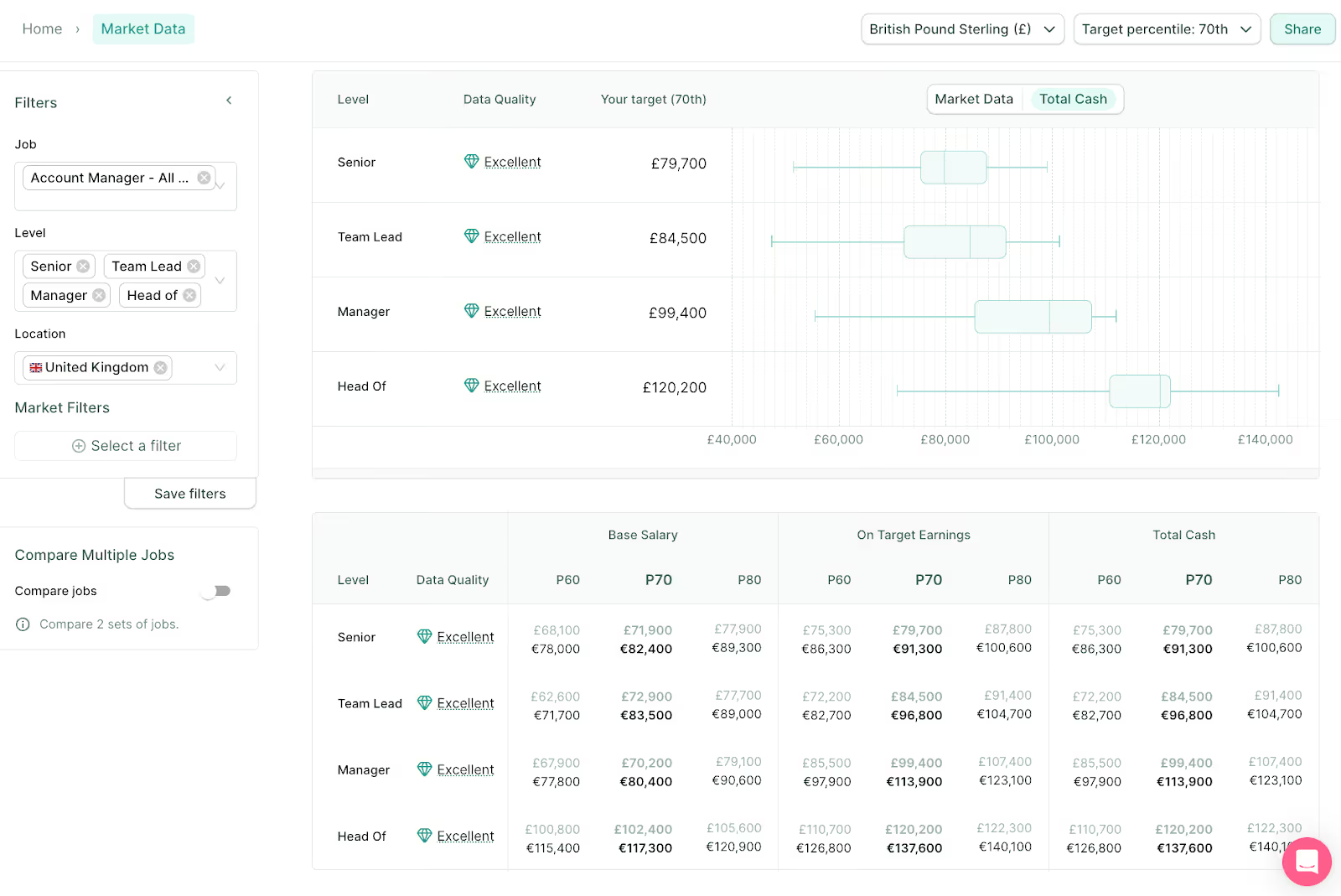
- Design progressive band widths: higher-level bands should be wider. Progression from Junior to Mid happens quickly; progression from Senior to Principal takes years. Make sure your band widths reflect that.
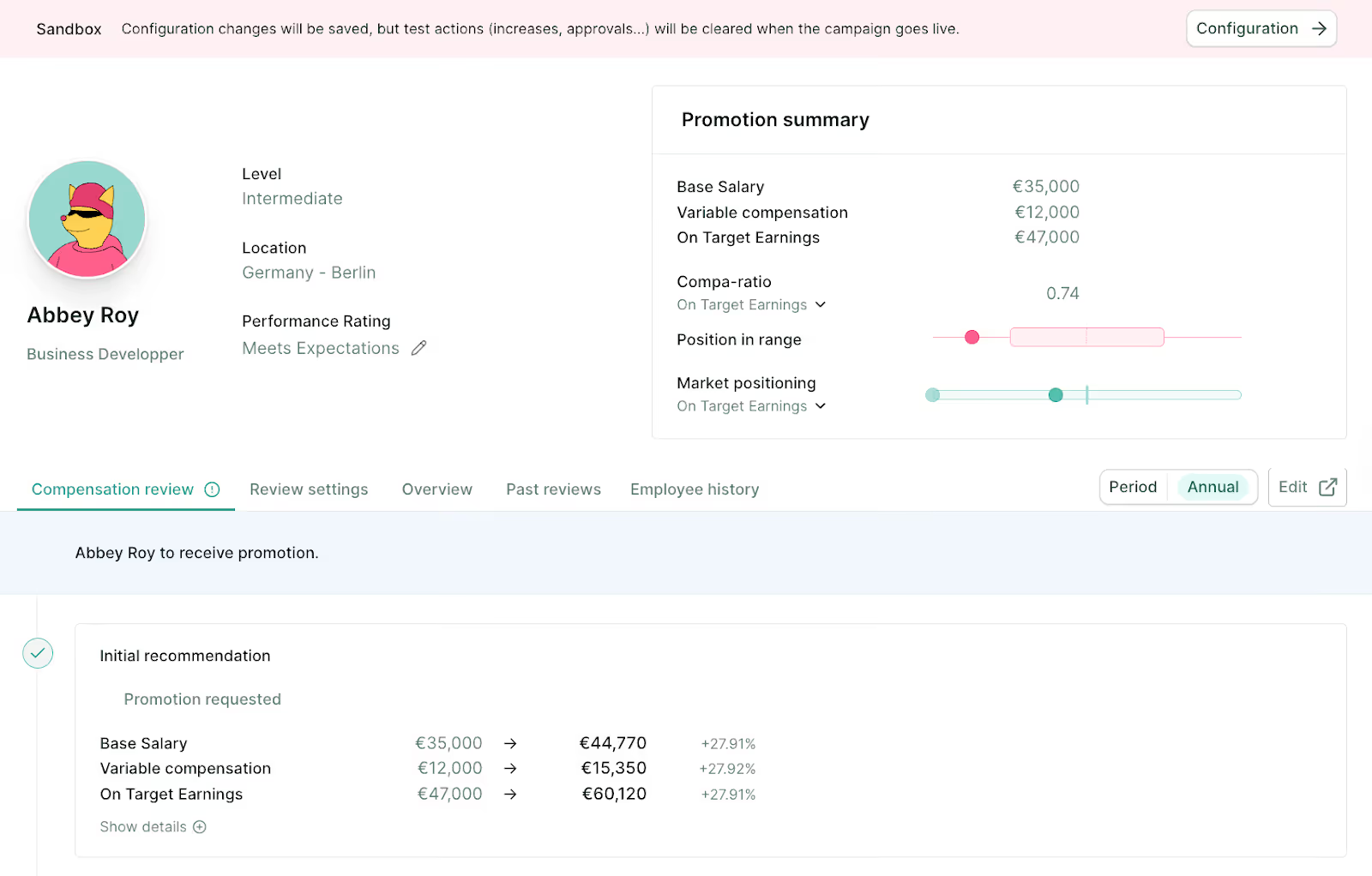
- Model the transition safely: before going live, simulate how moving employees into new bands affects your budget and pay equity. Figures' Sandbox Mode lets you test and iterate without disrupting your live compensation data.
- Communicate through managers: one-off brochures don't move the needle. Manager-led conversations and team sessions do. Invest in equipping your managers to explain the new structure clearly, and keep communicating as the structure beds in.
"Most companies spend months designing their pay structure and about two weeks communicating it. Then they're surprised when managers can't explain it, and employees don't trust it. The structure is not the problem — the preparation is."
– Virgile Raingeard, CEO, Figures
That’s true. Because you might have an excellent plan laid out for implementation, but if your managers are fluffing the comms, you’ll have an office-load of confused and frustrated employees. So, let’s help you get your managers ready.
Preparing managers for the driver's seat
Broadbanding shifts significant responsibility onto line managers. In a traditional grade structure, pay decisions are largely made for them. In a broadbanded structure, managers are expected to justify where an employee sits within a band that might span tens of thousands of pounds.
That's a big ask. And most organisations hand managers this responsibility without giving them the tools to handle it. This is where chaos actually starts.
Which brings us nicely to…
The compa-ratio conversation
A compa-ratio is the relationship between an employee's salary and the midpoint of their band. A compa-ratio of 100% means they're paid exactly at the midpoint. Below suggests they're still developing. Above that suggests strong performance being compensated accordingly.
This single number gives managers a concrete, defensible way to discuss pay, without it becoming a guessing game.
Standardising decisions
More discretion without clear guidelines means more room for bias. Organisations need to define upfront what criteria determine placement within a band, what progression actually looks like in practice, and how exceptions are documented.
🤔 Keep in mind, the goal isn’t to completely remove judgment from your managers. It’s just to ensure that they’re making consistent judgments and aren’t just relying on their own laurels. This is where true defensibility exists.
The right visibility
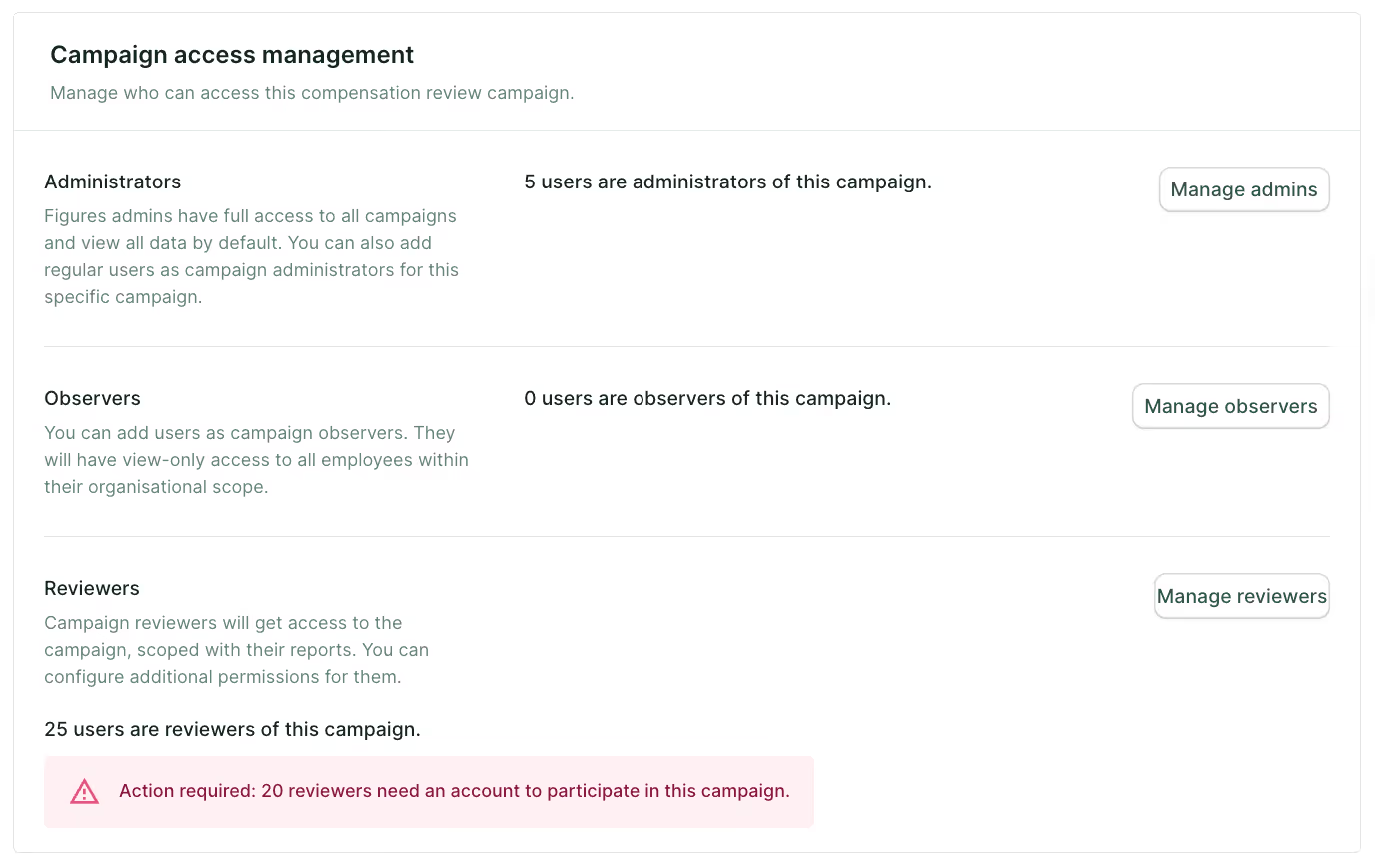
Managers don't need access to everyone's salary. They need the relevant band ranges, market midpoints, and where each direct report sits within the band. Figures' role-based permissions make this straightforward. Managers can have confident, transparent 1-to-1s without HR fielding a hundred follow-up questions every merit cycle.
Designing your structure with confidence
Broadbanding works when it's built on solid foundations. Clear job levels, current market data, intentional band widths, and managers who actually understand their role in the system are all going to ensure your broadbanding strategy works. Without those things in place, wide bands don't create flexibility. They create confusion.
Before you go live, ask yourself: are your levels defined, your midpoints defensible, and your managers prepared? If the answer to any of those is no, that's where to start.
When you're ready to build, Figures gives you the infrastructure to do it properly, with real-time benchmarks, Mercer-backed market data, Sandbox Mode for safe modelling, and audit trails that hold up under EU Pay Transparency Directive scrutiny.
Ready to see it in action? Book a free demo.

Summarize this article with AI
No time to read it all? Get a clear, structured, and actionable summary in one click.





.avif)
.avif)

