


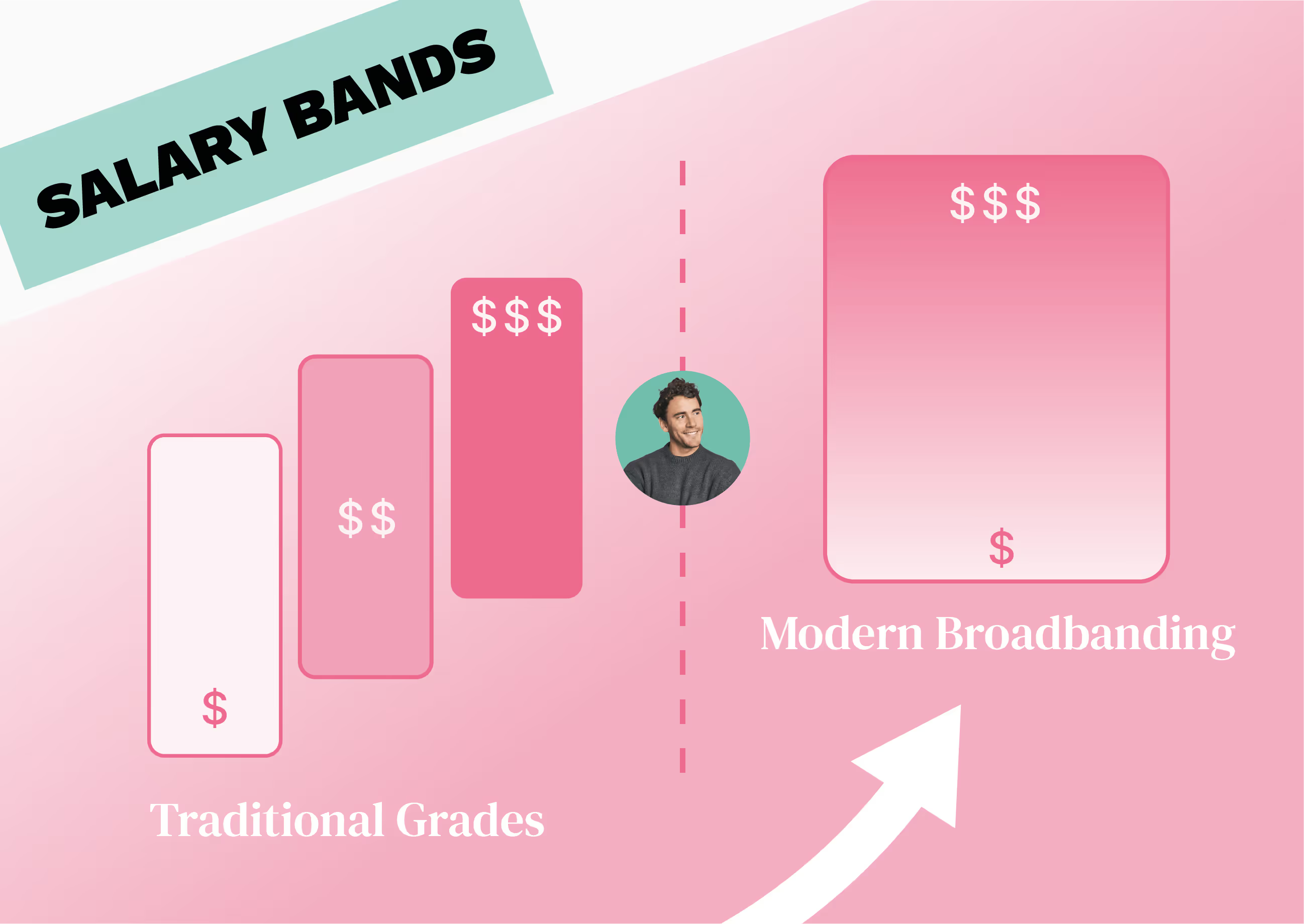
Key points:
- A pay structure is a company's formal framework for determining how each job is compensated.
- The two main components are salary bands (groups of jobs with similar value) and salary ranges (the pay rates within those bands).
- The six most common types of pay structures are: traditional narrow-graded, broad-graded, broadbanding, market-based, step pay, and skill-based.
- Your choice will depend on your company culture, size, and goals.
- Whatever you decide, you need to be open and transparent about it in order to build trust with employees and future candidates.
Want to hear something funny? 81% of UK employers review their pay structures for fairness, yet only 31% actually share the results with employees. Sounds a little suspect, because if you’re paying fairly, surely you’d want to shout it from the rooftops?
That gap tells you everything about where most HR teams sit right now. Caught between wanting to do the right thing and feeling uncertain about how to communicate it. You're probably there too, juggling market rates that shift monthly, internal equity concerns that keep you up at night, and budget constraints that won’t budge.
Thankfully, building a pay structure that you can confidently explain to anyone in your company isn't as complex as it feels. Figures is here to show you how… minus the nonsense and jargon you’d find elsewhere.
We'll walk through the common structure types with real numbers, show you exactly how to build salary bands that make sense, and explain how to maintain them without constant firefighting. By the end, you'll have a framework that attracts talent, keeps people around, and stands up to scrutiny. Let’s get off the ground with a definition.
What is a pay structure?
A pay structure is a company's formal framework for determining how each job is compensated. It organises jobs into grades or bands based on their value, ensuring external competitiveness and internal equity.
The most common way to bring this framework to life is by creating salary bands (also called salary ranges or grids) for each level. These bands set clear minimum and maximum pay points for every role.
It takes away the guesswork of what to pay someone, alongside some other juicy benefits:
- Financial predictability: you can budget accurately and forecast costs without guessing what next quarter's hiring spree will cost.
- Internal equity: similar roles receive similar pay, cutting bias and boosting morale when people compare notes.
- Talent management: competitive pay and visible career paths help you win candidates and keep your best people from jumping ship.
- Compliance: a documented structure defends your decisions against UK equal pay laws and the incoming EU Pay Transparency Directive.
Pay structure vs. salary vs. payroll
We all love terminology (especially in HR), but these three terms are needlessly similar-sounding, even though they describe different things… most of the time, anyway. Have a look:
The building blocks: understanding grades and bands
Before we dive into different structure types, you need to understand two components that form the foundation of any pay system.
Salary bands (or pay grades) are groups of jobs that have similar value to your organisation. You determine this through job evaluation or market pricing. A Marketing Coordinator and a Junior Designer might sit in the same band because they require comparable skills and deliver similar business impact.
Salary ranges then define what people in each band can earn. Every range has three parts:
- Minimum: The lowest salary for the grade, typically offered to new hires or employees still developing in the role.
- Midpoint: The competitive market rate for the role. This is your target salary for a fully proficient employee performing at expected levels.
- Maximum: The highest salary for the grade, reserved for top performers with extensive experience who've mastered every aspect of the role.
Here's what this looks like in practice for a Marketing job family:
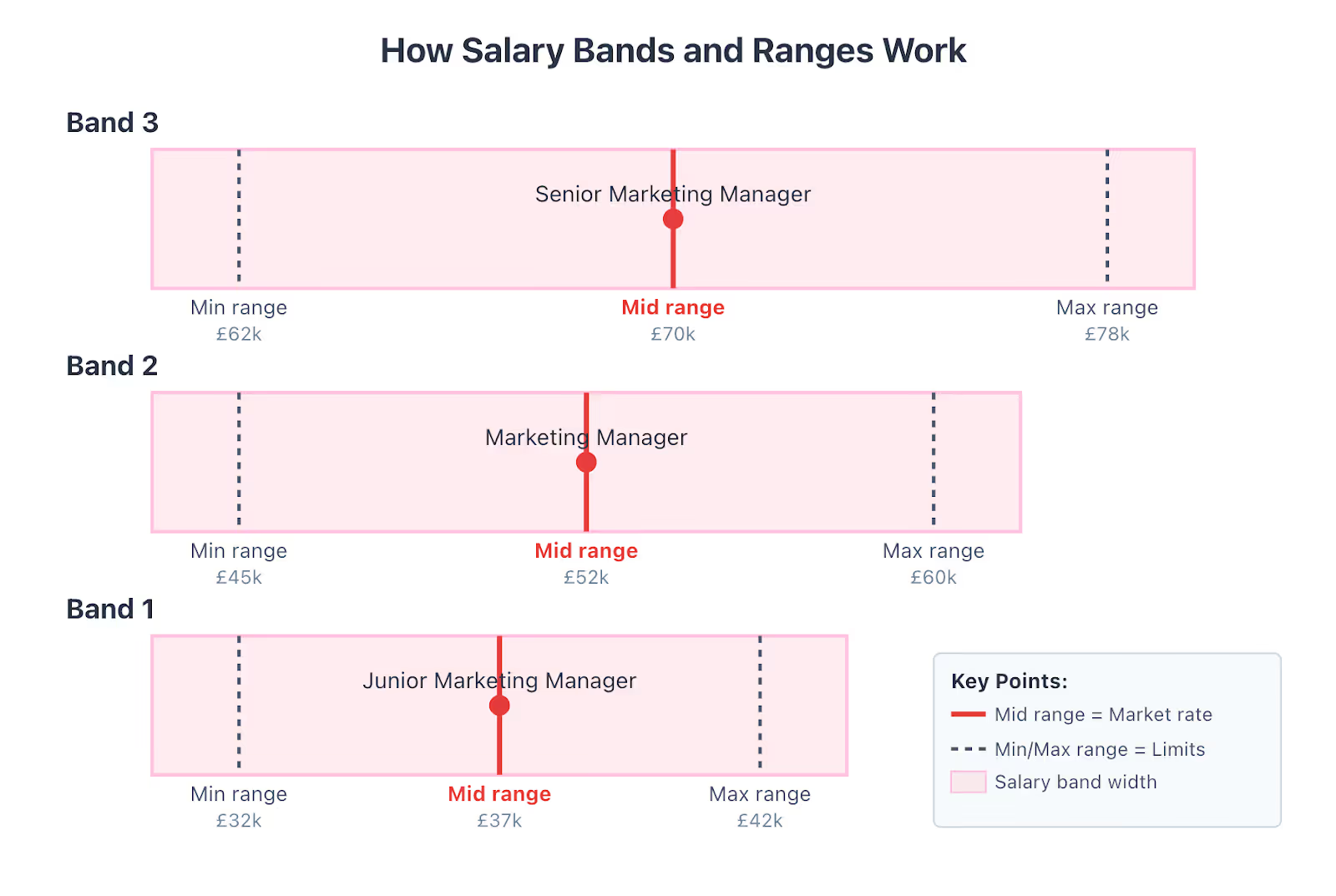
Notice how the ranges progress. Each promotion brings roughly a 35-40% jump in midpoint salary, giving employees a clear picture of what advancement means financially.
‼️To make your job easier, it’s a good idea to sort out your job architecture. Having one job title for all levels can give you real headaches, so make sure each role is clearly defined.
Now that that’s out of the way, let’s go into the different types of pay structures.
6 common types of pay structures
If you’ve been at your company since its startup days, you may remember a time before proper pay structures. Most businesses begin with informal structures, like:
- Individual pay rates: Each person's salary is based on what they negotiated when hired, heavily influenced by their previous salary or bargaining skills.
- Individual pay ranges: A loose range exists for each role, but it's not part of a company-wide, interconnected system.
These methods work fine when you've got 20 people. But once you hit 100+ employees, the cracks show. That’s because you’ll bring in new hires who expect higher pay, all while your loyal veterans sit with the same salaries they had five years ago. Before you know it, you’ve got pay compression issues flying out the wazoo, alongside some unhappy employees.
That's when HR leaders look to implement a formal pay structure for consistency and equity.
Here are the six most common formal structures:
Traditional narrow-graded
A structure with many tightly defined pay grades. The minimum and maximum are only 10-15% apart from the midpoint, creating a total range of roughly 20-40%. Progression is linear and directly tied to formal promotions.
Generally, this structure works well for large, stable organisations where roles are highly standardised and career progression is predictable and incremental. Think administrative functions, operational roles, or traditional corporate environments.
"Narrow-graded bands can work brilliantly when employees are expected to move quickly from one level to the next. The narrow bands provide cost control, while frequent promotions drive career and salary growth."
– Agnès Chauvigny, VP People at Figures
Granted, there are some issues, namely the limited room for rewarding strong performance without a promotion. Like a developer who can code better than the hackers you’d see in an early 2000s cyberpunk film… but would be lost in a leadership role without extensive training. You can’t really give them a big raise, because you’ll be causing pay compression, especially with those narrow bands.
Broad-graded
This is your next step up. It’s somewhere between rigid, narrow grades and full broadbanding. It consolidates several narrow grades into fewer bands with moderately wider salary ranges – typically a 40-60% spread from minimum to maximum.
This is a good one for organisations wanting to simplify administration by reducing the number of grades, whilst providing more flexibility for pay growth than traditional structures offer.
🤔 Important: While it offers more room for in-role growth, managers often still feel pressured to grant promotions to justify significant pay rises. In these cases, this structure can feel like applying cellotape to a hole in the wall. Well-intentioned, maybe, but it does little to fix the actual issue.
Broadbanding
Here, you’re going to the opposite end of narrow bands. You’ll collapse many traditional grades into just a few very wide bands. The philosophy shifts from "promote to pay more" to "develop and reward within your current role."
Broadbanding serves two strategic purposes that seem opposite, but both work:
- Dynamic, flatter organisations (tech scale-ups, creative agencies): Provides flexibility to reward rapid skill growth and impact without needing frequent title changes. Your Senior Engineer can double their skills and see their pay reflect that growth, even if "Principal Engineer" isn't in the cards yet.
- Larger, traditional companies with slower promotion cycles: Wide salary bands allow meaningful raises for high-performing, long-tenured employees, retaining them even when promotions aren't immediately available.
‼️You’ll need some well-trained managers who can objectively assess performance to determine pay within wide bands. There’s less of a framework from the top to guide decisions, which can lead to wide pay gaps if your managers are prone to bias or misjudgment.
Market-based
While the previous pay structure relied on manager discretion, this one gives them an easily understandable framework to base their decisions on. External market data for similar roles drives pay decisions. Nice and simple, especially if you’ve got handy compensation software to help you out.
Fast-growing industries benefit most from this approach, where attracting and retaining talent trumps all other considerations. If you're hiring 50 engineers this quarter and competitors are bidding up salaries monthly, you need to rely on actual market data… and pretty deep pockets.
Unfortunately, pure market-based structures can create internal inequities. Your DevOps Engineer might earn significantly more than your equally skilled Data Engineer simply because the market's hotter for one skill set right now. We may be out of high school, but it looks like popularity still matters… At least the smart kids have the power now.
Step pay
Uff… don’t you just hate your step pay? It’ll never be your real pay, no matter how much the company forces you to call it Dad. Wait… where did that come from?
Childhood trauma aside, step pay is predetermined pay increases (steps) within each grade, typically triggered by tenure or satisfactory performance reviews. Everyone knows exactly when and how much their next raise will be.
Unionised environments, public sector organisations, or traditional manufacturing and highly standardised roles are where you’ll find this type of structure. Transparency and predictability matter more than differentiation. A postal worker with five years' service should earn more than one with two years, regardless of whether they're "exceptional" or merely "competent."
Skill-based
Your employees who love online courses and certifications will adore this structure.
That’s because Pay follows the skills and competencies employees acquire, not their job title or years of service. Master five types of welding instead of three? Your pay increases accordingly.
Environments where employee flexibility provides a direct competitive advantage are where you’ll find this structure. Specialised manufacturing (technicians certified to operate multiple types of complex machinery) or certain technical support teams where multi-skilled employees keep operations running smoothly.
If you’re liking the sound of this model, well, we’ve got some bad news. It’s notoriously difficult to implement and maintain. It requires significant investment in frameworks to define and certify each skill. Few companies manage to make it work effectively at scale, which is why you'll hear about it more often than you'll see it in practice.
Expensive myths about modern pay structures
- "Broadbanding is automatically better than traditional grades" – Nope. Without clear reference points, you just trade "structured but rigid" for "flexible but chaotic."
- "Market-based pay structures guarantee fairness" – Market-based structures reflect the market, and markets aren't always fair. If the market systematically undervalues certain roles or demographics, you're outsourcing your bias.
- "Flashy SPIFFs (Sales Performance Incentive Fund) mean great compensation." – That "win a trip to Cancun" incentive sounds brilliant until you realise your base salary is 20% below market. SPIFFs often distract from weak underlying pay. "
“Boring but reliable beats flashy but uncertain. Your employees would rather know their next raise is coming in March than wonder if they'll qualify for an unpredictable accelerator. Predictability pays the mortgage. Excitement doesn't.”
– Virgile Raingeard, Figures CEO and ex-HR
How to establish a pay structure step-by-step
Right, you’ve got the different structures under your belt, now we’re going to go through developing your own:
- Align with business needs: start by defining your compensation philosophy. Do you want to lead, match, or lag the market? This decision shapes everything that follows.
- Define job roles and families: group similar jobs (Marketing, Engineering, Operations) into families and write clear job descriptions for each role.
- Conduct job evaluations: determine the internal value of each job relative to others. This ensures internal equity – your Senior Analyst shouldn't earn more than your Engineering Manager if the latter role carries greater responsibility and impact.
- Gather high-quality market data: benchmark your roles against external market rates. This is critical for competitiveness. Consider industry, company size, and location.
- Choose your structure type: based on your culture and goals, select the model that fits best.
- Build your grades and ranges: group roles into your chosen grades and use market data to set the minimum, midpoint, and maximum for each range. Your midpoint should align with the market rate for a fully proficient employee.
- Create a communication plan: transparency builds trust. Prepare to explain how the new structure works, where employees fall within it, and what progression looks like. The Equal Pay: Code of Practice notes that "pay systems that are transparent and value the entire workforce send positive messages about an organisation's values and ways of working."
- Document and review: document everything clearly. A pay structure is a living document – plan to review it at least annually to adjust for market shifts and prevent issues like salary compression.
Keeping it fair: how to maintain your pay structure
Congratulations, you’ve got your pay structure! Now take a seat and take a deep breath, as we tell you that building your structure is the easy part.
Unfortunately, there’s so much that can change that can throw your current structure out of whack. Benchmarks can go out of date fast, and the data you used six months ago could be as outdated as that mouldy cheese you’ve got at the back of your fridge.
You might think getting new benchmarks will help, but now that you’re hiring with new salary ranges, older hires are getting paid significantly less. Then you’ve got the EU directive looming on the horizon, which requires pay transparency and reporting with ongoing monitoring… and now you feel like screaming, right?
HR is the backbone of any organisation, but with everything you’ve got to keep on top of, it can be overwhelming. Especially if you’ve got to do all this in spreadsheets on Google or Microsoft Ex-hell. No worries, there’s a heaven of automated compliance and easy monitoring just ahead.
Build a competitive pay structure with Figures
Yep, that light at the end of the tunnel is a Figures dashboard on a computer screen. It’s the compensation management platform designed for HR leaders who need to make fair, data-driven decisions without the manual chaos.
Salary Bands sits at the centre – your single source of truth to create, visualise, and manage your entire pay structure.
What makes it powerful:
- Fuelled by live data: bands connect directly to the Benchmark tool, ensuring alignment with real-time UK and European market data. No more six-month-old salary surveys.
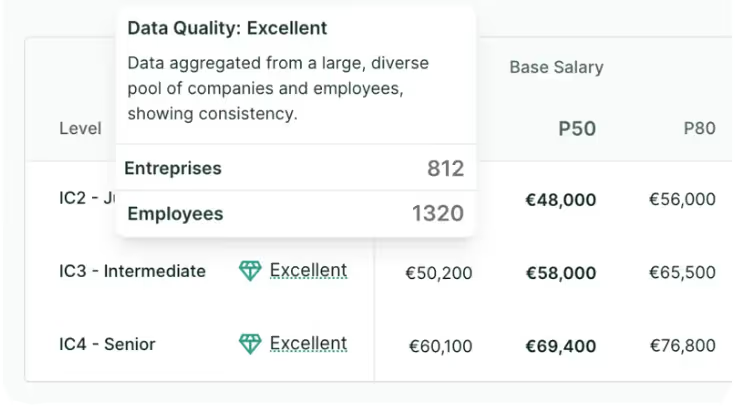
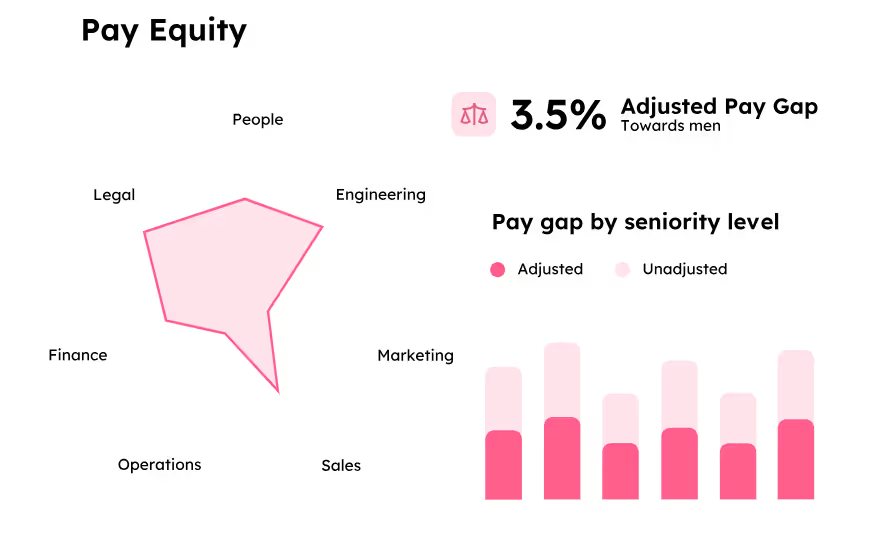
- Kept fair and compliant: the Pay Equity module constantly analyses data within your bands, flagging potential gaps and ensuring the structure is applied fairly across all employees.
- Made actionable: the Compensation Review tool lets managers collaboratively make pay decisions perfectly aligned with established bands, streamlining the entire process.
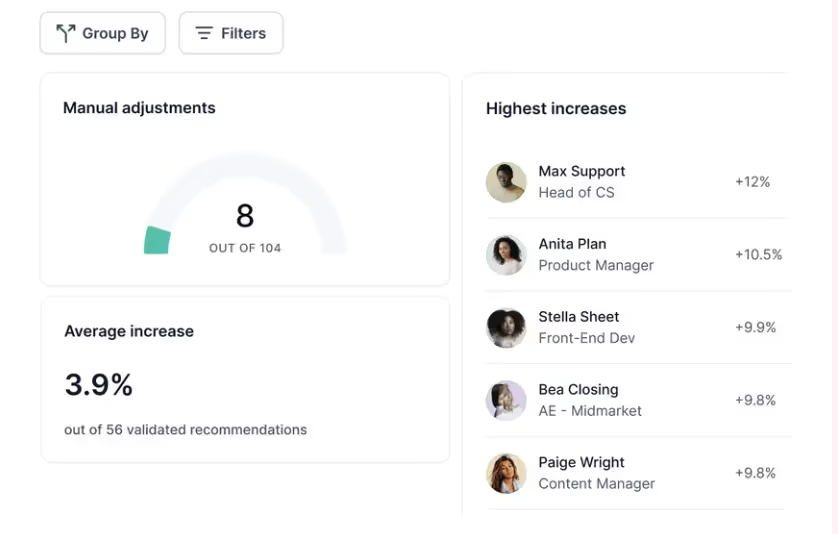
Whereby built a transparent compensation structure that scaled across two continents without creating pay gaps.
As COO Jessica Zwaan explains: "As a fully distributed company, you have a responsibility to look at compensation much earlier than a traditional single-geography company. The compensation you don't look at is just a fire burning slowly out of sight."
They implemented a performance-based framework that automatically adjusts for inflation and market changes, removing negotiation entirely from both hiring and annual reviews. The result? Team members receive proactive pay adjustments aligned with market rates – turning compensation from a quarterly headache into a strategic advantage that builds trust and loyalty.
Your next move: from confusion to clarity
A well-designed pay structure transforms compensation from a source of confusion and risk into a strategic tool that attracts talent, retains your best people, and defends your decisions when scrutinised.
Your next steps:
- Choose your model. Decide which pay structure type best fits your company culture and goals. Traditional grades for stability? Broadbanding for flexibility? Pick what serves your business.
- Get current benchmarks. You can't build a competitive structure on outdated or incomplete data. Six-month-old salary surveys won't cut it when markets shift monthly.
- Document everything. Create a clear, defensible document outlining your philosophy, grading practices, grading ranges, and progression policies. Transparency starts with documentation.
For HR leaders who want to accomplish all three with confidence and precision, Figures provides the data, tools, and support you need.
Stop wrestling with spreadsheets. Start building pay structures that work.

Summarize this article with AI
No time to read it all? Get a clear, structured, and actionable summary in one click.





.avif)
.avif)

