


Key points:
- Salary bands create defensible pay equity: They shift decisions from managerial intuition to objective criteria based on role, level, and market data – your strongest defense in pay disputes.
- Transparency attracts better candidates faster: Many candidates won't apply without salary information, and are more likely to apply when compensation is listed.
- Bands unlock strategic negotiation levers: Fixed base pay boundaries enable consistent wins on signing bonuses, equity, PTO, and progression reviews that ad-hoc systems can't match.
The EU Pay Transparency Directive looms on the horizon, and European organizations face a stark choice: scramble with ad-hoc compensation fixes that unravel under scrutiny, or build a lasting framework that can withstand both regulatory pressure and employee questions.
Oh, and if you’re in the UK, you’re not safe from the reach of the pay directive, either, especially if you hire EU workers remotely. Even if that’s not the case, chances are your UK employees will eventually want the same level of fairness that our continental brethren have, so shape up now.
And fairness is what salary bands aim to deliver. That’s because they create predictable rules that actually expand your options. Yes, bands put a hard ceiling on base pay – and that ceiling feels restrictive at first glance. But don’t be misled. They offer benefits far beyond simple structure, which is what we aim to share in this article.
Let's explore how salary bands' benefits extend far beyond the compliance checkbox, transforming how you attract talent, retain high performers, and navigate compensation conversations with confidence.
What are salary bands?
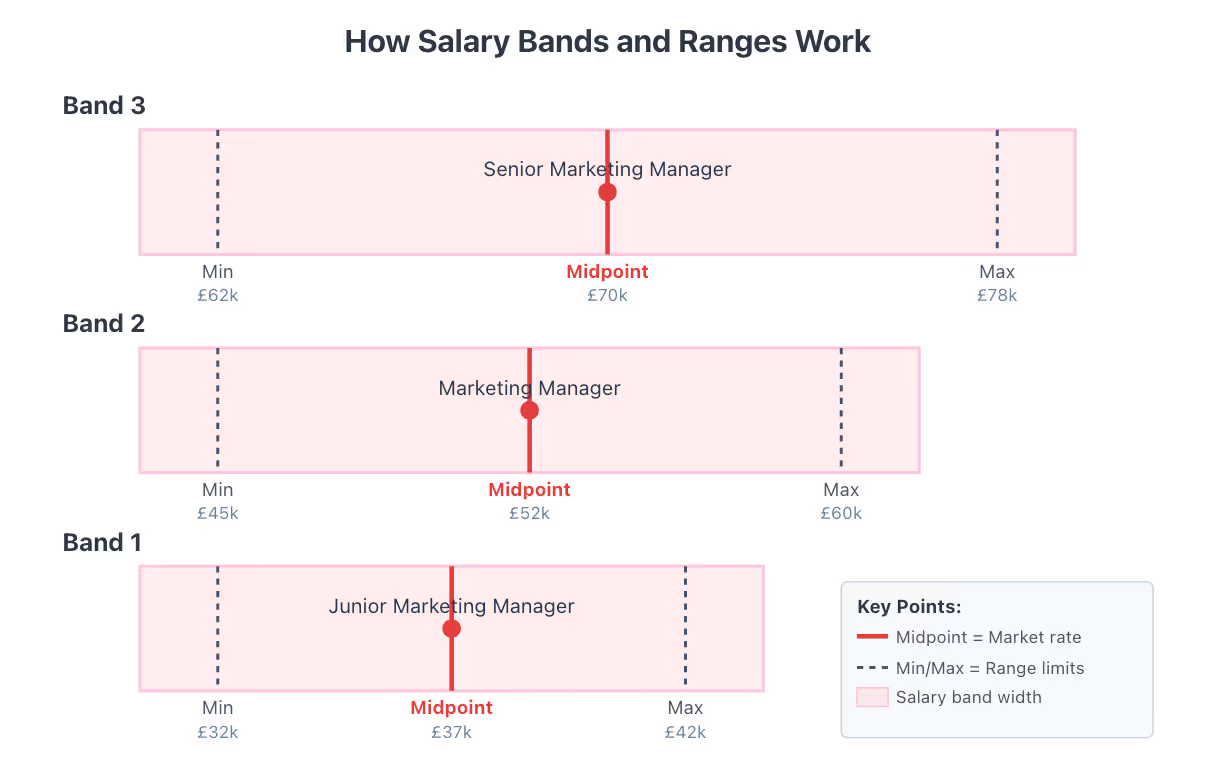
A salary band is a pay range with a defined minimum, midpoint, and maximum that groups similar jobs at the same level within your organization.
Simple as that.
🤔Need a bigger breakdown? Our guide on salary bands covers the structural basics. If you're specifically navigating UK compensation requirements, check out our UK salary bands breakdown.
We’ve linked those articles above, not just because we’re incredibly proud of our work, but because if you’re looking to calculate salary bands, this article isn’t where you’ll find it. This guide focuses on something more exciting: the practical benefits that actually change how your organization operates and how to leverage salary bands to solve real compensation challenges.
The top benefits of salary bands
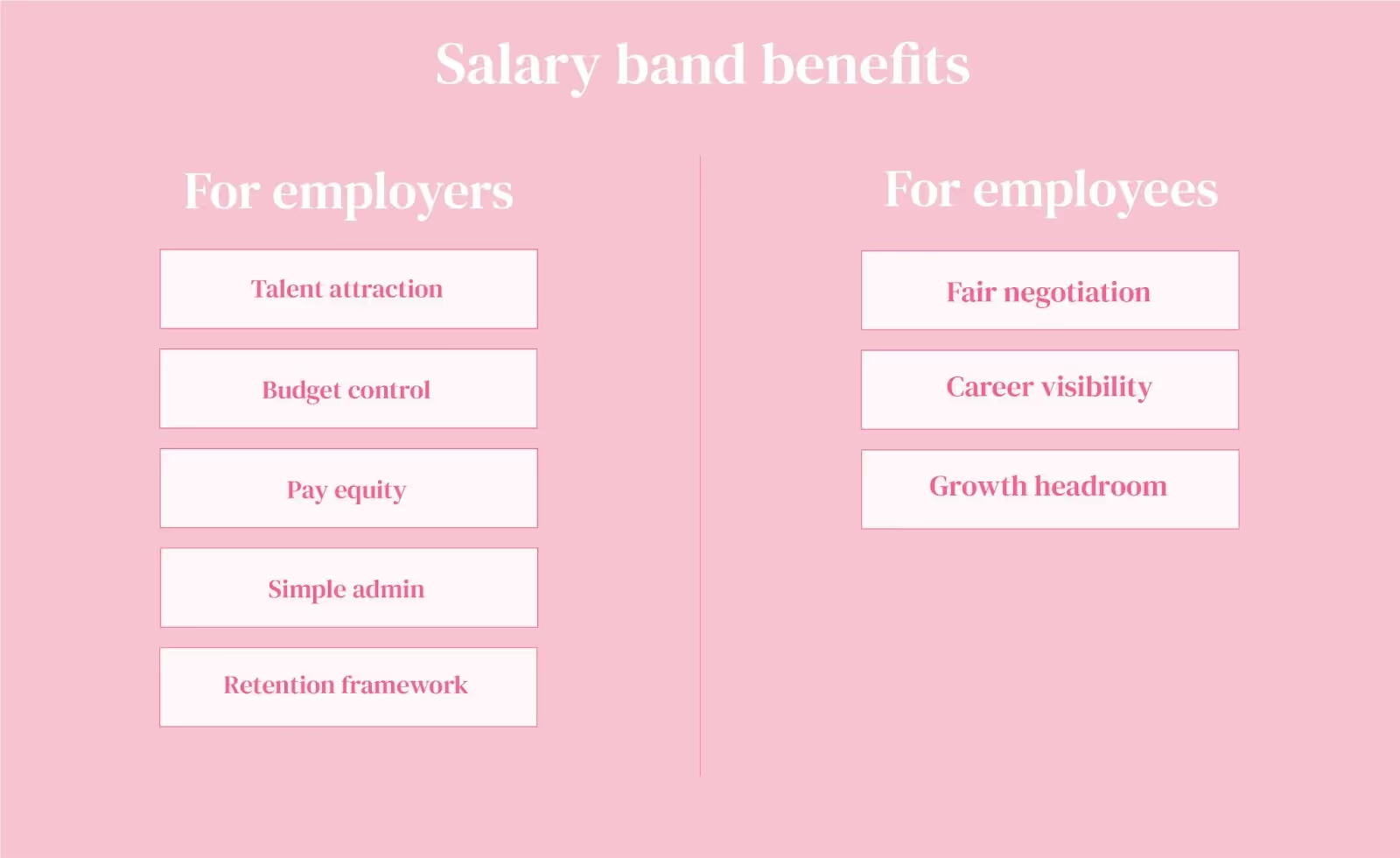
Let’s go for the benefits that will be most important to you at the moment: business and brand benefits. After all, if you want to implement salary bands, you’ll need something to present to the board. And with the benefits we’ll list below, they’ll be practically salivating at the gains.
Key benefits for your organization
Before we get started, salary bands can help businesses comply more easily with the EU Pay Transparency Directive before it arrives. While helpful, that’s boring stuff. That’s why we’re only focusing on the exciting (at least we think of them as exciting) capital-B benefits.
1. Ensures defensible pay equity and reduces bias
Salary bands shift compensation decisions from managerial "gut feel" to objective criteria grounded in role requirements, level, and market data.
Pay decisions shouldn’t rest on instinct, because that’s where bias creeps in. And while your managers might think of themselves as immune to bias, they can unconsciously reward confident negotiators over quiet high performers (more on that later).
Salary bands create an objective framework that makes these patterns visible and fixable.
With salary bands, you can demonstrate exactly why two people in similar roles earn different amounts and address pay gaps across gender and ethnicity before they become legal liabilities.
HolidayPirates experienced this transformation firsthand. Before implementing structured bands, their HR team and employee representatives struggled with compensation discussions that lacked a shared foundation.
"The lack of reliable and on-time data led to open negotiations and discussions," explains Teresa Pau, Team Lead Human Resources at HolidayPirates. "Everyone was trying their best, but we didn't have a shared source of truth." With structured bands backed by market data, those prolonged debates turned into clear, evidence-based decisions.
2. Supercharges talent attraction and employer brand
Why are more companies using transparent salary bands? Because opacity now costs you candidates.
Posting salary ranges filters out misaligned candidates, builds immediate trust with those who apply, and signals that your organization values transparency.
And the numbers agree. Gartner research found that 44% of candidates decided not to apply for a job because the description didn't include salary information, while 64% reported they are more likely to apply when compensation is listed.
3. Creates predictable budgets and financial control
Ad-hoc compensation systems are budget nightmares. One manager agrees to a premium for a critical hire, another approves an off-cycle raise, a third negotiates a signing bonus "just this once." By Q3, your compensation spend bears little resemblance to your January forecast. Whoopsie.
Granted, if there are no controls or balances, can you really blame your managers?
Salary bands stop this drift. They allow HR and finance teams to accurately model new hire costs, promotion budgets, and annual review expenses. When you know a Senior Product Manager in Berlin sits in a €74,700–€92,900 band, you can plan for multiple hiring scenarios and forecast promotion costs.
4. Simplifies compensation administration
Back-and-forth negotiations on salary can be a pain in the backside. Salary bands give managers and HR a clear script for pay conversations. No more improvving salary estimates way outside your limits.
Instead of "Let me check and get back to you," the conversation becomes: "This role sits in our Senior Engineer band, which ranges from £65,000 to £82,000. Based on your experience, we can offer £74,000."
“The band becomes your single source of truth for all pay decisions. This focuses judgment on what matters (experience mapping to levels) rather than arbitrary questions (what did the last person negotiate?).”
– Virgile Raingeard, CEO at Figures
5. Provides a framework for retention and growth
When you link pay to a formal leveling framework, employees can see exactly where they stand and what's next.
"I'm currently a Level 3 Senior Analyst earning £56,000 in the £52,000–£64,000 band. To reach Level 4 Principal Analyst (£68,000–£85,000), I need to demonstrate strategic impact and mentor junior team members."
When employees can see clear stages of advancement, they’re less likely to take their skills elsewhere. And at the same time, you’re getting a more motivated and skilled employee than you had before. Everyone’s a winner!
Now, we did cheat a little here, because this is both an advantage for organizations and employees. But we’re not complaining (and you better not be either), because it does lead us nicely on to our next section.
What employees gain: the impact of fairness
Compensation can be an emotional topic. Before Welcome to the Jungle implemented structured salary bands, their employees lacked clarity on how pay decisions were made. "Our employees were looking for greater transparency on pay," explains Mathilde Fontaine, People Operations Team Lead. "Sometimes they didn't understand what it was based on." Without salary bands, employees don’t know how compensation is decided or how they can progress. Which can be real motivation killers.
Here’s why salary bands matter for employees:
It neutralises the "negotiation penalty"
In ad-hoc compensation systems, the best negotiators get paid more – not necessarily the best performers.
Research skills, confidence, and willingness to push back all correlate with higher salaries when there are no structural guardrails. This creates an obvious problem: quiet high performers earn less than vocal average performers simply because they didn't negotiate aggressively.
Salary bands level the playing field. They ensure pay is tied to role requirements, level, and demonstrated impact rather than negotiation skill or comfort with confrontation. Those quiet lads and lasses of the office still deserve fair compensation, even if they aren’t born with the gift of the gab. Bands help with that.
When two people join as Senior Analysts, they'll both land somewhere in the £52,000–£64,000 band based on experience and qualifications… not based on who asked for more during the offer stage.
It makes career progression visible and actionable
Without bands, employees guess at what it takes to earn more. With bands, they can see exactly where they stand and what comes next.
It essentially eliminates some glass ceilings, because employees know exactly where to invest their time and what skills to work on to reach that next level. The combined opportunities of progression and improvement make a happier employee.
Welcome to the Jungle built this exact framework into their compensation philosophy. "For us, employees don't need to be promoted or manage a team to get a raise," says Mathilde Fontaine. "They can evolve as individual contributors, stay in the same position for several years and see their salary grow as a result of their performance and expertise." This approach helps employees see multiple paths forward, whether through management or deepening expertise in their current role.
It proves the value of "headroom"
Let’s say you were hired at 95% of an ad-hoc budget. You were a keen negotiator and maximised your starting salary. Nice… But what’s next? You're effectively "overpaid" relative to peers and will likely receive only cost-of-living adjustments for years.
It’s like moving into a house at 6 years old, consisting of rooms that are 4ft high. You’ve got no room to grow. That’s why salary bands can be a godsend. Because they actually give you something to measure your growth on.
Being hired at 60% of a defined band is a strategic placement. It means you have 40% of the band's width as "headroom" to earn through high performance without needing a promotion.
Headroom isn't a penalty for accepting less. It's a runway for earning more through impact. So you'd better put some bass in your walk (oh, you thought that runway was for airplanes?).
The game-changer: how salary bands reshape total compensation
As HR, rules are basically our bread and butter. They provide guidelines that remove guesswork, and that’s also true in the context of salary and compensation negotiations.
When base pay has no structure, every compensation element becomes a high-friction negotiation. Candidates push on base salary, then bonus structure, then equity, then benefits, then start date. Managers negotiate in circles because there are no clear boundaries anywhere.
Everything is theoretically flexible, which paradoxically makes everything harder to negotiate.
Bands create predictable, hard-to-break rules for base pay. This clarity lowers friction and shifts negotiations to other levers that are genuinely more flexible and often more valuable to both parties. What are those levers? Take a look:
- Signing bonuses: "We can't start you at the 80th percentile – our internal equity rules are firm. But to recognise your specific experience with enterprise clients, we can offer a £10,000 signing bonus."
- Equity/stock: "Base pay is fixed by level. The real variable for high-performers at this level is equity grants. Let's focus there, because that's where exceptional candidates see the biggest upside."
- PTO/benefits: "The band is the band. But we can be flexible on an extra week of annual leave to get this deal done."
- Levelling review: "You're right, you're at the top of the L3 band. The next meaningful pay increase requires a promotion to L4. Let's set a six-month review to formally assess you for that level with clear success criteria."
‼️Flexible salary ranges can cause havoc in your company anyway, especially when it comes to creating pay compression. Oh, and that’s not even mentioning the issues they can cause in pay gap calculations. One especially high salary born from negotiations rather than solid bands can really skew averages…
Why salary bands fail and how to fix them
Salary bands work brilliantly – until they don't. Let's address the real disadvantages and the trust-breakers that make employees question the entire system.
The known disadvantages
- Admin burden: building, benchmarking, and implementing bands is a massive project. Job levelling alone can take months. Then you need market data, internal alignment, and rollout communications.
- Perceived rigidity: "What if a top candidate demands more than the band maximum?" Managers worry they'll lose talent because the structure won't flex.
- The pay ceiling: high performers hitting 95% of their band face a reality check. There's nowhere to grow in base pay without a promotion, which can feel like their earning potential just hit a wall.
The trust-breakers
These are the implementation failures that make employees lose faith in the entire system:
- Salary compression: tenured employees watch new hires join at the same rate or higher. Market rates moved, bands adjusted, but incumbents stayed frozen.
- Shifting ranges mid-process: a role is posted as Senior (£70,000–£85,000). A candidate applies, interviews go well, then HR re-levels the job to Mid (£55,000–£68,000). This destroys trust faster than any other single failure.
- Slow exception processes: a manager agrees to an exception in principle, then it disappears into a compensation review committee black hole for three months while the candidate accepts another offer.
- The hollow headroom promise: companies sell candidates on "joining at 60% with lots of room to grow," but an annual raise culture (1-2% cost-of-living adjustments) means progression never actually happens. The transparency becomes a lie.
The fixes
- For admin burden: use dedicated compensation management software (*cough *cough Figures). Spreadsheets don't scale well past 200 employees.
- For rigidity: train managers on total compensation levers – signing bonuses, equity, PTO, and levelling reviews become your flexibility.
- For compression: run annual band refreshes and simultaneously adjust tenured employees to their correct compa-ratio (position within band).
- For shifting ranges: complete job levelling before posting. If scope changes, communicate immediately with candidates and explain why.
- For exceptions: create a fast, transparent exception process owned by a single committee with defined timelines.
Why the EU Pay Transparency Directive changes everything
Why are more companies adopting transparent salary bands? Because it's no longer optional.
The EU Pay Transparency Directive becomes enforceable across member states by June 2026, fundamentally changing how European organizations approach compensation.
Here are its core requirements:
- Employers must provide salary information or salary ranges in job postings before interviews.
- Companies cannot ask candidates about salary history.
- Employees can request comparative pay data by gender for equivalent roles.
- Organizations with gender pay gaps exceeding 5% must conduct pay assessments and develop action plans.
For UK companies with EU operations, this applies now. For purely UK-based employers, while there aren’t regulations requiring you to be transparent about pay, we hope we’ve argued the case that the benefits far outweigh opaque pay practices.
Granted, the UK does require consistent reporting on gender pay gaps. Without proper salary bands, gender pay gap analysis is much more difficult. Without proper guidelines, you can have pay disparities between departments, between part-time and full-time employees, and between employees working the same jobs.
So, you may as well make your life easier now by implementing salary bands. And luckily, we’re going to give you a step-by-step guide to get you off the ground running.
How to create salary bands in 5 steps
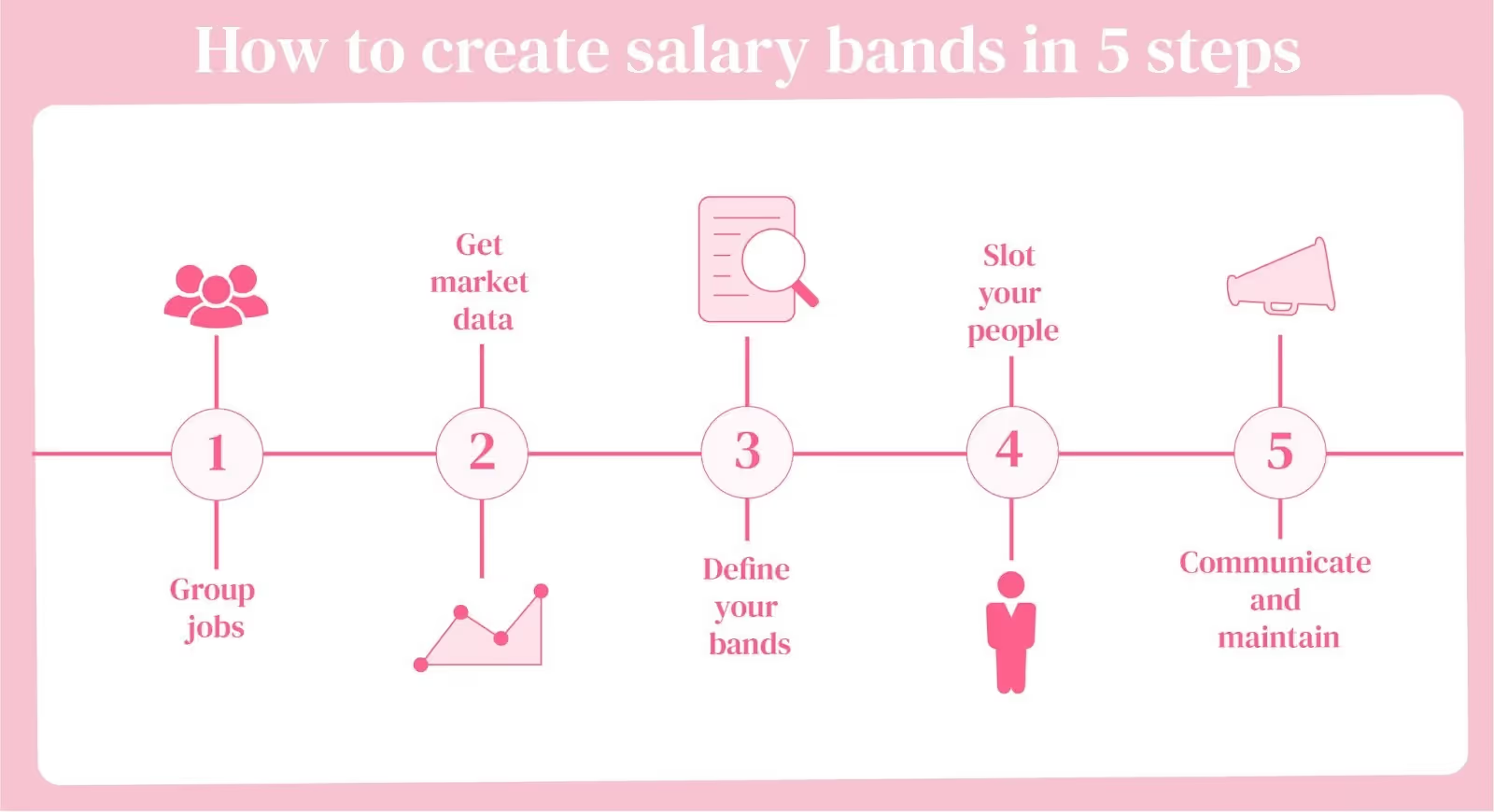
Building effective salary bands requires systematic execution across five stages.
- Group jobs (job levelling) – Analyze and group similar roles into job families (Software Engineer, Product Marketing) and then into levels (L1 Associate, L2, L3 Senior, L4 Staff). Establish clear progression criteria defining how employees move between levels. For more info, take a look at our guide on job architecture.
- Get market data (benchmarking) – Price levels, not individuals. Use real-time data sources like Figures to find market rates (e.g., 70th percentile) for an L3 Senior Data Engineer in Berlin or London.
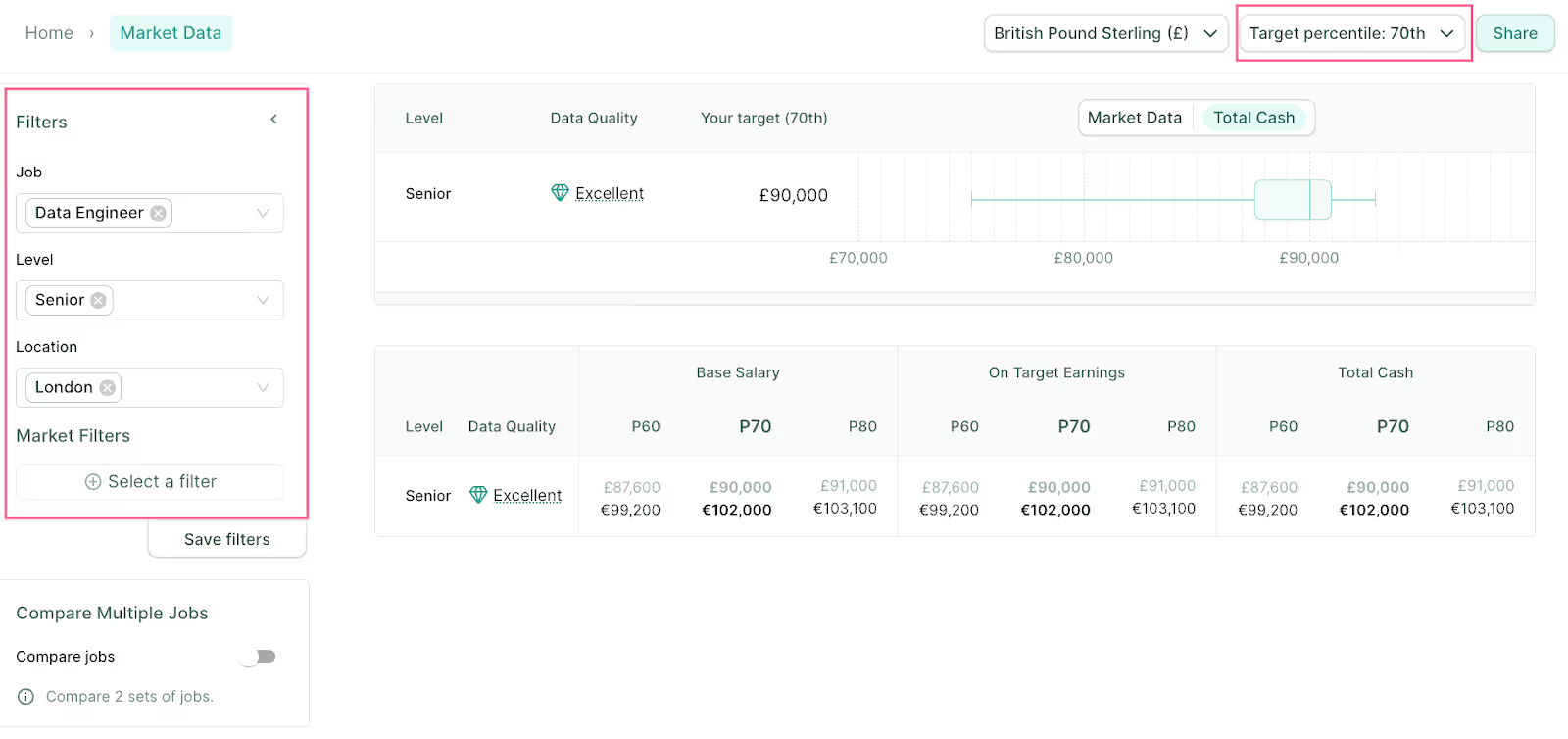
- Define your bands – Create ranges (min, mid, max) around your market midpoint. Example: If the market rate for a Senior Product Manager is £74,700, your band might be £67,000 (min) – £74,700 (mid) – £82,400 (max).
- Slot your people – Place current employees into the new bands. Identify and address outliers, particularly anyone falling below the minimum.
- Communicate and maintain – Train managers on the structure and progression criteria. Build an annual refresh cadence to update market data. This ongoing maintenance separates successful implementations from those that fail within 18 months.
‼️While we make it look easy here, this process requires a lot of planning and dedication to carry out. Salary bands should be a gradual rollout, not something you compile within a couple of days.
Your next move with salary bands and Figures
Salary bands are the only way to build a fair, transparent, and strategic compensation model that attracts top talent and meets new legal demands.
The benefits are clear: defensible pay equity, faster recruitment, predictable budgets, simplified administration, and visible career paths. But the primary disadvantage remains – the immense administrative burden, the risk of working with outdated data, and the complexity of maintaining bands as markets shift.
This is exactly what Figures solves.
Figures salary bands solution provides real-time market data powered by 3.5 million data points (powered by Mercer), a simple platform that replaces spreadsheet chaos, and the clear structure you need to move from theory to implementation in a fraction of the time. You get enterprise-grade benchmarking, manager-friendly tools, and compliance-ready modules – all in one place.
Don't let spreadsheets be your downfall. Book a demo and discover how to build salary bands that actually work.

Summarize this article with AI
No time to read it all? Get a clear, structured, and actionable summary in one click.





.avif)
.avif)

