Tightening regulations, evolving employee expectations and a clear focus on fairness and equity mean there’s no getting away from pay transparency.
Done well, transparency can reduce gender pay gaps, strengthen employer branding, and even motivate employees to work harder. But without the right preparation and planning, employers risk overwhelming employees with pay data, leading to misinterpretations and confusion.
For years, Figures has provided the tools employers need to make informed, strategic decisions about compensation. We help companies build robust, scalable salary band systems, benchmark salaries against the most appropriate market, and run smooth, straightforward compensation reviews.
Today, we’re still doing all of that — but we’re also focused on the part many organisations underestimate: helping employees understand why they’re paid what they are. After all, when pay decisions and salary breakdowns aren’t clearly explained, employees fill in the gaps with assumptions. This can lead to:
- Widespread frustration and resentment
- Distrust in managers and HR
- Disengagement and attrition
In this article, we draw on our experience working with HR and compensation teams to explore common sources of employee confusion — and share practical tips to help employees truly understand their pay.
{{ ai }}
When transparency leads to confusion
From our work with HR and compensation teams across hundreds of organisations, we’ve seen how pay transparency can backfire if it’s not managed carefully.
For example, picture this: a company publishes its salary bands but doesn’t explain how employees are placed within them. An employee at the lower end of their band may feel undervalued or overlooked — even if there’s a legitimate reason for their placement.
Now imagine an employee who notices a colleague in a similar role earning more. This may be due to experience, performance, or tenure, but without explanation, it can feel arbitrary or unfair.
Finally, picture a company that recently adjusted salaries in its engineering department to stay competitive in a fast-moving job market. Employees in other teams might wonder why they didn’t get a raise — or even assume the reason is bias or favouritism.
As a recent report from Korn Ferry puts it, "Transparency without context raises more questions than it answers”. From our perspective, this confusion carries a clear cost: it can erode trust, dampen engagement, and drive talented employees out of the organisation. Keep reading to learn how to turn that confusion into clarity by providing employees with the context and explanations they need to truly understand their pay.
Top pay transparency mistakes to avoid
Here are some of the mistakes we see cropping up again and again — and how to avoid them:
- Rushing to comply with regulations: Take the time to plan ahead so you can meet compliance obligations with confidence.
- Sharing numbers without context: Provide clarity on the principles and data behind pay, so employees understand how decisions are made.
- Treating transparency as a one-time event: Make pay communication part of your ongoing processes.
- Sharing incomplete or inconsistent data: Double-check information and align across teams to avoid confusion.
- Not preparing managers for pay conversations: Equip your teams with the skills and knowledge to explain pay clearly and confidently.
- Overlooking the emotional impact of pay disclosures: Consider how pay discussions can affect trust, morale, and engagement.
- Assuming transparency alone will fix inequity: Think of it as a tool to support fair and equitable pay practices — not a magic bullet.
How to get it right: helping employees understand pay data
You won’t unlock the full benefits of pay transparency with numbers alone. Rather than treating it as a box-checking exercise to meet regulatory requirements, companies should think of pay transparency as an ongoing conversation that helps employees understand not just what they’re paid, but why. Read on for practical tips to help employees make sense of pay data and build trust in your organisation.
Do the behind-the-scenes work first
Pay transparency only works when your pay practices are fair, consistent, and defensible. Sharing pay data before your internal systems are ready can create confusion — and in the worst cases, surface inequities, create legal risk, and erode employee trust.
“Pay transparency only works well when you have a well-kept house. If employees see wide pay gaps between similar jobs—or unclear paths for advancement—they are more likely to feel frustrated than reassured by transparency.” — Mercer, Giving pay transparency the right foundation
So, what does being “ready” actually mean? Thankfully, this is one area where we at Figures know what we’re doing. And in our experience, there are two essential steps you’ll need to take before you can confidently share pay data with your teams:
Step #1: Build your pay framework
Start by mapping roles across your organisation, defining job families and levels and building salary bands that reflect experience, performance, market benchmarks — and anything else that matters to your organisation. And if you already have that structure in place? It’s still worth auditing your salary bands, pay criteria and decision-making processes for fairness and consistency, giving you a defensible foundation for any pay data you share. Not sure where to begin? It all starts with the right tools — like Figures.
Step #2: Make it clear and understandable
Your pay framework is only effective and defensible if employees can understand it. Tools like Figures can help clarify pay structures, decision criteria and progression paths so employees see how their pay is determined, how roles compare and what opportunities exist to advance. Making your framework comprehensible lays the groundwork to ensure transparency builds trust rather than confusion.
This process takes time and effort — but for many employers, it’s no longer optional. The EU Pay Transparency Directive will be in effect by June 2026 at the latest, and organisations that fail to prepare risk being forced to share pay data before they’re ready. Starting the prep work now puts you in control and helps ensure transparency builds trust rather than undermining it.
Share the ‘why’ (not just the ‘what’)
The difference between clarity and confusion isn’t how much information you share, but the context you provide. Sharing pure data like salaries or salary ranges without context may raise more questions than it answers.
At Figures, our goal is to help organisations build clear, consistent pay frameworks — and then share them effectively with employees. In our view, pay transparency isn’t just about sharing numbers, but helping employees to make sense of pay data by sharing how pay decisions are made.
“Rather than trying to satisfy everyone, the goal is to ensure each employee understands the ‘why’ behind their compensation.” — Compversation #31: Will Employees Ever Be Satisfied?
As our CEO Virgile Raingeard explained in a recent issue of our newsletter, Compversation, sharing your compensation policy effectively means being clear about three things:
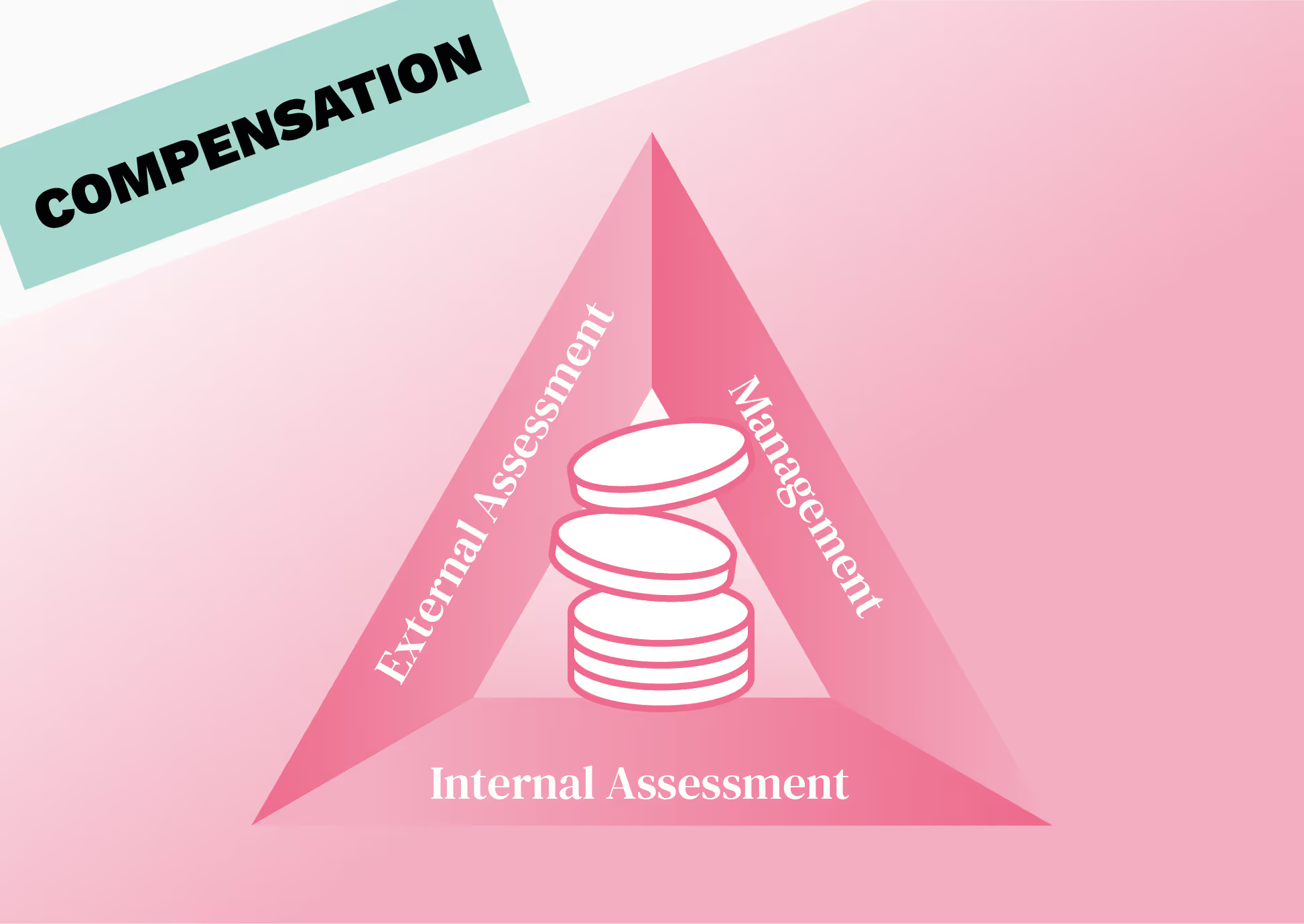
- The company’s positioning relative to the market: Employees need to understand how pay compares to the external market. Figures helps organisations hit the right spot across roles and levels with our salary benchmarking tool.
- How each employee fits within the company’s pay structure: Clarity around salary bands, job families and levels ensures employees see the rationale behind their pay. We help companies design fair and consistent pay structures then communicate them clearly to their employees.
- Where each person sits in comparison to colleagues in roles of equal value: Transparency around pay decisions builds trust. Figures helps you identify and analyse pay gaps and explain pay differences to employees, turning raw data into an explainable narrative.
Only when everyone understands these key principles can individual pay discussions be truly useful — and sharing numbers without this context will only cause confusion.
Tip: Explain what “the market” means to you
Companies define “market pay” differently. Some benchmark nationally, others against a small local peer group. If employees don’t know what their pay is being compared to, they may feel underpaid — even when they’re not. A clear explanation of how you’re defining “the market” can go a long way to reassuring employees that there’s method behind your pay decisions.
Set managers up for success
Managers are on the frontline when it comes to explaining pay decisions — and they’re one of your most powerful tools for helping employees understand pay data.
To be successful, managers need to be able to confidently and clearly discuss compensation — which starts with their own understanding. When you train managers on your company’s pay policies and the philosophy behind them, this knowledge will trickle down throughout your organisation.
It’s also important to train managers on how to effectively communicate about pay information. This is a broad topic, but our Compensation 101 guide for managers can help you get started.
Remember: unclear pay information doesn’t just confuse employees — it can also cause frustration, anxiety and resentment. That means training managers to talk about pay with empathy is crucial. But it’s equally important to avoid getting derailed by emotion and keep the focus on the reasoning and systems behind pay data.
How to lead pay conversations with empathy and compassion
Don’t say…
- "That's just how it is.”
- “The decision has been made — it’s out of my control.”
- “Everyone’s pay is fair. You’re overthinking it.”
- “That’s the company policy — there’s nothing we can do about it.”
- “I can’t discuss that.”
Do say…
- “I understand this is frustrating.”
- “Let’s talk about the reasons behind this decision.”
- “I hear your concern. Let’s go through how pay is determined.
- “Here’s why the company takes this approach.”
- “Here’s what I can share about how the decision was made.”
Make it a two-way street
Pay transparency isn’t just about sharing numbers — it’s about fostering dialogue between managers, employees, HR and leadership. If you simply hand over the data and expect employees to figure it out, you’re bound to be met with confusion.
True transparency gives employees the chance to ask questions and actually understand the pay information available to them. How you do this is up to you, but you could start with 1:1 meetings, structured Q&A sessions, or open office hours. Effective two-way communication doesn’t just help employees make sense of pay data. It also builds trust, reduces misunderstandings and ensures every team member feels seen, heard and valued.
Real transparency requires the right tools
The EU Pay Transparency Directive deadline is fast approaching, and European employers need to be ready. The most successful companies treat pay transparency not as a box-checking exercise, but as an opportunity to strengthen fairness, build trust, and boost engagement.
Figures helps organisations turn complex pay data into clarity. From mapping roles and structuring salary bands to uncovering and analysing pay gaps, our platform makes it easy for managers and HR to share clear, defensible pay information and explain compensation decisions confidently and consistently — helping employees truly understand their pay.

Summarize this article with AI
No time to read it all? Get a clear, structured, and actionable summary in one click.