
Key points:
- A salary increase letter contains: the employee's name, role, current salary, increase amount and percentage, new salary, and effective date.
- Keep proof the letter was delivered: a pay rise is a one-way change in the employee's favour, so there's no countersignature to chase; a dated email or secure upload is enough.
- UK and EU rules point the same way: a pay change is a contract variation needing written notice within a month (Employment Rights Act 1996), equal pay applies under the Equality Act 2010, and the EU Pay Transparency Directive reverses the burden of proof from 7 June 2026.
- One structure covers multiple scenarios: merit, promotion, market realignment, cost-of-living and expanded-scope letters share the same skeleton; only the central argument and its data change.
- Fix the process behind the letter: calibration, pay equity checks, and a defensible benchmark come first; get those right and the mistakes that compound at scale never reach the page.
A salary increase letter is a formal written notification that an employee's pay is changing. You'll issue them after annual review outcomes, promotions, market realignments, cost-of-living adjustments and retention offers – rarely one at a time, and often across several countries and languages at once.
In practice, that means review season with 40 letters to get out the door, each one accurate, consistent and legally sound, and no two quite the same.
It’s hard, but it’s also super important to get right, so today, we’ll look at the elements the letter needs, the UK and EU rules behind them, five scenarios with a template you can adapt, and the mistakes that quietly compound at scale. We’ve also added a section on what to do when a request comes the other way, from an employee making their own case.
What every salary increase letter must include
These details belong on every salary increase letter, whatever prompted the raise:
Everything else is situational.
- A reason for the raise helps on a merit or promotion increase, but it isn't always needed and is sometimes left off on purpose: for a retention or off-cycle adjustment, you may not want "for retention" sitting on the record.
- You can name the employee's manager, though the letter is issued and signed by HR.
- A review period helps when it clarifies what the decision covers.
One thing you don't need is a signature back. A pay rise is a one-way change in the employee's favour, so an informational letter does the job on its own; what matters is a dated record that it reached them. Timing is just as simple: the letter has to land before the change shows up on the payslip.
‼️ Figures' Compensation Review populates these fields into your own letter template, pulled from the employee record and the approved decision, ready to edit before it goes out.
UK and EU requirements to be aware of
If you work in the UK or EU, or you’re hiring people from all over, you need to pay attention to all the regulations:
UK requirements for pay changes
In the UK, a pay change is a variation to the employment contract, and the employee is entitled to a written statement of the change within one month under section 4 of the Employment Rights Act 1996. Equal pay sits alongside it: the Equality Act 2010 reads a sex equality clause into every contract, so the figure in the letter has to hold up against what colleagues doing equal work are paid.
EU requirements for pay changes
Across the EU, the Pay Transparency Directive (2023/970) raises the bar on documentation and reverses the burden of proof in equal pay disputes from 7 June 2026. Without a proper pay gap reporting system, your inconsistent letters can become solid evidence against you.
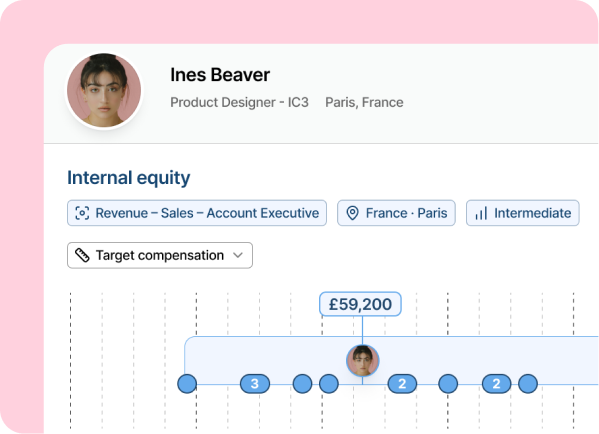
The upside: the same documented, consistent process that produces good letters is what gets you ready for the directive. Figures is built around EU requirements and flags pay gaps across peer groups (job, level, location) before letters go out. The directive's joint pay assessment kicks in at a gap of 5% or more between categories of workers doing equal work, so seeing those gaps early lets you catch and justify them before they reach a letter.
Five scenarios that call for a salary increase letter (and one ready-to-use template)
A salary increase letter can come from different situations, but the structure would still barely change. The only things you might have to adjust are the central argument and the data behind it.
That last one is the scenario most template libraries skip, and it's the one that breeds the most resentment when it goes unacknowledged.
Here's the structure worked through for a performance-based increase:
For a promotion, market realignment, cost-of-living or scope-expansion letter, keep everything above and rewrite only the paragraph carrying the reason; the elements, the format and the sign-off stay put. Best practice is to run these from your own branded template, in wording your teams recognise.
What to do when an employee sends a salary increase request
The honest answer is that pay isn't something you settle desk by desk. You have review cycles for a reason: they apply the same policy, the same bands, and the same data to every role. So when a request comes in off-cycle, the fairest thing you can do is walk the person back to that process, and remind them when the next round is and what it looks at. Someone asking should be the rare exception; the cycle is where raises actually get decided.
Anything genuinely worth acting on – real delivery, grown responsibilities, sitting below their salary band – goes into the next cycle's assessment, where it's judged on the same basis as everyone else. Not settled there and then. Set aside everything that shouldn't sway a pay decision: the mortgage that's gone up, the "it's been two years", the "but so-and-so earns more", the quiet ultimatum. They're how pay gaps open up, one sympathetic exception at a time.
And when it's a hard conversation, a no or a case you can't say yes to, Figures' guide to delivering review results has sample scripts you can lean on.
Mistakes HR teams make when sending salary increase letters at scale
Most of these are harmless at 50 employees and genuinely risky at 500 because they compound with volume.
Updating payroll before the letter goes out
The employee finds out about their own raise from a payslip instead of from you, which is a deflating way to receive good news. Make sure your order is correct: the payroll change takes its date from the letter's effective date, never the reverse.
Letting the language drift between managers
When everyone writes their own version, two people getting the same percentage for the same reason end up with letters that read completely differently: different tone, different rationale, different level of care.
To avoid that, you need one approved template accessible by everyone, with the central argument set centrally, that keeps everyone consistent and spares managers the wordsmithing and “creativity”.
Keeping no record that the letter landed
If a question comes up months later, "we definitely told them" isn't much of a defence. A salary increase is a one-way change in the employee's favour, so there's no countersignature to chase.
What you do need is dated proof of delivery: an email, an upload to a secure document store, or a logged in-person handover.
One polished letter, five rough translations
When you’re hiring internationally, you have to consider the language barrier. It’s not fair if your UK employee gets a considered letter while your colleagues in Paris and Berlin get something a manager ran through a rough translator and the framing either changed entirely or it just plainly sounds weird.
Before you start sending them out, ensure each version comes from the same approved template, properly translated so the framing is identical whether it lands in London, Paris or Berlin.
Skipping calibration before anything is drafted
This is the expensive one. Each manager makes a perfectly defensible call on their own people, and collectively those calls open a pay gap between two peers in the same role. The letter is the moment that gap gets written down and dated. Calibrating across the cohort first is what stops it.
From individual letters to a structured compensation review
All of the mistakes we just mentioned (and potential others you might have encountered) come from writing letters one at a time, when the letter should be the final output of a structured review, produced once the decisions behind it are already made.
A structured review turns the order around. The decisions come first: a documented trail for every employee, calibration across the cohort before anything's drafted, pay equity checks against peer groups, a defensible benchmark behind every figure, and a promotion budget set at the start with a clear view of who's eligible against it. Do that, and the letter is the easy part.
📄 And if you’re tempted to ask ChatGPT about it, read our study where we tested its capabilities with 10,000 salary benchmarks!
So, how do you get all that? We see the same problems across companies, so we built Figures' Compensation Review. Figures is a European compensation management platform that generates salary increase letters from your company's own template. It produces a letter template in your own company wording, in each employee's language, from the data already in the platform: the employee record, the new salary, the effective date, the manager's rationale, the approved budget.
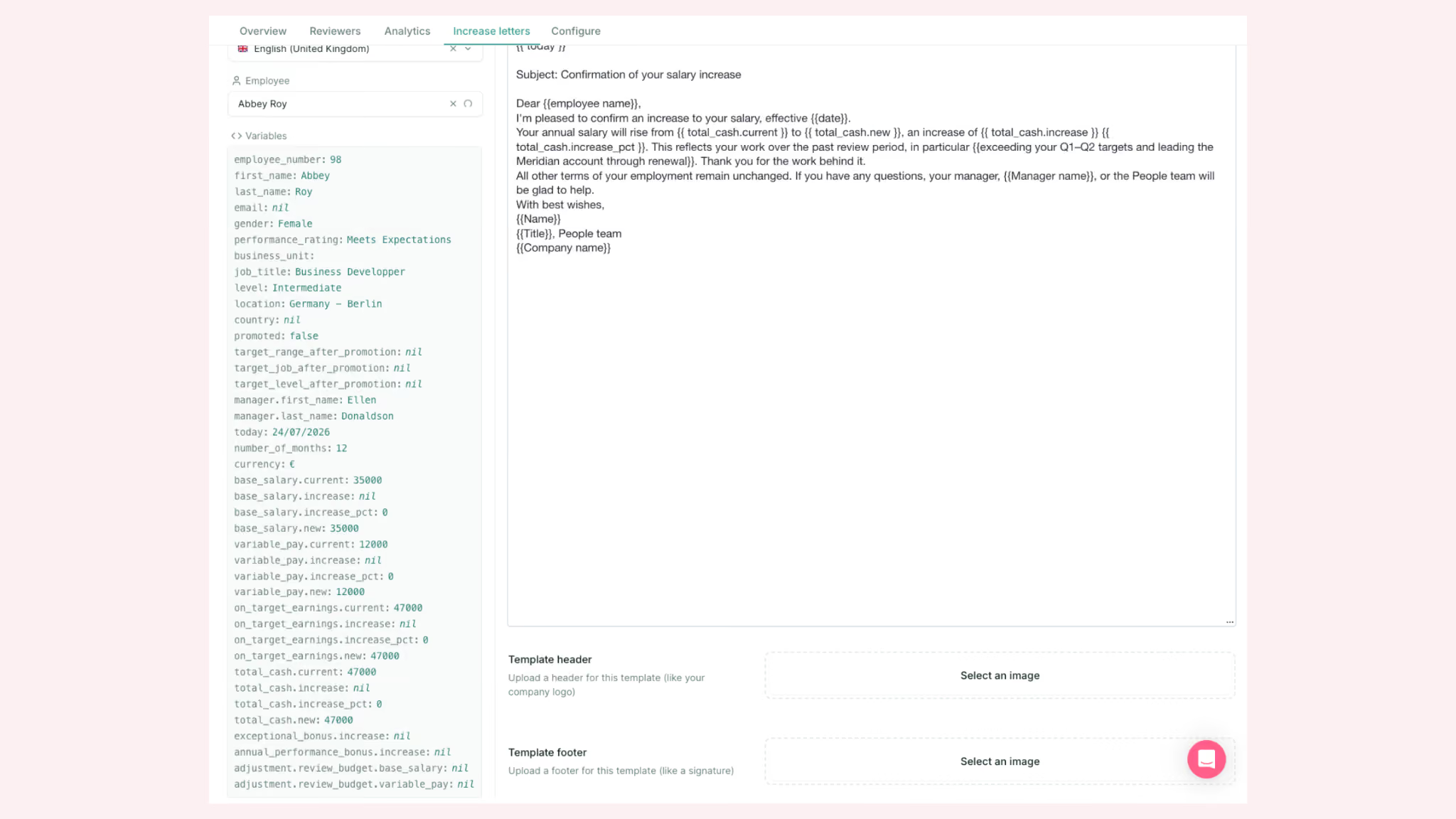
The supporting pieces sit around it: the Benchmark gives you the figure, Pay Equity flags peer-group gaps before you approve anything, live budget tracking shows what's left to spend and how many people are still eligible, and finished letters go to reviewers in the dashboard for sign-off before they reach anyone.
If your next review cycle is looming, book a Figures demo and see it run on your own data.
Ready for the Directive? We help you build a compensation policy you can explain to your teams, your candidates, and regulators.
Ask a demo