


.avif)
Key points:
- The loyalty penalty is expensive: 35% of workers leave jobs specifically for better pay and benefits.
- Pay compression drives quiet exits: When tenured employees earn less than new hires for the same work, your most loyal people start looking elsewhere.
- Fair pay drives productivity: 81% of workers report feeling more productive and loyal when they believe they're paid fairly, making competitive compensation your highest-ROI retention investment.
- Transparency builds trust: From 2026, the EU Pay Transparency Directive requires companies to report pay gaps and justify differences, making proactive equity analysis a necessity, not just good practice.
- Data-driven tools eliminate guesswork: Companies using structured compensation platforms achieve 100% employee positioning within salary bands while saving three weeks annually on compensation reviews.
Your most loyal employees are quietly falling behind.
While you're paying new hires current market rates, the people who've been with you for years are earning less for the same work. You might not be doing that on purpose, but still… what a way to reward loyalty.
It's not going to be long before those underpaid employees will say "good riddance", either. Recent research shows that 35% of workers leave jobs specifically for better pay and benefits. Not because they hate the company, but simply because staying costs them money.
Competitive pay retention means aligning base salaries to verified market percentiles and fixing compression before it triggers exits. It's a solution that works for everybody. Your employee gets paid fairly, and you don't lose a valuable employee because you forgot to adjust their pay to current market rates.
And in this article, we're going to show you how to build a pay strategy that genuinely improves employee loyalty and reduces turnover – with concrete benchmarks, realistic timelines, and examples that make sense for companies like yours.
Why competitive pay is your best defence against turnover
Competitive pay retention is the practice of aligning employee salaries to verified market percentiles. It's a way to keep your loyal employees… well, loyal.
Imagine how it would feel if you were working at a company for 15 years. You've received pay rises, sure, but you've noticed that newer employees are paid more than you.
Are you likely to stay loyal? We highly doubt it.
This is a very real phenomenon, and one that pushes employees out the door in search of companies that actually have a competitive pay strategy.
The true cost of employee turnover
When someone hands in their notice, you'll be paying for more than just a job posting:
Direct costs:
- Recruitment expenses (job boards, agency fees, advertising).
- Interview time (HR teams, hiring managers, senior leadership).
- Onboarding and training for the replacement.
- Administrative processing (contracts, systems access, equipment).
Indirect costs:
- Lost productivity during the vacancy period.
- Knowledge gaps that slow down projects.
- Reduced team morale and increased stress on remaining staff.
- Cultural disruption and relationship rebuilding.
Here's what this looks like in practice: For a mid-level employee earning £50,000 annually, replacement costs might range from £25,000 to £37,000. That's six to nine months of their salary consumed by the churn cycle.
A senior developer leaves for a 15% pay bump? You'll spend months recruiting, then more months waiting for the replacement to reach full productivity. If you pay fairly in the first place, you avoid this problem entirely.
The impact on morale and motivation
You might remember someone saying, "Money can't buy happiness." Well, tell that someone to hush their mouth, because sometimes, it absolutely can.
Consider the fact that 81% of workers report feeling more productive and loyal when they believe they're paid fairly. But if they find out that a new employee earns more than they do, they can become very unhappy. That productivity and loyalty disappear faster than your colleagues when you mention it's time for office conduct training.
🤔An unhappy employee can cause havoc in a workplace by sowing discontent amongst other employees. Especially if those employees are facing similar pay problems… That's why you need actual equity.
The link between pay, equity, and loyalty
Competitive pay means two things: matching external market rates AND maintaining internal fairness.
Pay equity examines whether people in similar roles with similar experience receive comparable compensation. When your data scientist with five years' tenure earns less than a new hire doing the same work, that's an equity problem waiting to trigger an exit. And if it isn't already clear, this will cost you time and money.
"Companies often see competitive pay as an expense line, but it's one of the highest-ROI investments you can make. Every pound or euro you invest in fair, market-aligned pay comes back in productivity, engagement, and lower recruitment costs. Ignoring it is simply bad business."
– Virgile Raingeard, CEO at Figures
‼️If you're in the EU, the upcoming Pay Transparency Directive makes equity urgent, not optional. From 2026, companies across Europe will need to report pay gaps and justify differences.
If you're in the UK, the directive might still affect you, especially if you want to eventually expand into the EU or hire EU workers for your remote company. That's not to mention employees who might be looking to greener pastures if your company isn't up to scratch. The UK already lost a lot due to Brexit, so let's not let our talent follow suit.
5 pillars of a modern competitive pay strategy
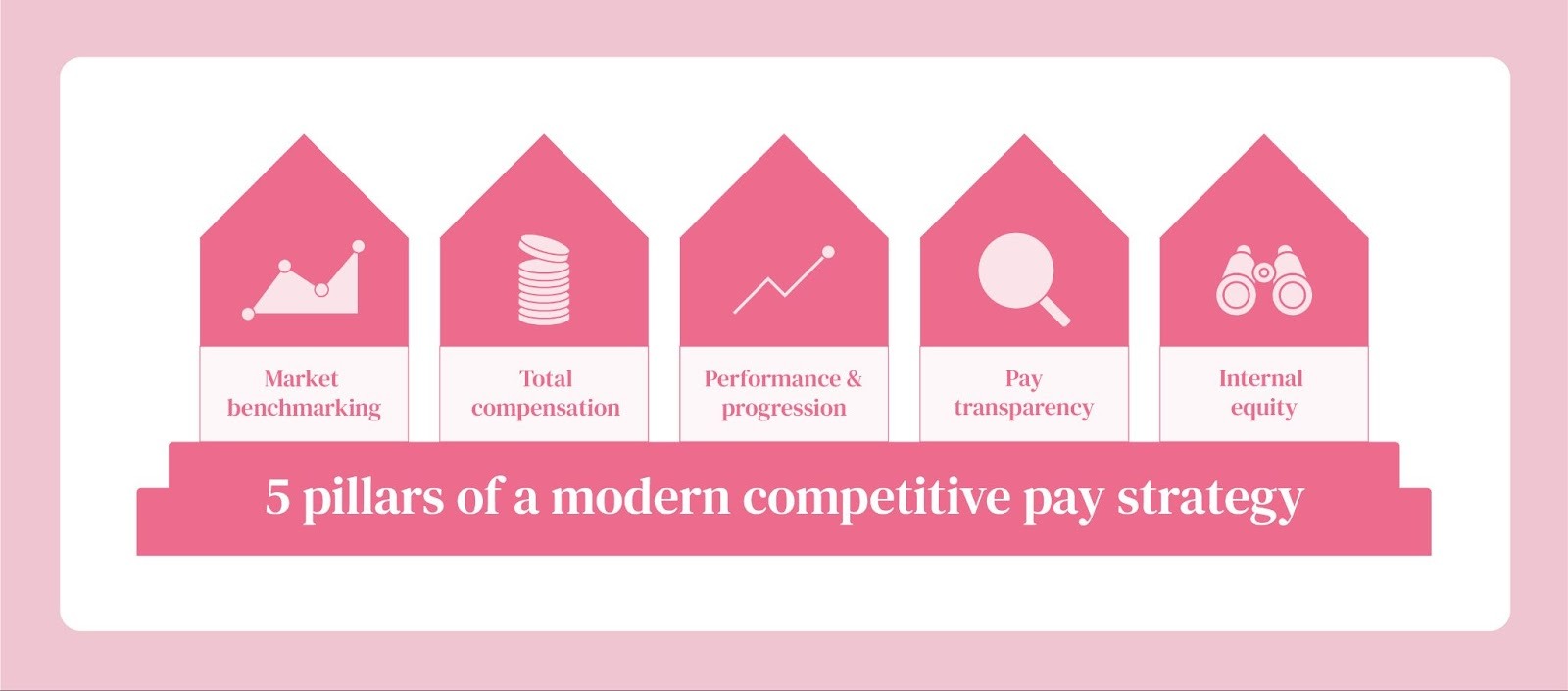
Getting pay right is an ongoing commitment that requires constant care and monitoring.
Sounds a bit like a relationship, right? Well, that's because it kind of is, at least between the business and its employees. And while we can't give you advice on how to make your personal relationships work (sorry), we'll happily help you develop a competitive pay strategy that'll keep both the business and employees in close ties.
Pillar 1: Regular market benchmarking
Compensation isn't a "set it and forget it" task. Market rates shift constantly, especially in high-demand sectors like technology, finance, and healthcare.
What feels competitive in January can drift below market by year-end. That's why you need reliable, current market data specific to your industry, geographic location, and company size. Generic salary surveys from 18 months ago won't cut it.
How often should you benchmark? At a minimum, twice annually for most roles. For high-demand positions facing fierce competition, we'd recommend quarterly benchmarking.
Next up, choose your market position strategically:
| Role type | Target percentile | Why |
|---|---|---|
| Standard roles | 50th percentile | Market median provides cost efficiency while staying competitive. |
| Critical roles | 75th percentile | Positions that directly impact revenue or innovation require premium positioning. |
| Hard-to-fill roles | 75th–90th percentile | Scarce talent demands top-tier compensation to attract and retain. |
💡This percentile targeting gives you a framework for making consistent, defensible pay decisions across your organisation.
Pillar 2: Look beyond the base salary
Total compensation goes beyond the monthly payslip. It's base salary plus bonuses, equity awards, pension contributions, and benefits that improve daily life.
UK and European workers particularly value:
- Flexible working arrangements – CIPD research found that four million employees changed careers due to a lack of flexibility. On top of that, 71% of professionals now prioritise flexible working patterns, making this something you can't afford to ignore.
- Professional development budgets – funding for courses, conferences, and certifications. Development helps your business in the long run, too. A developed employee is a better employee.
- Enhanced parental leave – if you want to be really, really cool – go beyond statutory minimums. We're also all for equitable leave for both parents.
- Wellness programmes – gym memberships, mental health support, annual health checks, and whatever else makes sense for your industry.
For retention, you can use bonuses to bridge short-term gaps. But don't use benefits and bonuses as a replacement for competitive base pay, because you'll just be creating the same problems.
Why? Bonuses can freeze future base growth, creating new resentment. An employee who receives a €10,000 retention bonus might find their merit increase reduced the following year because "we already adjusted your compensation." That breeds cynicism fast.
Pillar 3: Plan for performance and progression
What are the 3 R's of employee retention?
Well, unlike the 3 R's of English education, these ones actually start with R: Recruiting, Recognition, and Reskilling. In terms of competitive pay and recruitment, the connection should be obvious. But what about the other two?
Well, competitive base pay gives recognition programmes credibility.
Tell someone they're valued while paying them 15% below market? Your employee will know you're blowing smoke up their pigeonhole. But if you pay them fairly, then add meaningful recognition, your message lands.
This can go even further if you connect compensation to performance through:
- Structured annual reviews with clear evaluation criteria.
- Transparent promotion pathways showing required skills and experience.
- Merit increase guidelines tied to measurable outcomes.
- Bonus programmes linked to both individual and company goals.
This creates a visible growth trajectory, which is where reskilling comes into play. Employees stay when they see progression possibilities.
Research supports this: organisations with strong recognition programmes experience lower voluntary turnover. Recognition works best when paired with competitive pay that reflects market reality.
Pillar 4: Embrace radical transparency
Pay transparency builds trust by showing employees exactly how compensation decisions happen. Nobody likes being left in the dark, and that is doubly true when we're talking money and compensation.
In the UK, you're basically forced to do this, at least in terms of the gender pay gap. You've got to put your report on your website, alongside an action plan… although there's no governmental pressure to actually ensure those action plans are carried out. That policy needs to see a dentist, because it's toothless.
That being said, we're not simply advocating for transparency just for gender pay gaps, but across the board for every employee. Workers should be able to access information on pay and opportunities to increase their pay. But that requires your company to promote a culture of transparency.
One way to do this is to create an employee portal where they're able to access:
- Where their salary sits within the band for their role.
- What criteria determine progression to the next level.
- How their compensation compares to verified market data.
Pillar 5: Ensure internal equity
Paying competitively externally means nothing if internal disparities create resentment. Regular pay equity analysis identifies gaps based on gender, ethnicity, or other protected characteristics.
Consider this stat: the gender pay gap in the UK averages 6.9%, a gap that's closing far too slowly. Companies have both a moral and a business responsibility to accelerate progress.
Moving away from the gender pay gap, we also have pay compression, which is when salary differences between employees at different experience levels shrink below meaningful thresholds. This typically happens when market rates rise quickly, pulling new hire salaries up while existing employee raises lag behind.
How can you spot that? With the 90% rule. An employee's base pay shouldn't exceed 90% of their manager's base pay; otherwise, you've got a problem. One that could lead to one of them getting out of Dodge.
Looking for more specific advice? Check out our pay compression guide for detailed steps on how to address this. Catching compression early prevents the expensive exits that follow when employees discover the discrepancy.
Putting your pay retention plan into action
You've just read the five pillars of competitive pay strategy. Maybe you're thinking: "This all sounds great, but where do I get this data? How do I manage it all without spending weeks in spreadsheets?"
Well, just like Legion, you are many. Because that's a question every HR member asks.
The problem with spreadsheets
Most organisations still run compensation through Excel or Google Sheets. The result? A chaotic mess that creates more problems than it solves:
- Version control issues – which file has the latest salary data? Is this the March version or the April update someone emailed last week?
- Manual data entry errors – one misplaced decimal point, and suddenly your engineering team looks drastically underpaid.
- No real-time market insights – by the time you manually update benchmarks from an annual survey, the data is already outdated.
- Security vulnerabilities – sensitive salary information lives in files that get emailed, shared, and copied across drives.
The average HR team spends weeks annually wrestling with spreadsheets during compensation reviews. Weeks of cross-checking formulas, chasing down manager inputs, and fixing broken links.
What if we told you there's a better, easier, faster, and (dare we say it?) more aesthetically pleasing way to attain and organise your data? Well, there is.
How Figures turns competitive pay into your strongest retention tool
A dedicated compensation management platform solves the data problem at its root. Here's how Figures connects directly to each pillar we've discussed.
Get your benchmarking right with real-time data
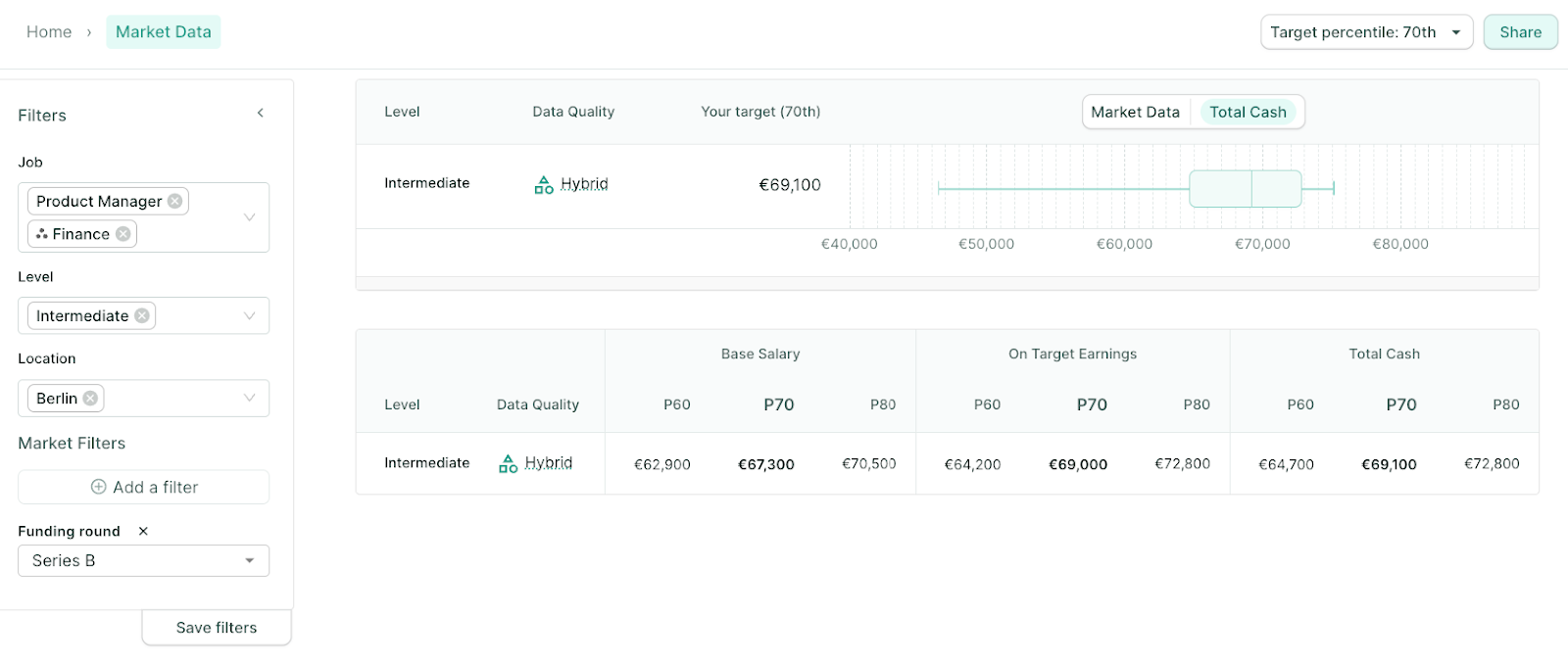
Figures Benchmark gives you access to 3.5 million data points, updated monthly and powered by Mercer. This isn't stale annual survey data – it's current market intelligence.
Filter by location, industry, company size, and job level to find exactly the benchmarks you need. Want to know what mid-level product managers earn in Berlin at Series B finance startups? The data is there, GDPR-compliant and secure with SOC 2 and ISO 27001 certification.
Build a fair and structured system
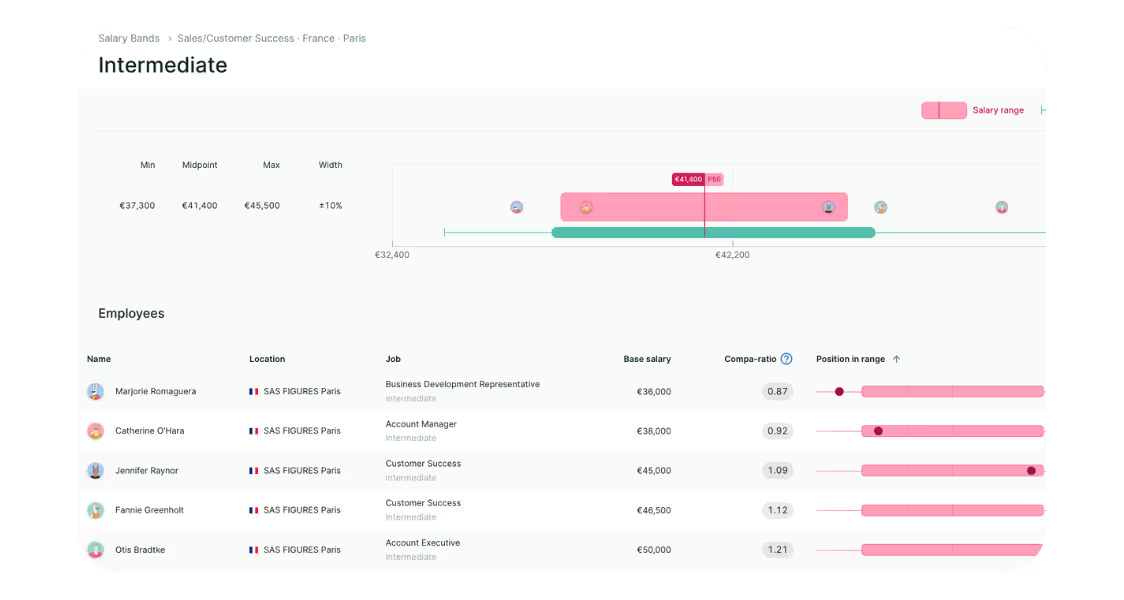
Salary Bands create clear pay structures with defined job levels and salary ranges. Bands stop compression from recurring by establishing offer caps and progression pathways.
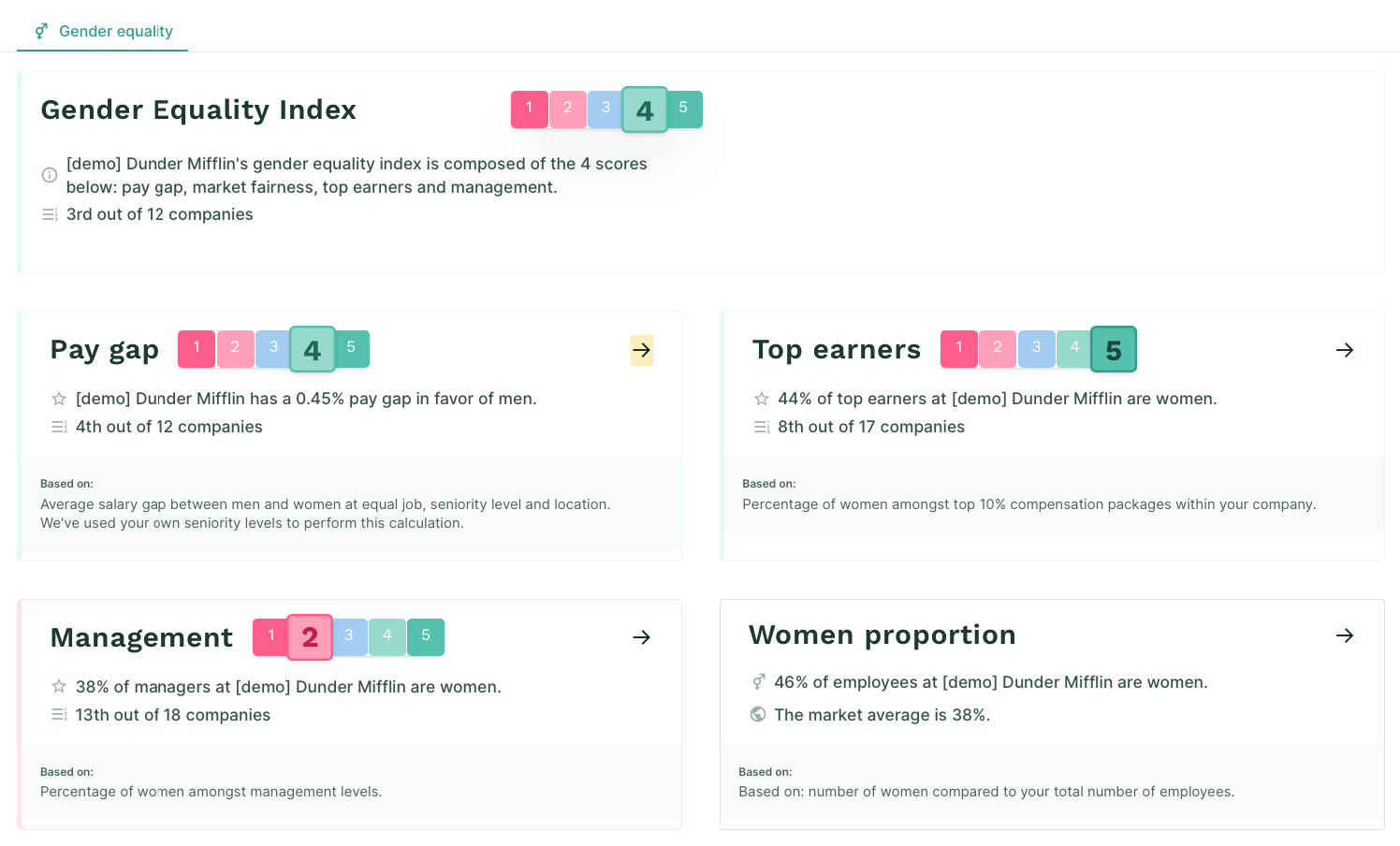
The Pay Equity module identifies gaps across gender, ethnicity, and other dimensions. Visual dashboards show exactly where disparities exist and help you build remediation plans.
Run reviews that managers and employees actually like
Compensation Review transforms the dreaded annual cycle from a spreadsheet nightmare into a collaborative process.
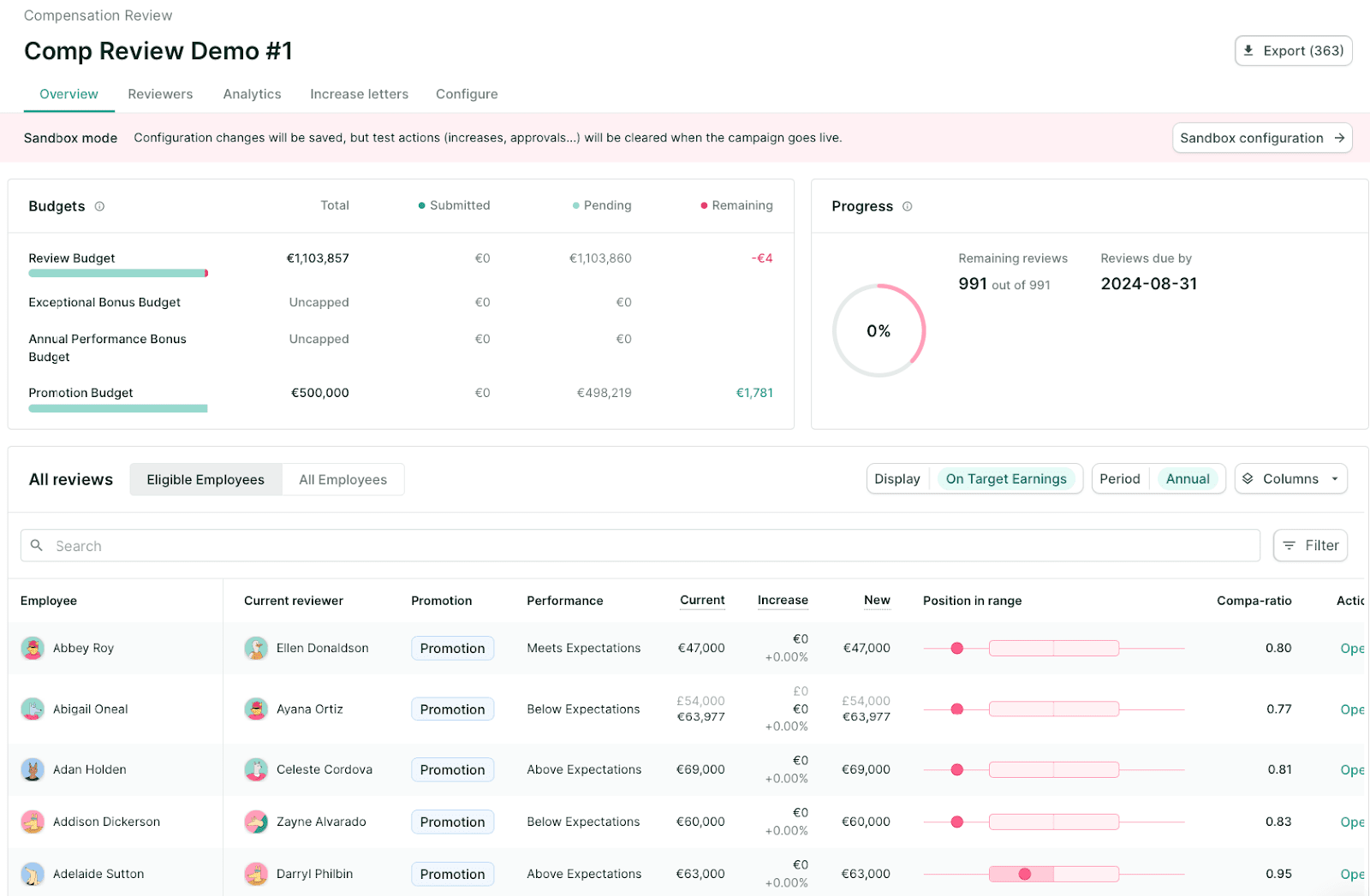
The platform centralises everything: market data, budget constraints, individual performance ratings, and manager recommendations. No more version control chaos or email chains asking "did you get my updated file?" (no, Susan, we bloody well didn't).
Data-driven recommendations guide managers toward fair decisions. Secure collaboration means finance, HR, and leadership work from the same real-time view.
Communicate with confidence
When your compensation strategy lives in a platform backed by verified data, transparency becomes easier. You can explain the "why" behind every decision because you have the benchmarks, the bands, and the equity analysis to support your answers.
Pay Transparency helps you build trust with employees today, while ensuring you're compliant with EU laws if you've got offices over the channel.
"True pay transparency isn't just publishing salary bands. It's the ability to confidently explain the 'why' behind every compensation decision. You can only do that when your entire strategy is built on a foundation of reliable data and fair processes."
– Agnès Chauvigny, VP People at Figures
Stop guessing, start retaining with Figures
Competitive pay is the foundation of employee retention. The loyalty penalty – where tenured staff drift below market while new hires arrive at current rates – drives your best people away.
Moving from guesswork and spreadsheets to data-driven compensation isn't optional anymore. The right tools eliminate compression, restore fairness, and turn pay into your most effective retention strategy.
"Implementing a tool to manage our salary reviews forced us to structure our campaign much more precisely." The outcome? "100% of employees positioned within their internal salary bands."
– Mathilde Sou, HRBP at Swan
Ready to stop the churn? Book a free demo and discover how data-driven compensation transforms retention.

Summarize this article with AI
No time to read it all? Get a clear, structured, and actionable summary in one click.




.avif)
.avif)

