Key points:
- Salary adjustments require a systematic six-step process: From data collection through payroll implementation, following a structured workflow prevents budget chaos and ensures defensible decisions.
- Real-time market data beats outdated surveys: Traditional salary surveys lag 12-18 months behind. Live benchmarking platforms prevent underpaying (losing talent) or overpaying (wasting budget).
- Budget allocation needs clear priorities: Before distributing raises, determine which comes first – legal compliance, band minimums, market corrections, or merit increases – to avoid running out of money mid-process.
- Manager proposals need guardrails and context: Without market benchmarks and internal band positioning, managers either propose wildly inconsistent numbers or default to identical increases that ignore actual performance.
{{ ai }}
A salary adjustment is the workflow of validating, approving, and implementing pay changes based on market data, internal equity, or role evolution.
And for HR teams managing compensation across UK and European offices, the difference between a smooth salary adjustment process and a chaotic one often comes down to having clear steps, not just good intentions. Unsure if you should be making one? Read our guide: What Is a Salary Adjustment? A Guide to Market Equity and Merit.
If that is something that you need to do, you should know that deciding who deserves a raise is a small part of it. The real challenge is building a defensible, repeatable workflow that satisfies Finance, HR, and Operations, all while keeping managers informed and employees confident in the fairness of decisions.
While it can be an overwhelming process, it doesn’t have to be. That’s why we’ve made this guide, which walks through the complete six-step workflow, from gathering market data to confirming the first adjusted payslip. Let’s go.
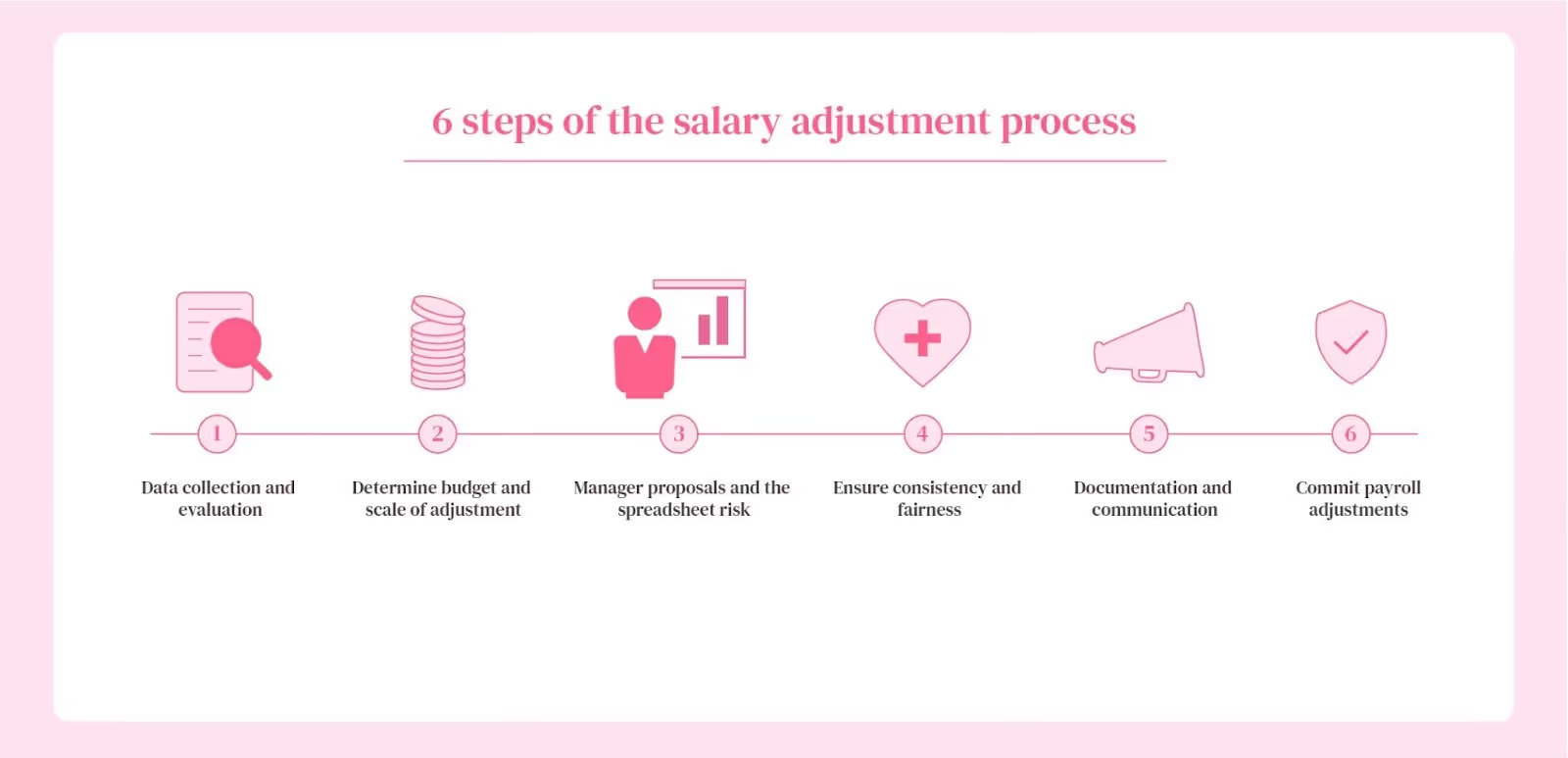
1. Data collection and evaluation
First things first: before proposing any salary changes, you need two things. External benchmarks that show what the market pays, and internal data that reveals where your people sit within your own structure.
Instead of just gathering data for the sake of it, you’re building that defensible structure we mentioned earlier. Who knows what questions finance or leadership might throw at you? To prepare for that, there are a few things you need to consider.
Start with legal baselines
Before you look at market rates or performance scores, identify any mandatory adjustments required by law.
In the UK, for instance, the National Living Wage increased to £12.21 per hour from April 2025. In April 2026, it will rise again to £12.71. If anyone falls below this threshold, it needs to be fixed immediately.
Legal compliance adjustments must be funded before you allocate budget to performance increases or market corrections. Miss this step, and you'll overspend your budget or leave people underpaid.
Map your competitive position with market data
Once legal requirements are covered, compare your roles against external benchmarks.
One word of advice, however. Don’t reach for salary surveys. Most salary surveys are published annually, which means the data you're using could be 12-18 months old by the time you see it. It’s like reading a science textbook from the 50s. Might look factually correct… but you should probably use something more recent.
In fast-moving sectors, that lag creates two risks:
- You underpay without realising it, then lose people to better offers.
- You overpay based on outdated data, locking in unnecessary costs.
Real-time benchmarking is what you need. And platforms like Figures pull from 3.5 million+ live data points (powered by Mercer) across Europe, showing you current market rates rather than historical averages.
This approach helps you:
- Position roles accurately within salary bands.
- Avoid reactive counteroffers when someone gets a competing offer.
- Make proactive adjustments before people start looking elsewhere.
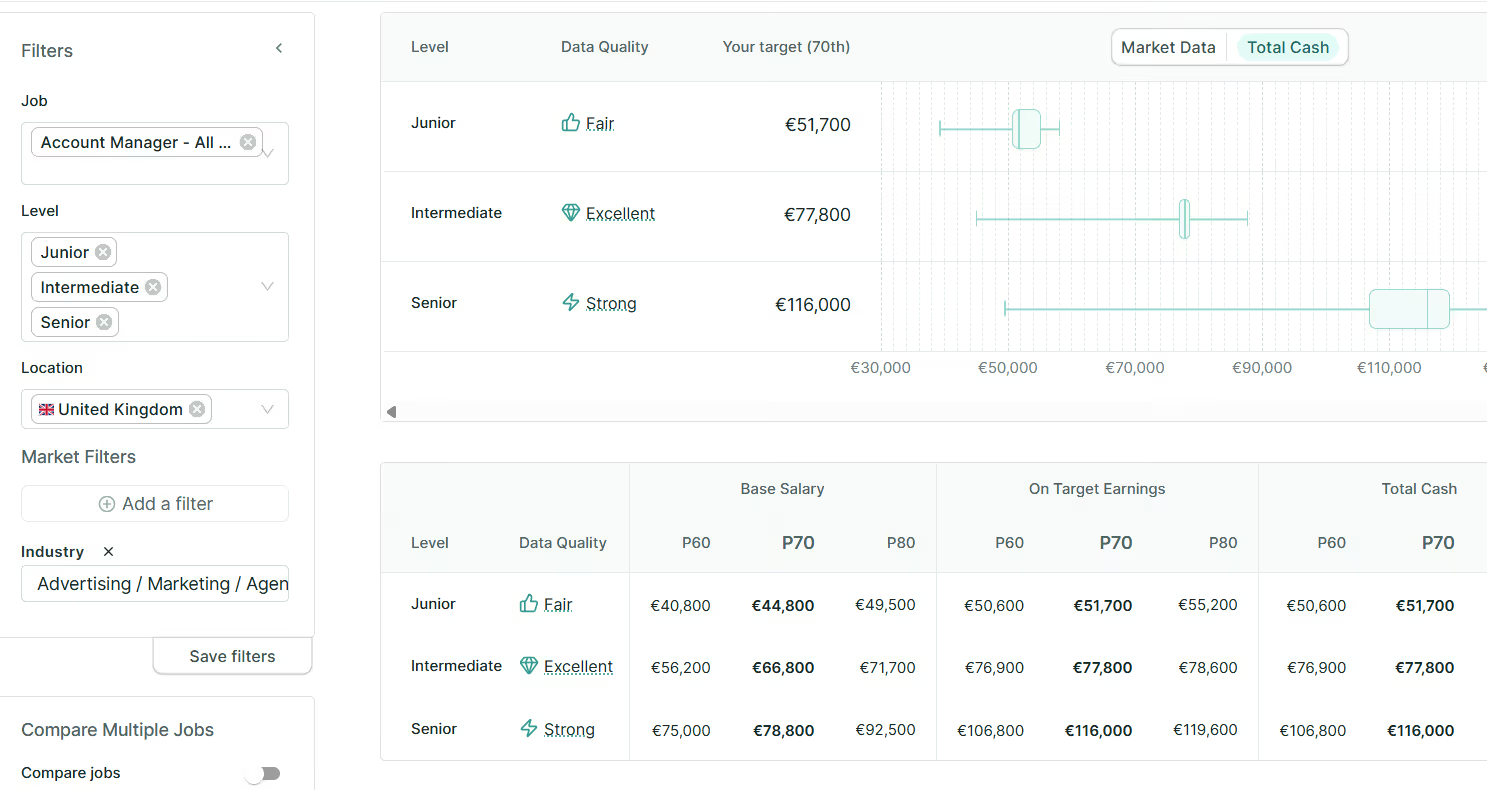
In short: if you work with UK and European workers, even if you’re not based there, real data matters. US-focused tools often lack granular EU market data, which creates problems when you're hiring in Paris, Berlin, or Amsterdam. Figures addresses this gap with coverage built specifically for European companies.
Now, at this point, you might be saying: “Why don’t we just ask ChatGPT? Our AI overlord seems to know everything – it should work with salaries too!” Well, you’ll be making a great mistake, and we’re not just saying that – we actually tested ChatGPT with 10,000 prompts for salary benchmarking!
The results were that it could both wildly overestimate and underestimate benchmarks. Trust us, compensation is one area you don’t want to make guesses on.
Check internal salary bands
Now compare your employees' current pay against your internal structure.
Look at your salary bands: the minimum, midpoint, and maximum for each role.
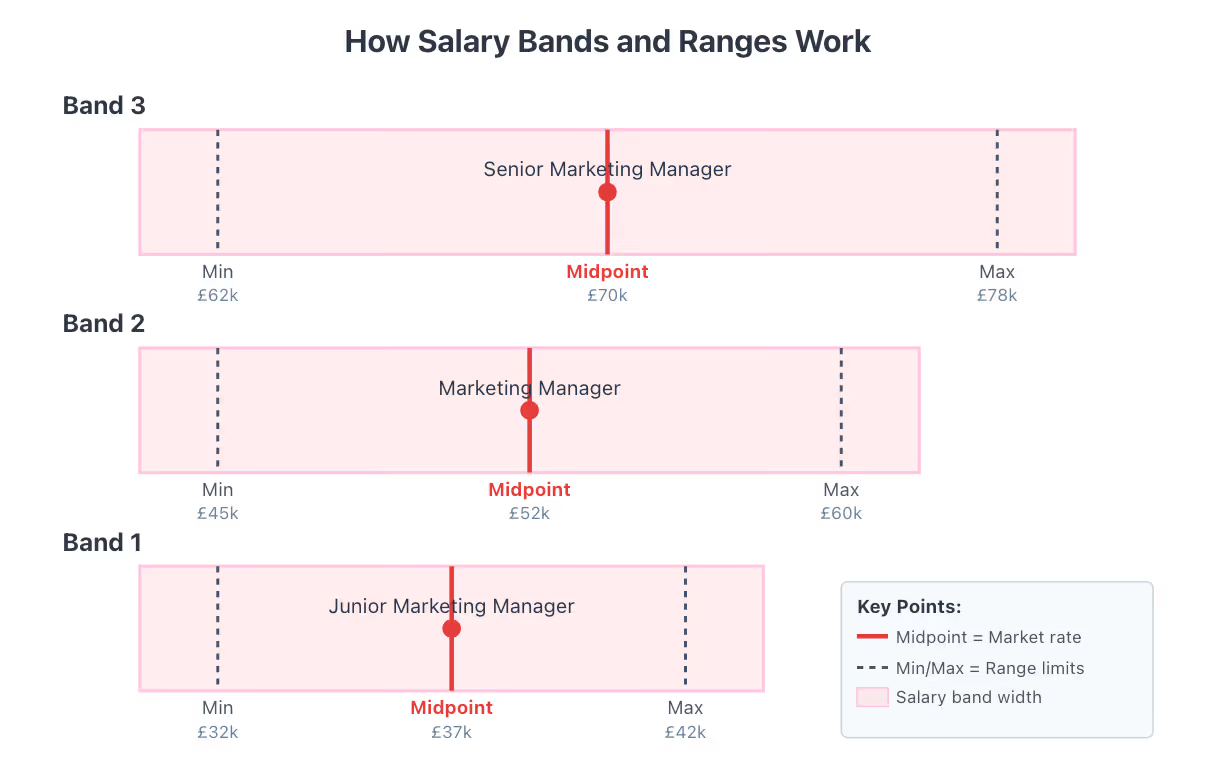
You're looking for two things:
- People below the band minimum: these need compulsory adjustments to bring them into range
- People above the maximum: these "red circles" signal overpayment that needs careful management
Example: Your Product Manager band runs from £55,000 (min) to £75,000 (mid) to £95,000 (max). You discover one PM earning £52,000 and another earning £98,000. Both need attention, but for very different reasons.
The first needs an immediate adjustment to reach the minimum. The second requires a conversation about whether their role has genuinely evolved beyond the band (the promotion case) or whether prior decisions have created an unsustainable position.
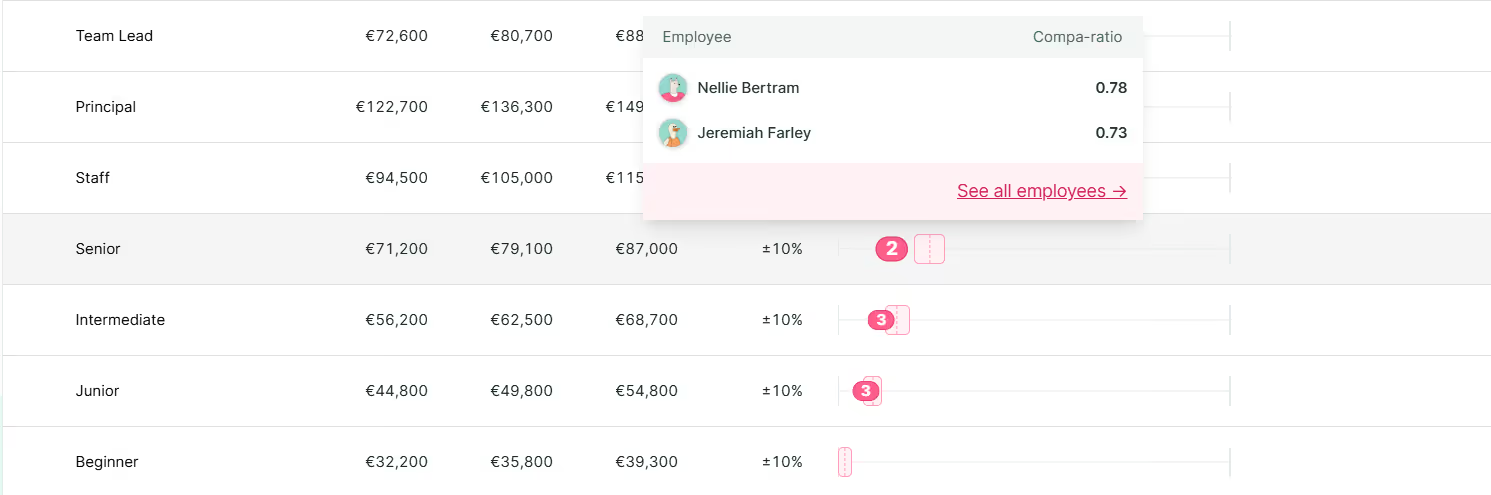
🤔 You can check salary bands at a glance in Figures and see where your employees fit within them. Compare bands based on role, level, and location, and easily identify whether your employees are above or below targets.
2. Determine budget and scale of adjustment
Once you understand where people sit relative to the market and your internal bands, the next question becomes: how much money do you actually have to work with?
Finance typically sets the overall pool – often expressed as a percentage of total payroll. "We have 4% for salary adjustments this year."
HR then defines how that pool gets allocated. This is where you establish the rules:
- Do adjustments to band minimums take priority over merit increases?
- How much do you reserve for promotions versus market corrections?
- What portion stays unallocated for mid-year exceptions?
While these questions can be difficult, going forward without a good plan can seriously affect how well you allocate your resources. You don’t want to blow your budget and then realise you still have employees with salaries below the market.
Now, with your budget defined and your data gathered, you can determine actual salary figures. This calculation combines several inputs:
- Market position: Where does this role sit relative to external benchmarks?
- Band position: Where does this person sit within their internal range?
- Performance rating: How did they perform this cycle?
- Tenure: How long have they been at this level?
3. Manager proposals and the spreadsheet risk
Surprise, surprise: you need input from the people who actually work with your employees every day. You’re not going to be able to see what every employee does, especially if you’re working with hundreds of people. So, you’ll need to confer with the managers.
The traditional workflow (and why it breaks)
In most companies, this looks like HR sending out spreadsheets to 15-20 managers, who fill them in with varying degrees of understanding, email them back with different naming conventions, and create a version control nightmare that takes weeks to untangle.
And who’s going to untangle that mess? Unfortunately, it’s you. Plus, managers aren’t always the best judges of what a fair proposal is. They might fall back on their biases or base salary on who has the best negotiation skills on their team. Avoid situations like this by giving managers context, such as:
- Their employee's current salary.
- Where that sits relative to market benchmarks.
- Where that falls within your internal band.
Without this context, managers either propose wildly inconsistent numbers or play it safe with identical 3% increases across their entire team.
One-off bonus or permanent increase?
Aside from getting the right context, smart managers will also need to distinguish between temporary performance spikes and sustained excellence.
If someone delivered exceptional results on a single project or covered for a colleague during parental leave, a one-off bonus rewards that contribution without permanently raising your fixed costs.
Permanent base increases should reflect sustained performance at a new level, not a short-term achievement.
The platform advantage
Figures' compensation review module replaces spreadsheet chaos with a structured workflow. Managers log in to a secure portal to view their team's compensation data alongside market benchmarks and the internal bands you defined in step one.
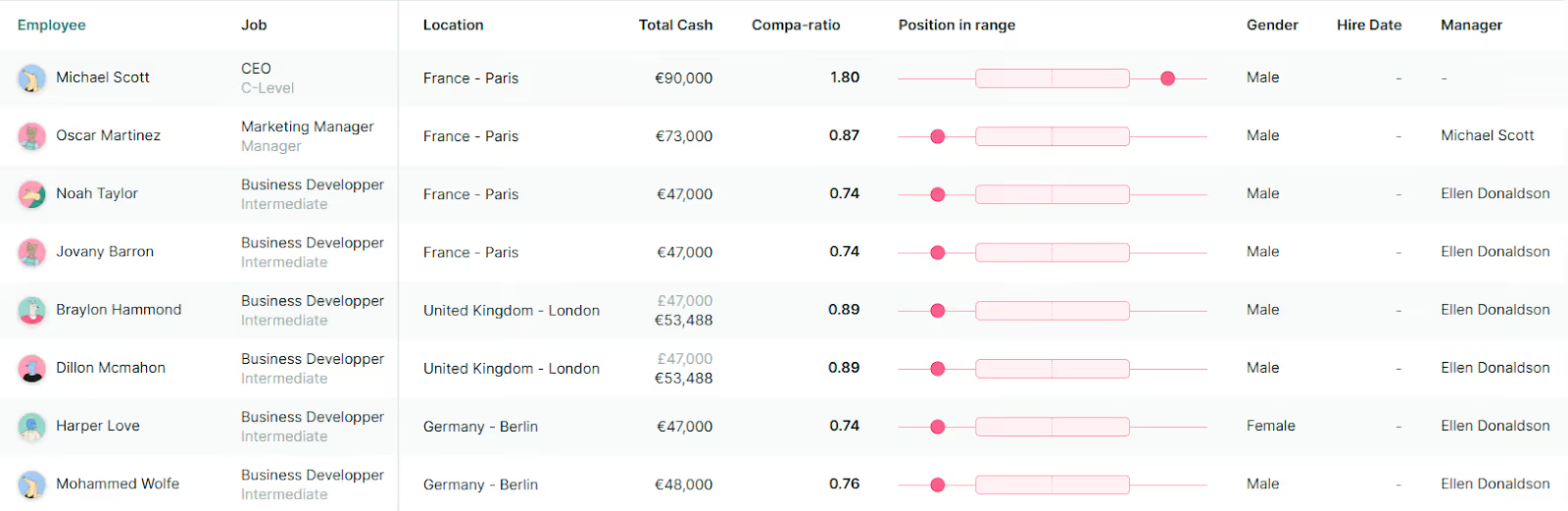
Managers can access simple dashboards and receive reminders on upcoming compensation reviews.
HR teams save roughly three weeks of work by centralising manager input rather than managing dozens of spreadsheets. Everyone works from the same data, changes are tracked automatically, and you can see budget utilization in real-time as proposals come in.
"Figures allowed us to structure our compensation reviews much more precisely. Having all the data in one place and being able to track decisions in real-time completely changed how we approach these cycles."
– Mathilde Sou, HRBP at HolidayPirates
4. Ensure consistency and fairness
You've gathered data, set budgets, and collected manager proposals. Now comes quality control, the step that prevents your carefully planned process from creating new inequities.
Calibration across departments
Look at all the proposed adjustments side by side. You're checking for inconsistencies that individual managers can't see from their siloed view.
Questions to ask:
- Are two departments proposing vastly different increases for similar performance ratings?
- Is one manager being overly generous while another is unrealistically conservative?
- Do the proposals align with your stated priorities?
You’ve got the full macro view, and so you need to make sure that everyone is collectively singing from the same hymn sheet. And just like someone singing out of key in a choir, a manager stepping out of line can cause waves across a company. And unless you’re working at a waterpark, no one likes waves…
Run the equity audit before finalising
Equity audits are crucial, especially with the EU Pay Transparency Directive incoming. You don’t want to hand out salary adjustments only to realise you’ve widened pay gaps and caused pay compression.
So, before you approve anything, check whether the proposed adjustments will create or worsen pay gaps.
Segment your population by gender, ethnicity, department, and level. Look at the proposed changes and ask: are we inadvertently widening gaps between groups?
"The way a company allocates its increased budget says more about its culture than the amount itself. If you're not checking equity before finalising decisions, you're building problems you'll need to fix later. Often at much higher cost."
– Virgile Raingeard, CEO at Figures
Document the approval chain
Create a clear audit trail: Manager proposes → HR reviews → Finance validates → Final sign-off.
This is crucial because the EU Pay Transparency Directive requires companies to justify pay differences using objective criteria. Your approval documentation becomes the evidence that decisions were data-driven and consistently applied. Speaking of that…
5. Documentation and communication
Once decisions are approved, you need to create the formal records and tell people what's changing. This happens through a meeting and then a formal letter.
The meeting is very important because it gives employees a chance to talk about adjustments openly. Plus, managers can go through the exact reasons for the adjustments in detail. Your letter (or email) shouldn’t be a novel. Save exposition for the meeting.
With that in mind, we’ve included a table below, which can give you an idea of how one of these meetings could go:
Once that is settled, you need to do the salary adjustment letter: It needs to clearly state the new base salary (gross amount), the effective date (the specific date the change applies) and the reason code (market correction, merit increase, promotion, equity adjustment).
Example: “Your base salary will increase from £58,000 to £62,000, effective 1 April 2025, reflecting market alignment and your strong performance this year.”
Also include:
- How will it appear on their payslip?
- What does this mean for their next review cycle (if relevant)?
- Who can they contact with questions?
Finally, adjust the contracts. In the UK and European countries, permanent salary changes require updated employment contracts or written confirmations. Check your local requirements. Some jurisdictions accept a signed acknowledgment letter; others require a formal contract amendment.
‼️ Process these contract updates immediately after approval. Don't wait until the effective date – you want everything signed and filed before the first adjusted payslip goes out.
6. Commit payroll adjustments
You've made the decisions, documented them, and communicated with employees. Now comes the technical handover: getting those numbers into the systems that actually pay people.
Understand your tech stack
Three different systems play distinct roles, and confusion here causes most implementation problems:
- Compensation tool (Figures): This is where you model scenarios and finalise compensations using the dedicated salary adjustment feature. You've been working in this system through steps 1-5.
- HRIS (e.g., HiBob, Personio): Import data from Figures to your HRIS, updating salaries for affected employees.
- Payroll (e.g., SD Worx, PayFit): Your payroll system pulls the updated salary data from your HRIS to process the actual payment.
Mind the payroll cut-off
Every payroll system has a cut-off date – the deadline for submitting changes that will appear in the next pay cycle. You’ll need to ensure all adjustments are made before the cut-off; otherwise, you’re going to have a lot of frustrated employees.
If changes aren’t made before the cut-off, then you’ll need to push the effective date forward, which, as you can imagine, will create a wondrous mood in the office. If you want to dull the sting of breaking your promises, you can offer a retroactive payment, but that’s still not as good as just doing everything on time.
Follow up after implementation
After the first adjusted payslip goes out, check two things:
- Accuracy: Did the numbers process correctly? Random spot-checks catch system errors before they compound.
- Employee satisfaction: Are people clear on what changed and why? Quick pulse checks reveal communication gaps while you can still address them.
Monitor retention patterns over the following months. Effective salary adjustments should reduce turnover in key roles. If you're still losing people, your adjustments may have been insufficient or poorly targeted.
🤔 The worst-case scenario is that you have other issues in the workplace, ones that aren’t as easily solved by throwing more cash at them. This is where you need to have open and honest conversations about your company.
Your repeatable process for defensible salary adjustments
Running salary adjustments works best if it’s a systematic process you can repeat quarterly or annually with confidence. The six-step workflow we've covered – data collection, budget setting, manager proposals, calibration, documentation, and payroll implementation – creates consistency. Ad-hoc adjustments based on whoever complains loudest create inequity and budget chaos.
For urgent counteroffers or mid-year promotions that can't wait for the formal cycle, read our guide on off-cycle compensation adjustments.
Ready to automate the workflow? Book a demo to see how Figures handles benchmarking, budget tracking, manager workflows, and payroll export in one secure platform, so you can start focusing on decisions instead of spreadsheet management.

Summarize this article with AI
No time to read it all? Get a clear, structured, and actionable summary in one click.